

A hard freeze can quickly turn a quiet plumbing problem into water damage. Especially when a pipe is hidden behind a wall, under a sink, or near an exterior area. If a faucet stops flowing or only produces a thin trickle, treat it as a warning. Do not wait for water to return on its own.
For frozen pipe repair, first shut off the water supply if you can do so safely, open the affected faucet, and avoid open flames or improvised high heat. A plumber can assess the frozen section, identify damage, and repair or replace the pipe if it has split.
Homeowners in the Tri-Cities and Northeast Tennessee can often limit the risk by acting carefully and knowing when a do-it-yourself step could make the situation worse. The first step is recognizing the physical clues that separate a frozen supply pipe from an ordinary faucet or fixture problem.
What Does a Frozen Pipe Look and Feel Like?
A frozen water-supply pipe often announces itself through a change in water flow rather than an obvious patch of ice. When you turn on a faucet, water may come out as a weak trickle or not flow at all. If only one fixture is affected while other faucets work normally, the problem may be localized near that fixture. Along an exterior wall, or in another colder part of the plumbing system.
Warning signs you can notice at a fixture
Start by comparing nearby fixtures. A bathroom sink with little or no water, while the kitchen sink still runs, points your attention toward the branch serving that bathroom. If both the hot and cold sides are affected at the same fixture, the supply line or a nearby section of piping may be frozen. A toilet tank that does not refill after flushing can be another clue that its water-supply line is affected.
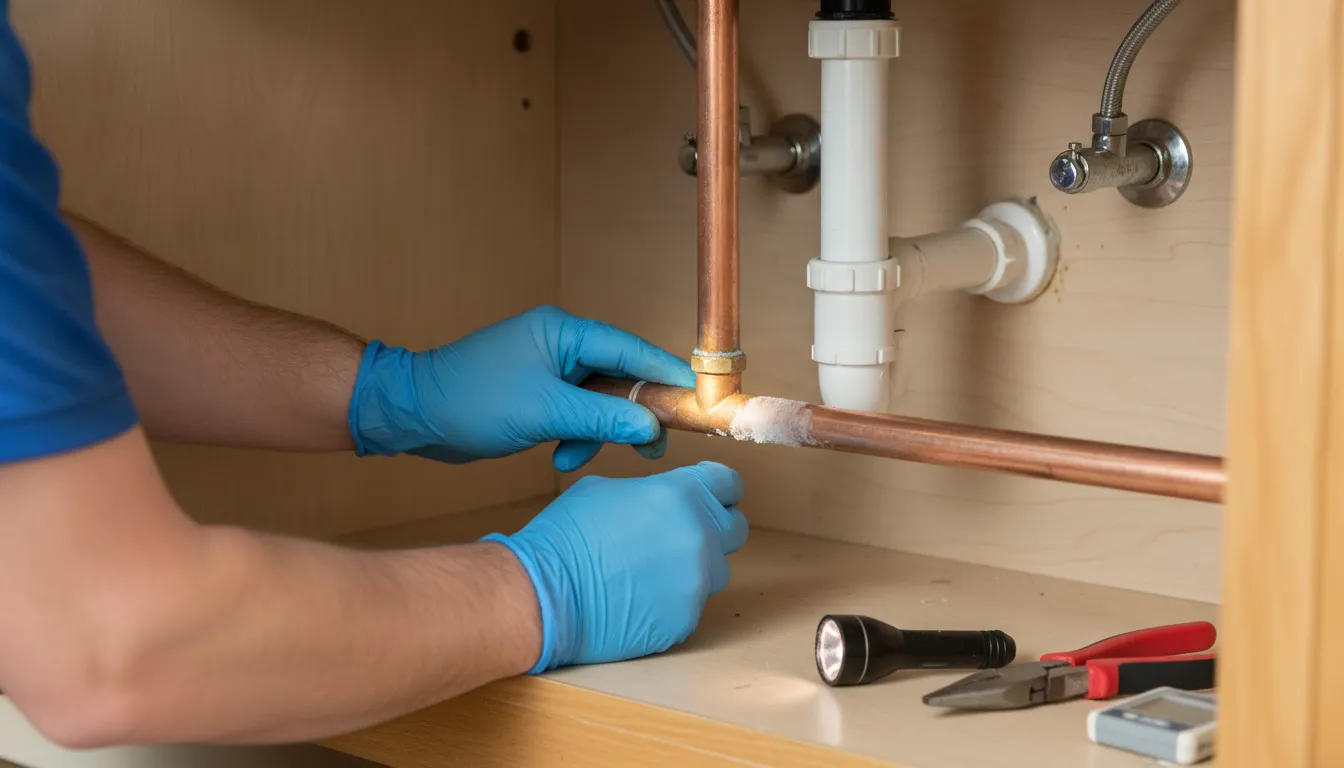
Do not dismantle the faucet, open a wall, or remove insulation just to look for the freeze. Instead, check visible pipe sections, connections, and the area beneath the fixture. Look for frost, a white or cloudy appearance on the outside of a pipe, dampness, or a small drip. A frozen section can be hidden, and the absence of visible ice does not rule it out.
Localized clues that deserve attention
Cold spots near exterior walls, crawl spaces, garages, or unheated areas can help explain why one section is affected. You may also notice unusual sounds when a faucet is opened, but do not rely on sound alone to diagnose the problem. If water pressure changes suddenly, a pipe appears swollen or cracked, or water begins leaking as the area warms, treat the situation as urgent. The restriction may have concealed damage that becomes visible when water can move again.
If you suspect a frozen pipe, avoid forcing a handle or using an open flame. Know where the main water shutoff is, and close it if a leak appears or you can do so safely. For help with frozen or burst pipe repair, Tommie’s Plumbing provides plumbing services for homeowners and businesses across the Tri-Cities and Northeast Tennessee. Address-level service availability should be confirmed when you request assistance.
Recognizing these clues early gives you a chance to limit water damage and make a safer decision. A complete lack of flow, visible damage. Or any active leak is a reason to stop investigating and seek professional help rather than trying to expose the pipe yourself.
What Should You Do Before a Frozen Pipe Bursts?
If you suspect a pipe is freezing, act carefully before the problem turns into a leak. The safest first goal is to limit water that could move through the pipe if it cracks while avoiding actions that could injure you or damage the plumbing. Use this sequence:
- Find the main water shutoff. If you can reach it safely and identify it with confidence, close the main shutoff to reduce water flow through the home’s supply lines. Do not enter standing water near electrical equipment, climb unsafely, or force a valve that is stuck. If you cannot locate or operate the shutoff, leave it alone and focus on keeping people away from the area.
- Open a nearby faucet carefully. Opening the cold-water faucet served by the suspected line can relieve pressure as the pipe warms. Use only a faucet you can reach safely. If water is not flowing, do not assume the pipe is clear, and do not keep forcing the handle.
- Protect the surrounding area. Move valuables, furniture, and items stored beneath or near the suspected pipe. Place a container or towels where a small amount of water could collect, but do not use electrical appliances or extension cords in a wet area. Keep children and pets away from the location.
- Avoid unsafe heat or force. Do not use an open flame, torch, grill, or other improvised heat source to thaw a pipe. Never strike the pipe or apply pressure to a frozen valve. These actions can create a fire, burn, or additional plumbing damage. If the pipe is behind a wall, ceiling, or other inaccessible location, do not open the surface just to reach it.
- Record visible damage. From a safe, dry position, take photos or video of dripping water, wet materials, bulging surfaces, or other visible changes. Note which fixtures have reduced or no water. This information can help a plumber understand the situation when you request frozen pipe repair.
Stop if conditions become unsafe, especially if water is near electrical components or the pipe has already split. A visible burst, rapidly spreading water, or a shutoff you cannot safely reach calls for professional help. Tommie’s Plumbing handles frozen and burst pipe leak repair for customers across the Tri-Cities and Northeast Tennessee, with service availability confirmed for the specific address.
What Do Plumbers Use to Unfreeze Pipes Safely?
Professional thawing is controlled, gradual, and paired with an inspection. A plumber may use equipment suited to the pipe material, its location, and the condition of the plumbing system. The exact approach can vary, especially when a pipe is behind a wall, beneath a floor, in a crawl space, or near electrical components. The goal is not simply to restore water flow. It is to thaw the blockage without creating a new hazard or overlooking damage that could become a leak.
How controlled thawing works
After identifying the affected section, a plumber can assess whether the water supply should remain shut off and where safe access is available. Controlled heat may be applied to the frozen area while the pipe and nearby materials are monitored. The technician may also open a faucet or another appropriate outlet so pressure has somewhere to go as ice begins to melt. This is one reason thawing should not be treated as a race. Restoring flow in one spot does not confirm that the entire line is safe.
Once water starts moving, the plumber can check exposed joints, fittings, and accessible pipe surfaces for signs of splitting or leakage. Some damage is not obvious while ice is still blocking the line. A careful inspection after thawing helps determine whether the problem needs a repair, replacement, or additional assessment for water damage.
Why open flames and aggressive heat are unsafe
Do not use a torch, lighter, grill, or other open flame to thaw a household pipe. Flame can ignite nearby wood, insulation, finishes, or other materials, and it can damage the pipe before the ice has cleared. High heat directed at one small area can also create an uneven thaw, leaving pressure trapped elsewhere in the line. Space heaters and heat guns can pose risks as well, particularly in damp, cramped, or poorly ventilated areas. Never place heating equipment where it could contact water or create an electrical hazard.
If a safe, accessible section can be warmed without flame, follow the appliance manufacturer’s safety instructions and keep the area attended. Stop if you cannot locate the frozen section, the pipe is concealed, water begins leaking, or the required heat would be near wiring or combustible materials. Stop the water supply if you can do so safely, protect the surrounding area, and contact a qualified plumber for frozen pipe repair. For homeowners in the Tri-Cities and Northeast Tennessee, Tommie’s Plumbing can assess the situation and explain the next step without relying on an improvised thawing method.
When Is Frozen Pipe Repair a Job for a Plumber?
Some frozen pipes can be monitored while they thaw safely, but other situations call for professional help. Contact a plumber when you see water around a pipe, hear unexpected running water, or find that a pipe has split and is leaking. A burst can continue sending water into walls, ceilings, cabinets, or finished areas, even when the visible leak seems small. If you can safely reach the main shutoff, turn off the water before help arrives and protect nearby belongings.
No water from one or more fixtures is another reason to take the problem seriously. A frozen section may be blocking flow, and the pipe can leak when ice begins to melt. Do not assume that restoring water pressure means the line is undamaged. If faucets sputter, flow remains weak, or pressure changes after thawing, a plumber can inspect the affected line and look for damage that is not immediately visible.
Call when the frozen section is difficult to reach
Professional help is especially appropriate when the suspected pipe runs inside a wall, ceiling, crawl space, foundation area, or another location that cannot be safely accessed. Avoid cutting into drywall or using high heat in an attempt to locate or thaw the pipe. An inaccessible line may require careful assessment before any repair or replacement work begins. The same applies when you are unsure which shutoff controls the affected fixture or whether the main valve is working. Guessing during an active leak can increase the damage.
Repeated freezing points to a larger problem
If the same pipe freezes more than once, the immediate thaw may not solve the underlying issue. The location could have inadequate protection, an air leak, an exposed section, or another condition that makes the line vulnerable during cold weather. A plumber can evaluate the pattern and explain practical next steps for the home. If you are uncertain whether the issue is a frozen supply line, a leak. Or a burst, it is safer to ask for an assessment rather than wait for visible damage.
Tommie’s Plumbing’s general plumbing page covers professional frozen or burst pipe repair. Homeowners in the Tri-Cities and Northeast Tennessee can also request plumbing service so the team can confirm the details and address coverage. The website describes emergency service for leaks and burst pipes, but response and dispatch availability should be confirmed for the specific address.
Frozen Supply Pipe or Sewer-Line Freeze: What Is the Difference?
Not every winter plumbing problem involves the same kind of pipe. A frozen water-supply pipe affects the water coming into a fixture, while a sewer or drain issue affects water leaving the home. The symptoms can overlap, especially when several fixtures are affected, so treat the pattern as a clue rather than a definite diagnosis.
| What you notice | Possible supply-pipe freeze | Possible sewer or drain freeze |
|---|---|---|
| Water at faucets | One faucet may have little or no water, or cold water may stop while another line still works. | Faucets may run, but water drains slowly or backs up after use. |
| Toilets and drains | A toilet may still flush unless its supply is affected, but the tank may not refill normally. | A toilet, tub, or floor drain may drain slowly, gurgle, or back up when other fixtures are used. |
| Leak risk | When a frozen section thaws, a damaged supply pipe can begin leaking under pressure. | Backups and standing water can signal a drainage problem, but the exact cause needs inspection. |
Use the safest next step for the symptom
If a supply line appears frozen, do not force a faucet handle or use an open flame to thaw an inaccessible pipe. If you can safely identify the home shutoff and suspect a leak, turning off the water can limit damage. Keep an eye out for wet walls, ceilings, cabinets, or flooring as the area warms.
If drains are backing up, stop using water until the cause is clearer. Continued showers, laundry, or flushing can add to a backup. Avoid chemical drain cleaners when you do not know where the blockage is or whether a pipe is damaged. A plumber can distinguish a supply problem from a drainage issue and determine whether frozen pipe repair, leak repair, or another service is appropriate.
Because symptoms depend on the home’s layout and the location of the affected line. A service request is the safest choice when more than one fixture is involved, water damage is visible, or the problem returns after temperatures rise.
How Can You Prevent Frozen Pipes in Northeast Tennessee?
Winter preparation matters in the Tri-Cities and throughout Northeast Tennessee because a short stretch of cold weather can expose plumbing that is easy to overlook. A few practical checks before the season can reduce the chance of losing water service or discovering a leak after a pipe thaws.
Protect exposed plumbing
Start with pipes in unheated areas, such as crawl spaces, garages, unfinished rooms, and exterior walls. Look for missing or damaged insulation and protect accessible plumbing with suitable pipe insulation. Pay attention to hose bibs and outdoor connections as well. Disconnect garden hoses, check that exterior fixtures are not dripping, and address plumbing openings that allow cold air to reach supply lines.
Keep indoor temperatures steady
During cold weather, maintain normal heat throughout the home rather than allowing seldom-used rooms to become significantly colder than the rest of the house. If you will be away, arrange for someone to check the property and keep the heating system operating as intended. Do not rely on a portable heater in a confined or unattended area as a substitute for safe home heating.
Reduce cold drafts around plumbing
Drafts can chill pipes even when the living space feels comfortable. Check around doors, windows, vents, and places where pipes pass through walls or floors. Seal obvious gaps with appropriate materials, while avoiding any repair that could damage wiring, ventilation, or the plumbing itself. Cabinets beneath sinks on exterior walls may be colder than the rest of the room. Opening those doors during very cold weather can allow warmer household air to circulate around the pipes, provided children and pets cannot reach anything hazardous inside.
Know your shutoff before an emergency
Find the home’s main water shutoff and make sure the handle can be operated. Everyone who may need to respond should know where it is. If a pipe freezes, a leak appears, or a pipe bursts. Shutting off the water when it is safe to do so can limit additional damage while you arrange help. Keep a flashlight and basic supplies nearby, and review the location of any separate shutoffs for fixtures or appliances.
Finally, inspect vulnerable plumbing before the next cold spell rather than waiting for a problem. If prevention turns into a leak or flooding concern, review these steps for urgent plumbing leak response. Tommie’s Plumbing serves the Tri-Cities and Northeast Tennessee, but address-level service availability should be confirmed when requesting assistance.
What Happens During Frozen Pipe Repair?
When you call for help with a frozen pipe, the first step is finding out where the problem is and whether water is already escaping. A plumber will ask what you noticed, inspect accessible piping, and look for signs such as frost. Bulging, cracks, damp materials, or a sudden loss of water at a fixture. The goal is to understand the condition of the pipe before applying heat or opening a wall.
Assessment and water shutoff
If a leak or burst is suspected, the water supply may need to be shut off before repair work begins. This limits additional water flow while the affected area is examined. The plumber may also check nearby fixtures and connected sections of pipe because a freeze can affect more than the spot that first became visible. If you can safely reach your home’s shutoff valve, keep the water off and explain what you observed. Do not remove insulation, drywall, or fittings unless directed to do so.
Safe thawing or access to the damaged pipe
If the pipe is frozen but intact, thawing is handled gradually and with attention to the sections behind the blockage. The safest method depends on the pipe’s location, material, accessibility, and condition. Open flames are not an appropriate shortcut. They can damage the pipe or nearby building materials while leaving pressure trapped in another section. A plumber may need to expose a concealed pipe carefully when the frozen area cannot be reached safely from an accessible connection.
Repair, replacement, and a check for water damage
Once the pipe has thawed or the damaged section is accessible, the next step is to determine whether it can be repaired or should be replaced. The decision depends on the extent of cracking, the pipe material, and the condition of the surrounding connections. For example, homeowners dealing with a leaking copper line may benefit from reviewing information about copper pipe leak repair before work begins.
After the plumbing work, the area should be checked for moisture around floors, walls, cabinets, insulation, and other nearby materials. A slow leak can cause damage even when the visible pipe problem appears small. In the Tri-Cities and Northeast Tennessee, Tommie’s Plumbing can help homeowners understand the next step and arrange professional plumbing repair services for the plumbing issue. Ask what was found, what was repaired or replaced, and whether any follow-up inspection is appropriate for your home.
Frequently Asked Questions
What do plumbers use to unfreeze pipes?
A plumber typically uses controlled, gradual heat and checks the pipe for cracks or leaks as it thaws. Avoid open flames, torches, and improvised high-heat methods, which can damage plumbing or create a fire hazard. If the pipe is inaccessible, already leaking, or connected to a burst section, professional help is the safer choice.
How long can pipes be frozen before they burst?
There is no dependable time limit. A pipe can remain frozen without an obvious leak, then release water through a crack when thawing begins. Shut off the main water supply if you can do so safely. Protect the area from further damage, and arrange an inspection rather than waiting for a specific number of hours.
Should you let hot or cold water drip to keep pipes from freezing?
A small, steady flow can help reduce freezing risk in vulnerable plumbing during severe cold. But dripping fixtures are not a substitute for insulating exposed pipes and protecting drafty areas. Ask a plumber which fixtures and lines in your home need attention, especially if freezing has happened before.
When should I call a plumber for frozen pipe repair?
Call when you see a leak, have no water at a fixture, hear unusual sounds. Find a bulging or split pipe, or cannot safely locate and thaw the frozen section. Prompt help is especially important if water is near electrical equipment or if the pipe may have burst behind a wall, ceiling, or cabinet.
Does homeowners insurance cover frozen pipe damage?
Coverage depends on the policy, the cause of the damage, and the facts of the incident. Do not assume a claim will be covered. Document the damage, take reasonable steps to limit additional water loss, and contact your insurer for policy-specific guidance while arranging plumbing assessment and repair.
Ready to Request Frozen or Burst Pipe Service?
If a frozen pipe is leaking, has burst, or cannot be safely accessed, professional help can limit further plumbing damage and help identify what needs attention. Tommie’s Plumbing serves homeowners across the Tri-Cities and Northeast Tennessee, with address-level service availability confirmed when you reach out. To request plumbing service, call Tommie’s Plumbing at 423-638-3662 and explain what you are seeing.