

Garbage disposals have become an essential part of the modern home. They help homeowners manage daily food waste and make kitchen cleanup much easier. Most people rely on their garbage disposal every day without giving it much thought. Then one day, you flip the switch and nothing happens. No sound. A garbage disposal can lose power or develop mechanical problems over time. Wear and tear, loose connections, and trapped debris often cause unexpected issues with garbage disposal. We will walk through the troubleshooting steps and show you several things you can check before scheduling service calls. Keep reading.
First Things First: Let’s Check the Power Supply
Let’s start with the basics because many garbage disposal problems begin with a power issue. Your garbage disposal needs a steady power source to operate. If your garbage disposal stops working, check whether it is receiving power.
Start by checking the wall switch near your kitchen sink. Flip the garbage disposal switch on and off a few times. Sometimes a faulty switch creates problems without obvious signs. Next, inspect the outlet and power cord. A loose power cord can disconnect slightly, preventing the unit from receiving power.
After that, head to your electrical panel. Look for a tripped circuit breaker. Your disposal may draw too much power, tripping the breaker as a safety feature. Flip the breaker completely off and then back on.
These quick checks often solve many garbage disposal problems without requiring a repair.
Now Let’s Talk About the Reset Button
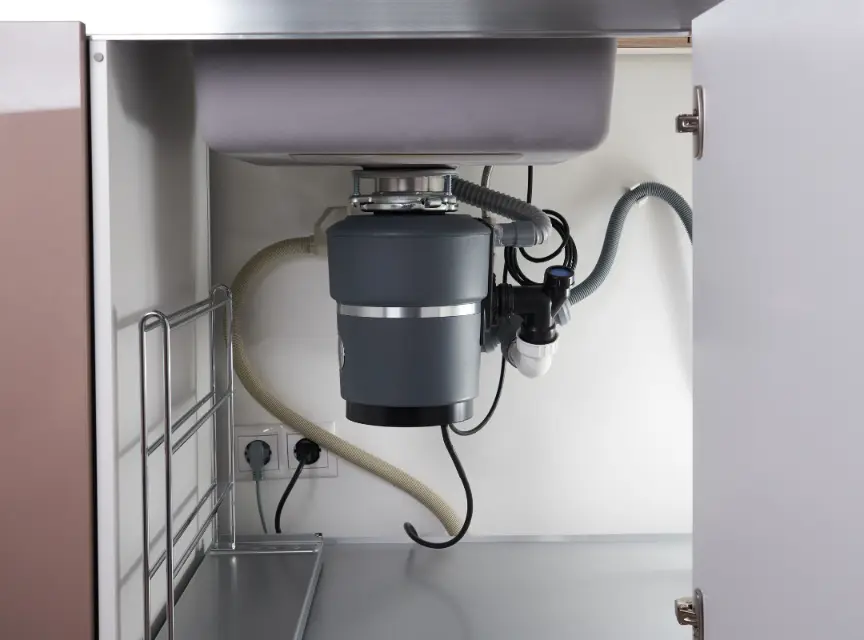
Let’s move to one of the easiest fixes homeowners often overlook. Every disposal unit includes a reset button, usually located underneath the unit.
When the motor overheats or senses a problem, the reset button shuts the unit down to prevent damage. This safety feature protects the motor and internal seals from more serious issues. Find the small red reset button under the disposal. Press it firmly and wait a few moments. Then return to the wall switch and test the disposal.
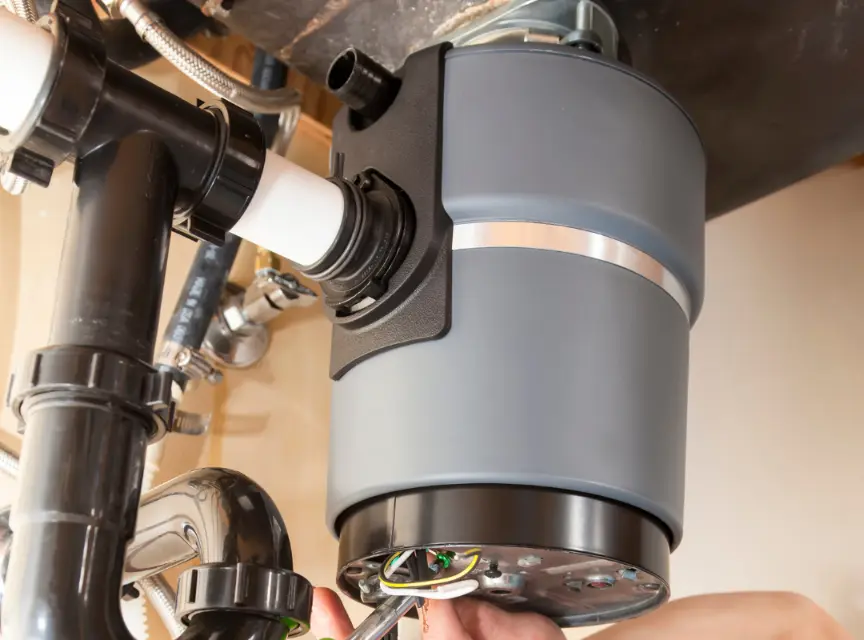
Many homeowners immediately assume they need a plumber when they lose power. In reality, pressing the reset button is a quick DIY fix for many common garbage disposal issues.
Hear a Humming Noise? Your Unit May Have a Jam
Let’s say you flip the switch and hear a humming sound, but the blades do not move. That sound usually points to a jammed motor.
A disposal won’t turn properly when food scraps or debris become lodged inside the unit. Certain items create more trouble than others. Potato peels, corn husks, fibrous foods, bones, and large amounts of food waste can stop the motor.
Turn off the power before doing anything else. Grab an Allen wrench or a hex wrench. Most disposal units include a small opening underneath for manual movement. Insert the allen wrench and manually rotate the motor back and forth.
This movement often frees debris that has become lodged inside. After rotating the motor, press the reset button and test the disposal again.
Sometimes this simple fix saves homeowners from expensive repair appointments.
Look Inside for Hidden Debris
Now here is another common situation. You hear strange noises from the garbage disposal.
Odd grinding sounds often point toward foreign objects inside the disposal. Silverware, bottle caps, fruit pits, and other hard objects sometimes slip into the sink unnoticed.
Turn off the power completely before checking inside.
Never place your hand inside the disposal. Use a flashlight instead. Look carefully for visible debris lodged inside the chamber.
If you spot an object, use tongs or pliers to remove it safely.
Many garbage disposal problems start with small objects that should never enter the disposal in the first place.
Slow Drainage Can Point to Bigger Problems
Let’s shift gears: sometimes the disposal itself works fine, but the water drains slowly.
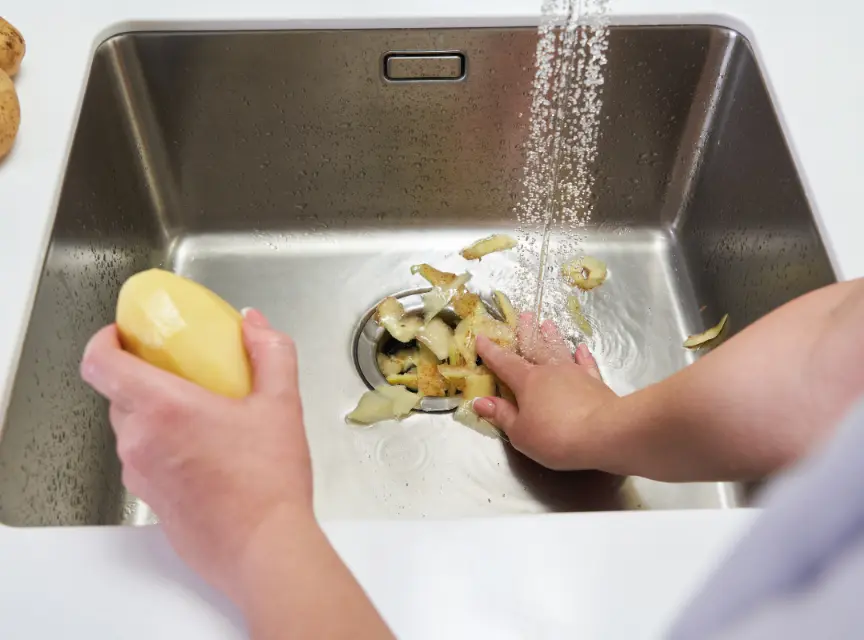
Slow drainage or standing water in the sink often signals a clog somewhere along the drain line. Food scraps, grease, and waste can accumulate and create blockages over time.
The p-trap beneath your sink can collect buildup. Too much food waste also causes slow-draining conditions.
Try a natural cleaning method before calling for service. Pour baking soda down the drain, then add warm water. Run cold water afterward to help clear residue.
Cold water helps solidify grease particles and move waste through the plumbing system more effectively.
Avoid harsh chemical cleaners because they can damage your disposal and internal components.
Check for Wiring Trouble Before You Panic
Sometimes homeowners complete every troubleshooting step and still find no results.
At that point, a wiring issue may stop the disposal from receiving power. Loose wiring connections, damaged wires, or electrical wear can interrupt operation.
Check visible wiring only if you feel comfortable doing so. Some disposal units connect directly to household wiring instead of using a standard outlet.
If you notice loose wiring, burnt smells from the garbage disposal, or signs of electrical damage, stop immediately.
This situation usually calls for a plumbing expert or licensed electrician.
Foods That Create Garbage Disposal Malfunction
Here is something many homeowners overlook. Certain foods increase the risk of future garbage disposal issues. Some foods do not break down easily. Others expand or wrap around moving parts.
Avoid placing these items into your disposal:
- Potato peels
- Corn husks
- Fibrous foods
- Grease and oils
- Coffee grounds
- Eggshells in large amounts
- Large food scraps
These materials create clogs, strain the motor, and increase the chances of a garbage disposal repair visit. Small habits often prevent most problems.
Know When DIY Ends & Professional Service Begins
Let’s be realistic for a moment. Some problems need more than a reset and an Allen wrench.
Leaks around the mounting flange, broken components, damaged internal seals, or repeated breaker trips often signal deeper trouble.
If your disposal unit leaks, repeatedly jams, or stops working after several attempts, professional service makes more sense.
An experienced plumber can inspect the drain system, identify hidden problems, and determine whether repair or replacement offers the better option. Trying to force a repair can sometimes make matters worse.
Start Small Before Making the Call
Let’s wrap things up with one simple reminder. A garbage disposal not turning on does not always mean disaster. Many homeowners assume the unit broke completely, but many garbage disposal problems come from power interruptions, reset issues, or debris trapped inside the motor area. Start with basic troubleshooting steps. Check the power source, inspect the garbage disposal circuit breaker, press the reset button, and investigate possible jams. These small checks can save time, money, and unnecessary service calls.
If the problem continues, a trusted plumbing expert can step in and get your kitchen back on track. Before you schedule a plumber, give these simple checks a try. Sometimes the answer sits right under your sink.
Help from Tommie’s Plumbing for Your Garbage Disposal
When a garbage disposal stops working, the cause is often something simple like a tripped reset button or a jammed flywheel. These small faults can make the unit seem completely dead, even when it just needs a basic reset or inspection. Tommie’s Plumbing handles these garbage disposal issues alongside drain cleaning, sink repairs, faucet replacements, pipe leak fixes, and general kitchen plumbing service. If your disposal has gone silent, contact us today.