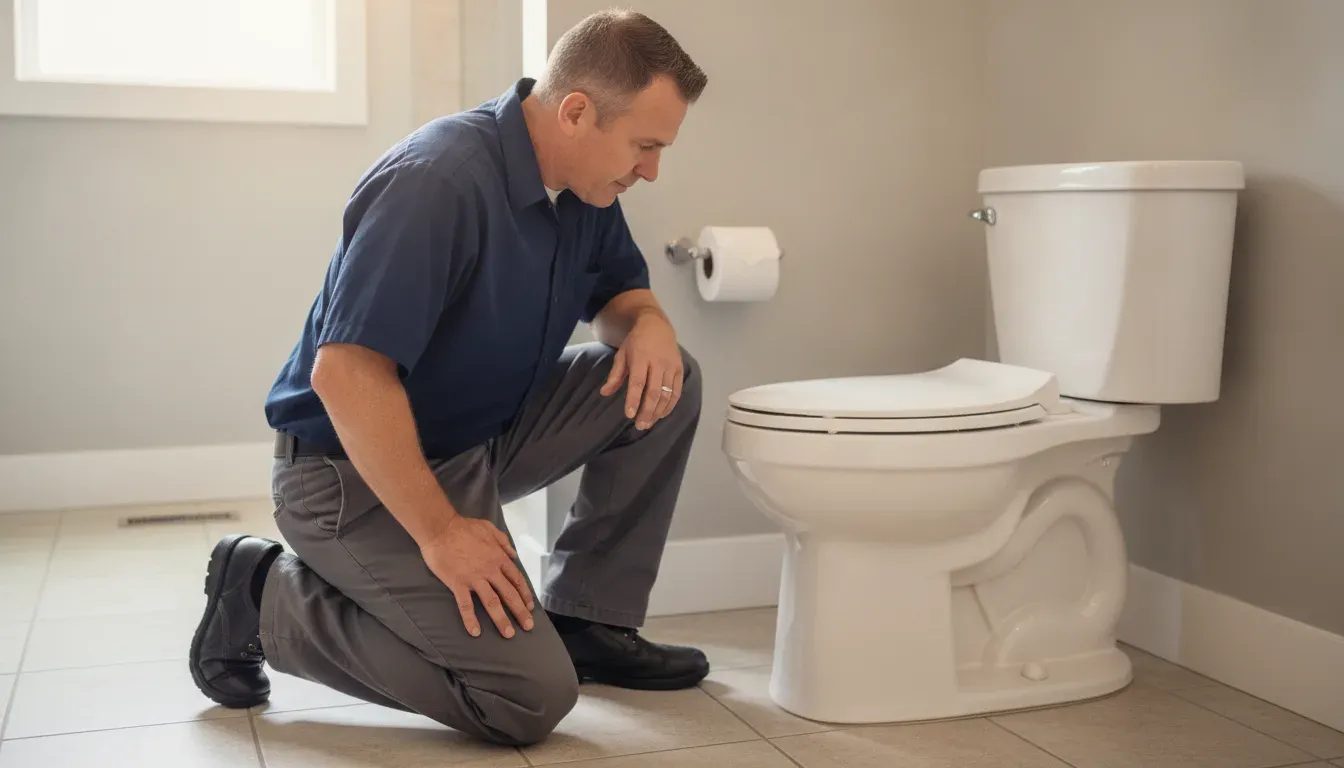
A successful toilet replacement starts before the old unit is removed. The right choice must fit the existing bathroom, connect safely to the supply line, and leave enough room for comfortable daily use. A little planning can help prevent surprises once the work begins.
Need help planning the replacement? Call (423) 638-3662 or request plumbing service.
Good toilet installation planning means checking the rough-in, bowl and tank dimensions, door and wall clearance, shutoff valve, floor, and flange before choosing a replacement. It also helps to decide whether the goal is better comfort, easier cleaning, improved water efficiency, or a straightforward replacement.
For homeowners in the Tri-Cities and Northeast Tennessee, the first practical step is understanding which measurements and features affect fit. From there, you can compare toilet styles with a clearer idea of what will work in your bathroom.
What Should You Consider Before Buying a Toilet?
Start by identifying the reason for the replacement. A toilet that leaks, rocks, clogs repeatedly, or no longer fits the household’s needs may need more than a new bowl and tank. However, some problems come from replaceable parts rather than the fixture itself. For example, the EPA notes that many toilet leaks are caused by an old or worn flapper, which controls the flow of water into the bowl. Reviewing common toilet flushing problems can help you decide whether repair or replacement deserves the first look.
Next, think about the configuration that suits the bathroom. A two-piece toilet separates the tank and bowl, which can make each piece easier to handle during delivery and installation. A one-piece model has a continuous design that may be simpler to wipe down because it has fewer seams. Wall-mounted toilets can create a different visual layout and may make floor cleaning easier, but they require the wall structure and plumbing connections to support that design. These choices should be checked against the existing bathroom before you buy.
Bowl shape also affects daily comfort and available space. An elongated bowl may provide more sitting room, while a round bowl can work better where the bathroom footprint is tight. Consider who uses the bathroom, how high the seat feels, how much clearance is available, and whether the tank or other surfaces will be easy to clean. A toilet that looks right in a product photo still needs to work comfortably in the actual room.
Water use is another practical consideration. The EPA says toilets account for nearly 30 percent of average indoor household water consumption, and older models can use as much as 6 gallons per flush. Toilets with the EPA WaterSense label use 1.28 gallons per flush or less and are independently certified for performance and efficiency. WaterSense models come in a broad range of styles, and some utilities offer rebates or vouchers, so it may be worth checking local program availability before purchasing.
WaterSense-labeled dual-flush toilets also offer a reduced-flush mode for liquid waste. EPA estimates that replacing older, inefficient toilets with WaterSense models can reduce toilet water use by 20 to 60 percent for an average family. Actual results depend on household use. For homeowners planning toilet installation in the Tri-Cities or Northeast Tennessee, selecting the fixture and confirming its fit together can prevent avoidable problems later.
How Do You Measure for a Toilet Installation?
A toilet can look like it will fit until the tank meets a wall, the lid hits a shelf, or the door cannot open comfortably. Before choosing a replacement, measure the existing space and compare those measurements with the manufacturer’s specification sheet. This planning step helps prevent an attractive new fixture from creating an awkward or unusable bathroom layout.
Start with the rough-in
The rough-in is the distance from the finished wall behind the toilet to the center of the floor drain or flange. Measure from the finished surface, not from the baseboard or an unfinished wall. If the wall covering has changed since the original toilet was installed, that difference can affect the available space. Record the measurement and check the replacement toilet’s required rough-in before ordering it.
Check the full footprint
Measure the width and front-to-back depth of the available floor area. A toilet bowl may have a round or elongated footprint, and the tank can add a different amount of depth depending on its shape. Compare the fixture’s complete dimensions, including the tank and any lid overhang, with the room around it. Also check the swing of the bathroom door, nearby cabinets, drawers, and shower doors. A unit that fits the flange may still interfere with something else in the room.
Look at connections and the floor
Note where the water supply line and shutoff valve sit in relation to the tank. The connection needs to remain reachable, and the valve should not be trapped behind a fixture that makes future service difficult. Look for a floor that appears uneven, soft, or damaged. A toilet that rocks after installation may point to a floor or flange issue rather than a problem that can be solved by tightening hardware.
Finally, ask what condition the flange is in. After the old toilet is removed, the flange should be inspected for damage, corrosion, or loose mounting. The existing seal and bolts may need replacement, but the right repair depends on what is found underneath. Clearance and fixture requirements can vary by location and project, so measurements are useful planning information, not a substitute for checking applicable Tennessee requirements.
What Should Happen Before the Old Toilet Comes Out?
- Shut off the water supply. Locate the shutoff valve near the toilet and close it before loosening any connection. If the valve will not turn, drips around the stem, or does not stop the flow, pause rather than forcing it. A failing shutoff can turn a planned replacement into a water-damage problem.
- Flush and drain as much water as possible. Flush after the supply is closed, then remove the remaining water from the tank and bowl with a sponge, towel, or small container. This makes the unit safer to handle and limits spills when the water line is disconnected. Keep towels nearby because some water may remain in the trap.
- Disconnect the supply carefully. Place a bucket or absorbent towels beneath the connection, then separate the supply line only when the valve is fully closed. Do not rely on a stiff or corroded connection to loosen cleanly. If the shutoff continues to pass water, stop and arrange for a plumber.
- Protect the floor and plan the route out. Clear the bathroom walkway and protect flooring with a material that will not slide. Toilets are heavy, awkward to grip, and easy to bump against a door or fixture. Decide in advance how the old toilet will be carried out and disposed of, rather than leaving it where it can be a trip hazard.
- Expose the base and floor fasteners. Once the water connection is separated, the tank may be separated from the bowl if that makes handling safer. Floor bolts or nuts can be difficult to remove when corroded. Avoid prying aggressively against tile or flooring, since the goal is to remove the fixture without creating additional damage.
- Protect the open drain. After the toilet is lifted away, cover the opening temporarily with a suitable plug or clean rag so debris does not enter and sewer odors do not spread through the room. Keep anything used for this purpose clearly marked and away from children or pets.
- Inspect before preparing for the replacement. Clear away old wax only as needed to see the flange, then look for movement, cracks, corrosion, damaged bolts, or an uneven floor. A new seal and replacement bolts may be needed, but a damaged flange or questionable floor is a reason to pause and call a plumber before continuing. These conditions affect whether the replacement will sit securely and stay watertight.
This checklist is for planning, not a substitute for evaluating the existing plumbing. If any step reveals damage or a connection you cannot safely control, getting professional help before removal is the more dependable choice.
When Do the Flange, Floor, or Shutoff Need Attention?
A toilet should sit securely and connect to a water supply that can be controlled when maintenance is needed. If the old toilet rocks, the floor feels uneven, or the shutoff valve will not close, the visible problem may be connected to conditions below or behind the fixture. These signs do not identify the exact cause by themselves, but they are good reasons to pause before moving ahead with a toilet installation.
A rocking toilet may involve more than the bowl
A toilet that shifts when someone sits down may not be sitting evenly on the floor. The flange, the floor around it, the mounting bolts, or the toilet base may need inspection. Avoid repeatedly tightening the bolts to force the fixture still. Excessive pressure can damage porcelain, and the underlying problem may remain unresolved.
Pay attention to flooring that looks swollen, soft, uneven, or discolored near the toilet. Moisture can sometimes affect flooring or the area around the flange, although appearance alone cannot confirm a leak. A plumber can inspect the surrounding area after the old toilet is removed and explain whether the floor needs attention before the replacement is set.
Inspect the flange and mounting hardware
After removal, old wax should be cleared away so the flange can be seen and inspected. The flange is the connection at the floor that helps secure the toilet and support the seal. Corroded or damaged bolts, a cracked flange, or a flange that does not hold the mounting hardware securely may make a replacement more complicated. New bolts and a new seal may be needed, but the correct repair depends on what is found at the opening.
Do not treat a damaged flange as a cosmetic issue. A toilet can appear to sit correctly while still having an unreliable seal or unstable connection. If the flange is broken, loose, or difficult to evaluate, leave the work for a qualified professional rather than guessing at a repair.
Know when the shutoff valve is a concern
Before a toilet is disconnected, the water supply needs to be shut off. If the valve will not turn, drips when operated, or does not stop the flow completely, do not force it. A worn shutoff can leak or leave you without a dependable way to control water during the project. This is especially important if the supply connection or nearby flooring already shows signs of moisture.
For help deciding whether repair or replacement makes more sense, review these common toilet flushing problems. When the floor, flange, or shutoff raises questions, Tommie’s Plumbing can assess the condition and discuss local plumbing service options for homeowners in the Tri-Cities and Northeast Tennessee.
Which Toilet Features Matter for Water Use and Daily Comfort?
Water use matters, but a toilet also needs to fit the bathroom and feel comfortable for everyone who uses it. EPA WaterSense information notes that toilets account for nearly 30 percent of average indoor household water consumption. While older models can use as much as 6 gallons per flush, WaterSense-labeled toilets use 1.28 gallons per flush or less and are independently certified for performance and efficiency. See the EPA’s residential toilet guidance for the program’s criteria and additional water-use information.
When comparing styles, consider access for cleaning, available space, and the supply connection’s location. Also consider whether the configuration will be comfortable for the people using the bathroom. The most water-efficient option is not automatically the best fit if its dimensions or controls do not work well in the room.
| Toilet style | Water-use considerations | Daily comfort and fit considerations |
|---|---|---|
| Two-piece | Can be selected with WaterSense performance, including a flush volume of 1.28 gallons per flush or less. | The separate tank and bowl are familiar, but the seam may require extra cleaning. Confirm the footprint and tank clearance. |
| One-piece | Water efficiency depends on the specific model and its certification, not simply on the one-piece design. | The smooth construction can be easier to wipe down. Check the unit’s height, depth, and weight before installation. |
| Wall-mounted | The carrier and flush system should be evaluated as part of the complete installation rather than by bowl style alone. | It can create a clean appearance and adjustable mounting height, but wall structure and access requirements are important planning questions. |
| Dual-flush | A WaterSense-labeled dual-flush toilet can offer a reduced-flush mode for liquid waste, helping avoid using a full flush when it is unnecessary. | Separate controls require clear operation for household members. Review the button or lever layout and cleaning access. |
EPA estimates that replacing old, inefficient toilets with WaterSense models can reduce toilet water use by 20 to 60 percent for an average family. Actual results depend on household use and the existing fixture. During toilet installation planning, compare the certification, bowl height, flush controls, and available space together instead of choosing on water use alone.
When Should You Hire a Plumber for Toilet Installation?
Hiring a plumber is a sensible choice when the installation involves more uncertainty than simply setting a new toilet in place. If you are not sure whether the new bowl will match the existing rough-in, clear the bathroom door and walls, or connect comfortably to the supply line, a professional can assess the fit before removal creates a larger problem. This is especially helpful when the existing toilet is an unusual size or the bathroom has limited space.
Pause when the shutoff, floor, or flange is not cooperating
A shutoff valve that will not close completely can leave the water supply active during the work. Do not force a stuck valve or continue if the connection begins to seep. The same caution applies after the old toilet is removed. Corroded bolts, a damaged flange, an uneven floor, or soft flooring can prevent the new toilet from sitting securely. A toilet that rocks or leaks at its base may need attention beyond the fixture itself.
These conditions are difficult to evaluate confidently without seeing the connection and surrounding floor. A plumber can explain what needs repair, what can remain in place, and which parts should be replaced before the new toilet is installed. That assessment can also help reduce the risk of a hidden leak damaging the floor or ceiling below.
Get help with heavy removal or a repair-versus-replacement decision
Toilets are awkward and heavy, particularly when access is tight or the old unit has been secured for many years. Professional help can be appropriate if lifting, carrying, disposal, or protecting nearby fixtures would be difficult. It is also worth getting advice when the toilet is still usable but has recurring problems. Reviewing common toilet flushing problems can help you identify questions to ask before deciding between repair and replacement.
Tommie’s Plumbing includes toilet repair and replacement among its plumbing services for families and businesses across Northeast Tennessee. You can review local plumbing service options, or read what to expect from a toilet replacement for a separate timing-focused overview.
Need help deciding whether your toilet needs repair or replacement? Call Tommie’s Plumbing at (423) 638-3662 or request plumbing service.
Frequently Asked Questions
Can I install a toilet myself?
Some homeowners can handle a straightforward replacement when the shutoff works, the new toilet fits the existing space, and the floor and flange are sound. The job becomes less predictable if the toilet rocks, bolts are corroded, the flange is damaged, or the supply connection will not close fully. In those situations, a plumber can inspect the underlying connection before a small replacement becomes a leak or flooring problem.
How do I know whether a new toilet will fit?
Check the rough-in from the finished wall to the center of the floor bolts, then compare the toilet’s footprint with the available wall, side, and door clearance. Also check the tank height, bowl shape, supply-line location, and whether the floor is level. A model that looks compact in a store can still interfere with a door or leave too little room around the tank.
Should the wax ring go on the toilet or the flange?
A wax seal sits between the toilet base and the flange, creating the seal at the drain connection. After the old toilet is removed, clear away leftover wax and inspect the flange before fitting a new seal. If the flange is loose, damaged, or uneven, pause rather than relying on a new wax ring to correct the underlying problem. The replacement process should include new bolts and a new seal when needed.
What should I ask a plumber before the installation?
Ask whether the selected toilet fits the existing rough-in, whether the shutoff and supply line are suitable, and whether the flange or floor shows signs of damage. You can also ask what is included in removal and disposal, how the connection will be checked for leaks, and whether repair makes more sense than replacement. Clear answers help you choose a toilet that works well in the room, not just one that looks right in a catalog.
Ready to Plan Your Toilet Replacement?
A careful plan helps confirm the new toilet will fit the space, connect properly, and work well with your existing plumbing. If you are unsure about measurements, the shutoff, the flange, or whether replacement is the best option, Tommie’s Plumbing can help you review the next step.
Call (423) 638-3662 to schedule plumbing service.