

You know that sound. A steady drip from the sink that hits your nerves more than the sink itself. A leaky faucet can become a real pain in the neck, especially when it keeps running day and night. In this beginner’s guide to repairing a leaky faucet, we walk you through simple steps you can follow at home. You will learn how to fix basic issues on your own, but you will also see when the job gets tricky enough that you should call a professional. Stay with this, because small leaks often hide bigger problems.
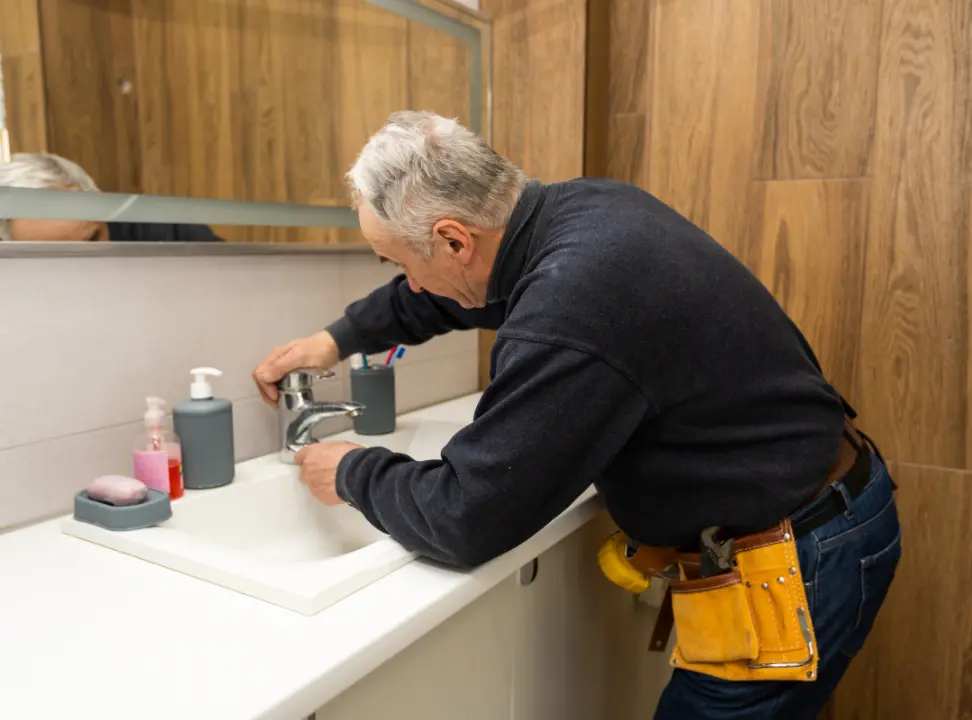
Find Where The Leak Starts
You might be looking at the faucet for leaks, but the real issue often hides inside. A leaky faucet usually starts from worn seals or a damaged washer. Sometimes mineral deposits build up and mess with water flow.
You check the faucet body first. You look for drips under the sink and around the faucet handle. You also check the sink drain area. Water can trick you and travel before it drops.
A compression faucet often leaks from a worn washer. A single-lever faucet usually leaks due to a faulty cartridge. A shower faucet can leak due to a bad valve seat or O-ring. You just need to locate the exact source before you fix anything.
Shut the Water Before Things Get Messy
Now, let’s not rush in. You always shut the water supply first. You either shut the valve under the sink or shut the whole house water supply if you cannot find the local valve.
You turn both hot and cold water valves off. Then you open the faucet to drain leftover water. This step stops pressure from building up.
You also place a towel in the sink. This helps catch small parts, such as screws or rings, if they slip from your hands. Trust me, one missing screw can slow you down a lot.
Gather Your Basic Tools Before You Start
Now, let’s talk about tools. You do not need a full plumbing supply store setup, but you do need the right basics.
You grab a flathead screwdriver, a wrench, and a pair of pliers. You also keep Teflon tape ready for sealing threads later.
You may also need:
- New washer
- O ring
- Replacement cartridge
- Towel for water drainage
- Small container for screws
A local hardware store usually stocks all these materials. You just make sure you buy the correct size before you start. You also keep your mindset ready. A loose screw or stubborn valve stem can test your patience.
Open Up That Faucet Step by Step
Alright, now we get into the hands-on part. You start by removing the faucet handles. You gently lift the cap and unscrew the handle using a screwdriver.
You loosen the screw and pull the handle off. You now access the valve stem or cartridge, depending on your faucet type.
If you deal with a compression faucet, you unscrew the valve stem. If you have a single-lever faucet, pull the cartridge straight out after loosening it.
If you pay attention to each small part, you may see a washer, an o-ring, or a ring inside the assembly. Keep everything in order so you can reassemble the faucet later without confusion.
Fix Those Worn-Out Parts Without Overthinking It
Now, when you look at the real faucet problem parts, a leaky faucet often comes from a worn washer or damaged O-ring. You replace these small parts with new ones.
You inspect the valve seat for scratches or mineral deposits. If you see buildup, you clean it gently. You remove any debris that blocks water flow.
You replace the washer and tighten it properly. You also check seals around the valve stem. If anything looks broken or stiff, you replace it.
You may also apply a small amount of Teflon tape on the threads if the connection feels loose. You keep everything clean and dry before you move forward.
This step makes or breaks the repair, so you take your time.
Putting It All Back Together and Testing It
Now you reassemble everything in reverse order. You push the cartridge or valve stem back into place. You tighten screws carefully but not too hard.
You reattach the faucet handle and cap. Then you turn the water supply back on slowly.
You check both hot and cold water flow. You watch for leaks around the faucet body and under the sink. You also listen closely for drips.
You test the pressure and temperature control. You run the faucet for a few minutes and double-check all connections.
If you still see leaks, you tighten the loose parts again. Sometimes a small adjustment solves the issue.
Let’s Talk About When You Should Call a Plumber
Not every leaky faucet repair ends with a quick fix. Sometimes the valve seat breaks or the faucet body cracks. Sometimes corrosion spreads inside the system.
When you reach that point, call a professional plumber instead of trying to do the repairs yourself. They handle complex faucet repair jobs, whole-house plumbing issues, and pressure problems. You save time and avoid damage when you bring in expert help at the right moment.
Tommie’s Plumbing Helps You Understand & Fix a Leaky Faucet
A leaky faucet might seem minor, but that constant drip can waste water and slowly wear down internal parts like the valve stem, washer, or cartridge. Most homeowners notice it first as a small annoyance that becomes harder to ignore over time.
Tommie’s Plumbing handles faucet repairs by identifying the exact cause of the leak. Whether it’s worn seals, mineral buildup, or damaged components, we provide proper repair or replacement when needed. If your faucet won’t stop dripping, don’t let it turn into wasted water every day. Contact us today, and let’s turn that drip into a done deal.