

Drain field replacement cost can vary widely because the work depends on what is failing, how much of the field needs attention, and what site conditions allow. If you are seeing wet ground, slow drains, or wastewater odors, this guide explains how a drainfield is evaluated, what can affect the scope, and how to prepare for a clear estimate. A site visit is needed to determine what is happening on your property.
Ask about an on-site evaluation
What does a drain field do?
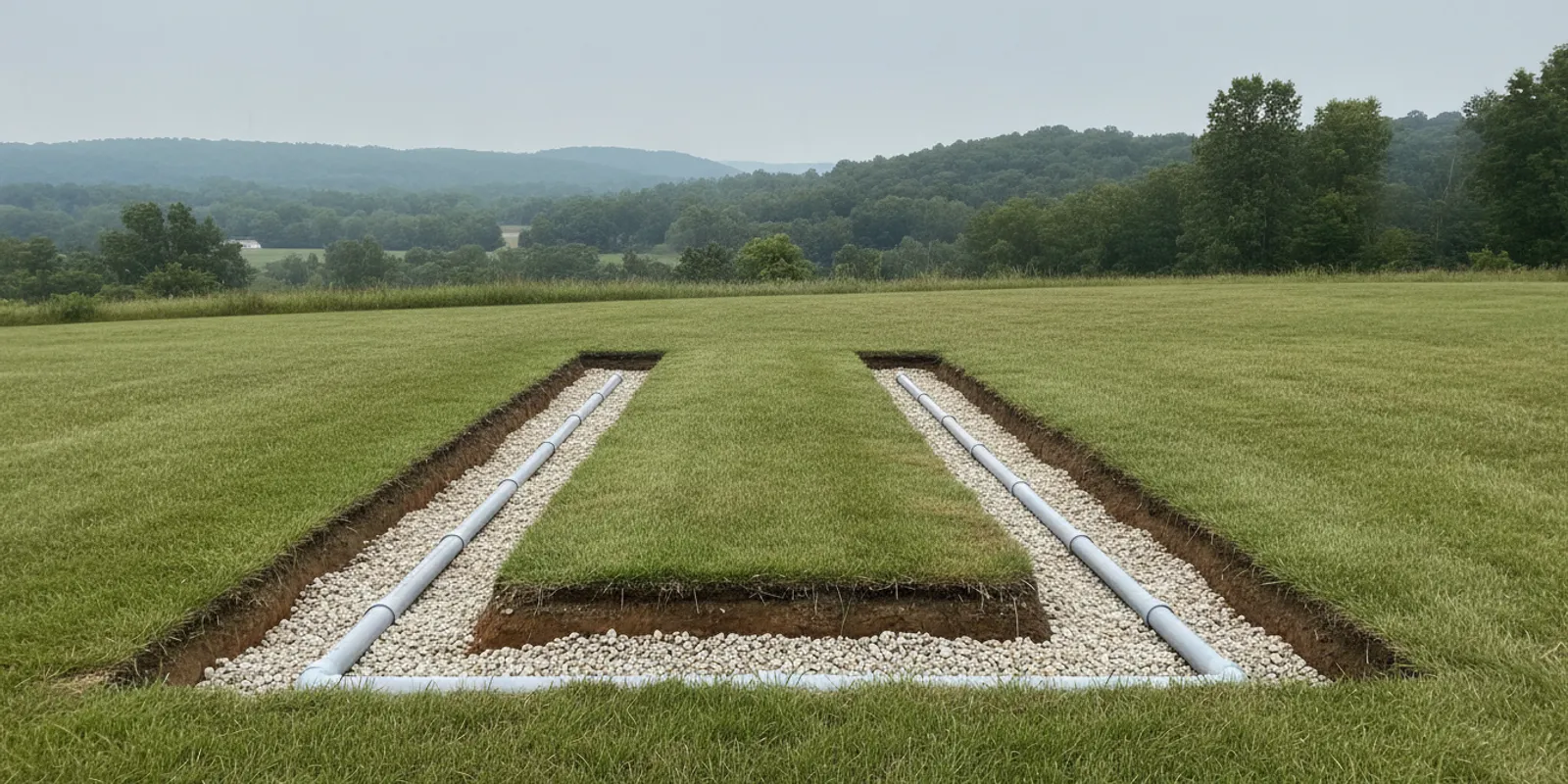
A septic drain field, also called a leach field or soil absorption field, receives wastewater that has already passed through a septic system’s tank. Its network of buried lines distributes the wastewater into suitable soil, where it can be absorbed and treated. The field is a working part of the overall system, not simply a set of pipes that can always be replaced in isolation.
When homeowners say “drain field,” they may mean the entire soil absorption area, one or more field lines, or the piping that carries wastewater from the tank toward that area. Those parts are related, but the repair required for a damaged connection can differ substantially from replacing a failed field. An evaluation helps identify which component is involved before anyone estimates the scope.
A drainfield issue can also resemble a problem elsewhere in the plumbing or septic system. A blockage, a damaged sewer line, an overloaded system, or another condition may cause symptoms that look similar from inside the house. The point is not to diagnose the field from one sign alone. The cause and the appropriate work have to be determined on site.
Why can drain field replacement cost vary?
There is no reliable single price that applies to every property. A responsible estimate begins with the actual site and the specific work proposed. Two homes with similar symptoms may need different solutions because the affected area, access, existing system layout, and condition of the soil are not the same.
How much of the system needs work?
The scope may range from addressing a limited damaged section to replacing a larger portion of the field. If the issue is in a pipe between system components rather than in the field itself, a full drainfield replacement may not be appropriate. Conversely, an isolated patch may not solve a broader failure. Ask the plumber to explain what evidence supports the proposed scope and which parts are included.
Clarify whether the estimate covers the field lines only, related piping, excavation and restoration, or other work identified during evaluation. The phrase “field replacement” can be used casually, so it is helpful to get a plain-language description of exactly what will be removed, repaired, or installed.
What is the access like?
Workers need a practical route to the affected area and enough room to carry out the work. Fences, narrow side yards, retaining features, steep grades, trees, landscaping, patios, driveways, and other obstacles can affect how a work area is reached and restored. The distance from access points to the field can matter as well.
Before the visit, point out gates, buried features you know about, and areas that are difficult to reach. Do not assume that a clear patch of lawn means the field is easy to access below ground. The evaluator can identify what needs to be considered and explain any uncertainty in the estimate.
How do soil and site conditions matter?
Drainfield work depends on conditions beneath the surface. Soil composition, drainage, slope, the amount of usable area, and the presence of water or other site constraints may affect what work is feasible. The condition may not be fully apparent from a surface inspection, and the appropriate evaluation can depend on what is found at the property.
Do not assume a solution from a neighbor’s property will fit yours. Nearby homes can have different layouts, soil conditions, system ages, and maintenance histories. A site-specific assessment is more useful than a generic online price range, especially when excavation or replacement is being considered.
What existing information is available?
System records, prior repair notes, maintenance history, and information about the original layout can help a plumber understand what is present. Records may be incomplete or unavailable, but bring what you have. Photos of past work, paperwork, and dates when symptoms began can help direct the evaluation.
If the system has already been serviced, list what was done and whether the symptoms changed afterward. That does not replace an inspection, but it can prevent important details from being overlooked. If you are unsure whether a previous repair involved the tank, connecting pipe, or field lines, say so rather than guessing.
What restoration or related work is included?
Excavation may disturb soil, turf, planting beds, or other parts of the yard. Ask what restoration is included in the proposal and what is outside its scope. Also ask whether any related plumbing work is included, such as correcting a damaged line that serves the field. A price is only meaningful when you understand which tasks, materials, labor, and cleanup it covers.
Conditions uncovered during digging can differ from what was visible beforehand. A clear proposal should explain how the company will communicate if the discovered condition changes the scope. Ask who will discuss changes with you and whether additional work will be paused for approval where practical.
What signs may point to a drainfield problem?
Possible warning signs include persistently wet or unusually soft ground over or near the field, wastewater odors outdoors, unusually lush patches of grass, slow drains, or wastewater backing up into plumbing fixtures. A combination of symptoms, their location, and whether they are ongoing can help the service professional investigate.
These clues do not prove that the drain field has failed. A slow drain inside the home, for example, can have a plumbing cause that has nothing to do with the field. Wet areas can also have more than one explanation. Avoid treating a symptom as a diagnosis or approving major excavation based only on a visual guess.
Pay attention to when symptoms occur and whether they affect one fixture or several. Note any recent changes in use, heavy rainfall, or work near the system, without assuming that one event caused the problem. If wastewater is backing up or surfacing, limit contact with it and arrange an evaluation rather than waiting for the condition to worsen.
How is a replacement decision evaluated?
A useful evaluation looks at the system and the reported symptoms together. The plumber may ask when the issue started, what fixtures are affected, whether the problem is intermittent, and what previous service has been performed. Be prepared to describe what you have observed accurately, even if you do not know the technical name for a component.
The service professional will need to determine the source of the trouble and the extent of any affected area. The inspection approach depends on the condition and the system layout. There is not one universal test or repair that is appropriate for every property, so ask the evaluator to explain what they checked and what the findings do and do not establish.
If replacement is proposed, ask why repair or another corrective step is not suitable. A good explanation should connect the observed condition to the recommended work. It should also distinguish confirmed findings from items that remain uncertain until work begins. If the issue appears to involve a sewer line rather than the field, Tommie’s sewer line repair information can help you understand that the two scopes are not interchangeable.
Local project requirements and approvals can depend on the property and the work. Do not rely on a general online article to determine what applies at your address. Ask the service professional what coordination or approvals may be needed for the proposed work and who is responsible for confirming them before work begins.
What should an estimate for drainfield work explain?
Rather than focusing on a number without context, review the proposal for a clear description of the work. An estimate should give you enough information to understand what is being addressed, what is included, and what could change. If a term or line item is unclear, request an explanation before you approve the work.
- Problem identified: What condition was observed, and what component is believed to be involved?
- Proposed scope: Which areas or lines will be repaired or replaced, and what work will not be done?
- Access and excavation: What area must be reached, and what site impacts are expected?
- Included tasks: Are removal, installation, related connections, cleanup, and restoration included or excluded?
- Uncertain conditions: What might change once the area is opened, and how will a scope change be explained?
- Timing and preparation: What should you do before work, and what access will be needed?
- Next steps: Who should you contact with questions, and what is the process for approving the work?
Ask for a written estimate that separates the proposed work from optional or conditional items where possible. This makes it easier to compare proposals on scope rather than comparing totals that may cover different tasks. If one proposal includes restoration and another excludes it, those are not directly equivalent even if the stated prices look far apart.
It is reasonable to ask what is based on a confirmed finding and what is an allowance or possibility. No estimate can account for every concealed condition with certainty. What matters is that the known work, potential changes, and approval process are explained before you make a decision.
How can you compare proposals fairly?
First, confirm that each proposal addresses the same diagnosed problem. If one company recommends a limited repair and another recommends replacing a larger portion, ask each to explain the evidence and the expected limits of its approach. A lower total does not necessarily mean a better fit if it omits essential work, and a broader proposal is not automatically justified simply because it covers more.
Compare the written scope line by line. Look for differences in excavation limits, materials, connections, disposal, cleanup, yard restoration, and the process for handling unknown conditions. Ask whether the estimate includes the same locations and whether one proposal assumes access or site conditions that another has not confirmed.
Also consider whether the person explaining the proposal has answered your questions plainly. You should understand what is recommended, why it is recommended, and what happens next. Tommie’s Plumbing describes plumbing repairs and sewer and septic work among its services; you can read about the company’s broader plumbing services and its company background when deciding whom to contact.
What can you do before the evaluation?
A few practical steps can make the visit more useful without disturbing the system yourself.
- Write down the symptoms. Note where you see wet ground or odors, when drains slow down, and whether one or multiple fixtures are affected.
- Gather records. Bring prior service paperwork, system diagrams, or other documents you have. Do not delay scheduling just because records are missing.
- Make access possible. Unlock gates and identify areas where a vehicle or work crew may need to pass. Point out features that could be damaged by access or excavation.
- Share relevant changes. Mention recent plumbing work, unusual system use, or prior backups, but distinguish what you observed from what you suspect.
- Prepare questions. Ask what was found, what alternatives exist, what the estimate includes, and how changes will be handled.
Avoid digging, driving over the field, or attempting to open system components as a way to investigate. Disturbing buried components can create risks or make the condition harder to assess. If you know where the field is, tell the service professional and keep unnecessary activity away from it until you receive guidance.
How can you reduce the chance of avoidable field stress?
Good habits cannot guarantee that a field will never need repair or replacement, but they can help avoid some forms of unnecessary strain. Use water thoughtfully, take care with what enters drains, and address plumbing issues when they arise rather than allowing an ongoing problem to go unchecked. Follow any care guidance that applies to your particular system.
Keep vehicles, heavy equipment, and new construction away from the field area unless a qualified professional has advised otherwise. Do not redirect roof runoff or other surface water toward the field. Avoid planting or removing trees and large shrubs over a system without considering their roots and the buried layout. If you do not know where the field lies, look for records or ask a service professional to help clarify its location.
These are general precautions, not a substitute for an evaluation when symptoms are present. If the system has recurring issues, ask what maintenance or monitoring is appropriate for the setup at your property. Avoid assuming that a measure intended for one septic system applies to all others.
When should you seek service promptly?
Do not ignore wastewater surfacing in the yard, a persistent sewage odor, or a backup inside the home. Keep people and pets away from wastewater, avoid touching it, and contact a plumbing professional to discuss the condition. If water is actively backing up, reduce water use in the home while you arrange help, since continued use may add to the immediate problem.
For homeowners in Greeneville, Johnson City, Kingsport, Bristol, Elizabethton, and other communities across Northeast Tennessee, the details of a property still determine the appropriate scope. Tommie’s serves the Tri-Cities and Northeast Tennessee, and its service-area information can help you check the communities it lists. Do not assume that a web page replaces confirmation that a particular address can be served.
Frequently asked questions
Can a drainfield be repaired instead of replaced?
Sometimes a problem may be limited to a line or connection, while other conditions may call for a larger scope. The right option depends on what an on-site evaluation finds. Ask the plumber to explain why the recommended repair or replacement addresses the cause rather than only the visible symptom.
Can I get a reliable drain field replacement price without a site visit?
A general discussion can explain common cost factors, but it cannot confirm the condition, layout, access, or extent of work at your property. An estimate based on an actual evaluation is more useful because it can describe the specific tasks included and identify uncertainties.
Does a wet patch always mean the field has failed?
No. Wet ground can have different causes, and its presence alone does not establish a drainfield failure. Note where and when it appears, keep people and pets away from any wastewater, and have a qualified professional investigate if the condition persists or is accompanied by other warning signs.
What should I bring to a septic drainfield appointment?
Bring any service records, system diagrams, or prior estimates you have, along with notes about symptoms and when they started. Make access to the property practical, point out areas of concern, and prepare questions about the diagnosis, proposed scope, and what is included in the estimate.
Make a decision with a clear scope
Drain field replacement cost is best understood after the problem and the work required have been evaluated at the property. A clear explanation of the findings, scope, access, restoration, and possible uncertainties helps you compare options without relying on a generic price or guess. If you have septic or plumbing concerns in Northeast Tennessee, contact Tommie’s Plumbing to discuss the next step; if you gotta leak, let Tommie’s take a peek.