A shower that will not hold a steady temperature, drips after the handle is turned off, or is difficult to control may have a worn cartridge or another valve problem. Shower valve replacement is one possible solution, but the right next step depends on what is failing, whether the valve body is sound, and how the plumbing can be reached. This guide explains what homeowners can look for and what a plumber may need to assess before recommending repair or replacement.
Contact Tommie’s Plumbing about your shower valve
What does a shower valve control?
The shower valve is the plumbing component behind the handle or handles. It directs water into the shower and, depending on its design, mixes hot and cold water and helps regulate the temperature. The visible handle and trim are not the valve itself. A shower may also have a cartridge or other internal parts that move when you turn the handle. Those parts can wear even when the valve body and the surrounding pipe connections remain in usable condition.
It helps to distinguish three things that are often described together:
- The trim: The visible handle, plate, and decorative parts attached to the wall. A worn or dated trim does not automatically mean the valve needs replacement.
- The cartridge or internal mechanism: The part that responds to the handle and controls water flow or mixing in many common valve designs. It may be serviceable separately, but the correct part depends on the valve make and model.
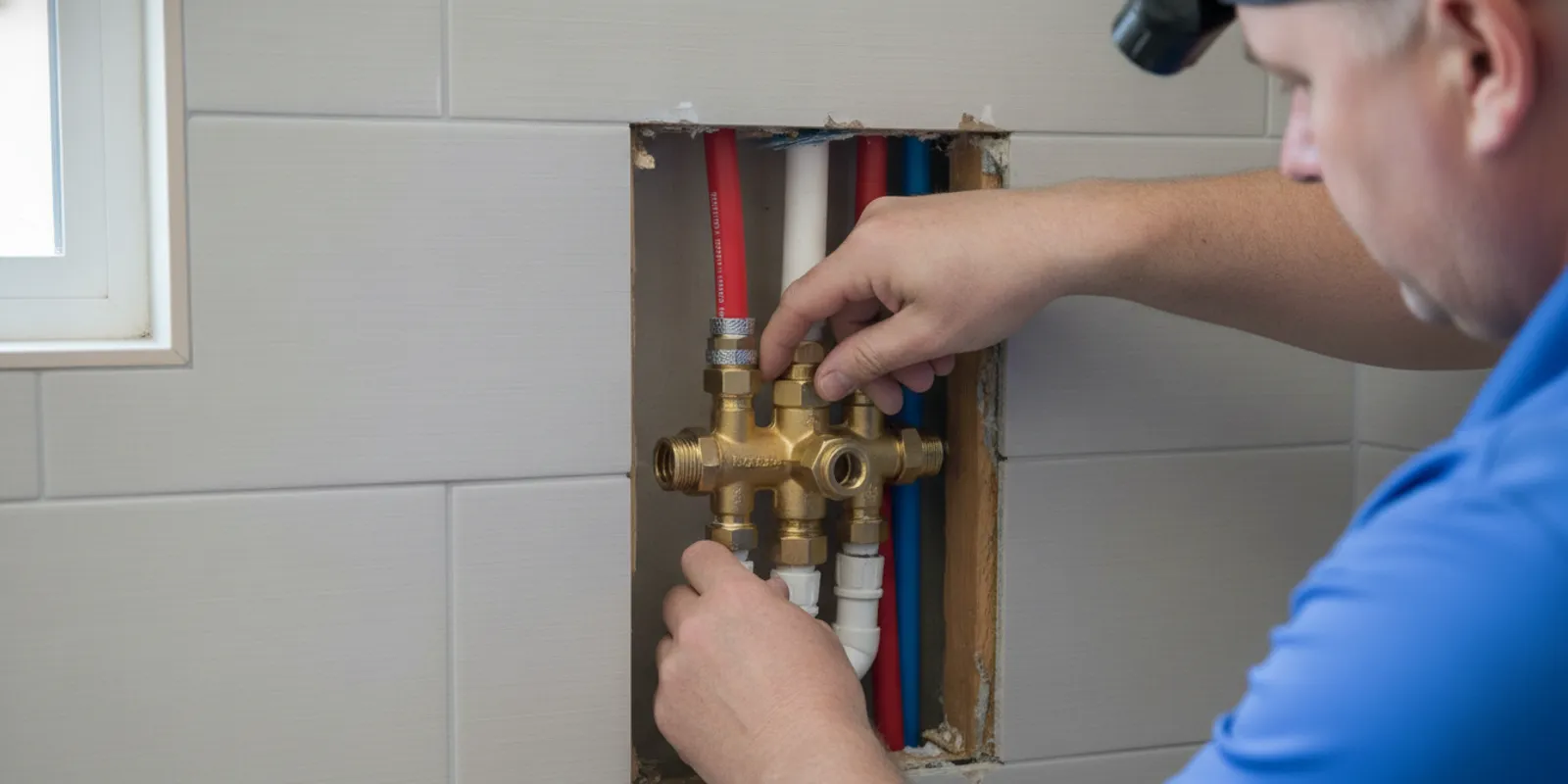
- The valve body and connections: The component secured behind the finished wall and connected to the hot- and cold-water lines, plus the outlet piping. Damage, corrosion, a leak, or incompatibility can make a larger repair necessary.
These parts are not interchangeable across every shower. Two valves can look similar from the bathroom side but use different cartridges or installation methods. That is why identifying the existing valve is an important part of diagnosing a problem, rather than choosing a replacement based only on the handle’s appearance.
Which symptoms may point to a valve problem?
A change in how the shower operates can be a clue, but no single symptom proves that the valve body has failed. The cause may be an internal valve part, a supply issue, a showerhead restriction, a diverter, or another plumbing condition. Note what happens and when it happens. That information can help a plumber narrow down the problem.
- The shower drips after you shut it off. A worn internal seal or cartridge can allow water to pass when the valve should be closed. If the drip continues, do not assume replacing the visible handle will resolve it.
- Temperature is difficult to control. A handle that has become stiff, turns unevenly, or gives a sudden change from cool to hot may indicate a worn or damaged internal mechanism. Changes in the home’s hot-water supply or pressure can also affect the experience.
- The handle turns but water flow does not respond normally. A loose, damaged, or slipping handle connection may be involved, but problems farther inside the valve can produce similar behavior.
- Water continues to come from the tub spout or showerhead unexpectedly. In a tub-and-shower setup, the diverter may be involved. The diverter and the main mixing valve have different jobs, so the symptom needs to be identified before ordering parts.
- There is moisture near the shower controls or on the other side of the wall. Water appearing outside the shower enclosure can signal a leak. It could come from a valve connection, a nearby pipe, the shower enclosure, or another source, and should not be diagnosed by appearance alone.
- The problem returns after a repair. A replacement cartridge that does not match the valve, debris or damage in the valve, or another underlying issue can cause trouble to continue. Repeated symptoms are a reason to reassess the full assembly.
Pay attention to whether the issue is limited to one shower or also affects sinks and other fixtures. A problem at a single shower may point toward that fixture; a broader change can suggest a supply or water-heating issue that needs a different evaluation. Tommie’s Plumbing handles plumbing repairs and fixture work across Northeast Tennessee; its plumbing services page provides an overview of the company’s work.
When might a repair be enough?
A repair may be appropriate when the plumber can identify a serviceable part that has failed and the valve body and connections remain in suitable condition. For some valve designs, replacing a cartridge, seal, or handle component can restore normal operation without opening more of the wall than necessary. The feasibility depends on the valve’s design, condition, and access.
Before a part is selected, a plumber may need to identify the manufacturer and valve model. Sometimes the name or model is visible on the trim or part; sometimes the parts must be inspected. A compatible replacement should match the installed valve. Forcing a similar-looking part into an assembly can damage components or fail to correct the symptom.
A repair is less straightforward if the valve has been discontinued, parts are unavailable, the body is damaged, or previous work has altered the installation. Mineral deposits or corrosion can also make removal difficult. These conditions can turn what looks like a simple cartridge swap into a more involved assessment. The practical decision is not just whether a small part can be changed, but whether that work is likely to address the cause reliably.
If the problem is only with the decorative handle or trim, replacement of those visible pieces may be a separate option. However, trim compatibility varies, and some trim kits work only with a particular valve. Have the installed components identified before buying parts. A new finish alone will not correct a leak or temperature-control issue inside the valve.
When does shower valve replacement make more sense?
Replacing the valve assembly may be considered when the valve body is cracked, badly corroded, leaking at a connection, or no longer suitable for a reliable repair. It may also be considered when the correct internal parts are not available or the valve has been altered in a way that makes repair impractical. A plumber should explain what was found and why replacing the assembly is being recommended.
Replacement may also come up as part of a larger bathroom project. If the shower wall is already being opened for other work, the installation may offer a different opportunity to reach the valve and piping. That does not mean a working valve must automatically be replaced; its condition and the scope of the renovation still matter.
There is no universal age at which every shower valve should be replaced. Use, water conditions, installation quality, maintenance history, and the availability of compatible parts all affect how a particular valve performs. A valve’s age can be useful context, but it should not take the place of inspecting the symptoms and the accessible plumbing.
Replacement is also not a guaranteed fix for every shower complaint. If the cause is a water-heater issue, restricted showerhead, supply-pressure change, or separate diverter problem, changing the main valve may not solve it. The purpose of an evaluation is to isolate the source before choosing the work.
How does access behind the shower affect the work?
The valve sits inside the wall, so access is a central part of planning a replacement. In some bathrooms, the valve can be reached through an access panel from an adjacent closet or room. In others, the plumber may need to open the finished shower wall or the wall on the opposite side. The best access point depends on the layout, materials, nearby pipes, and the valve’s location.
Opening tile or another finished surface can add restoration work beyond the plumbing itself. Ask which area may need to be opened, whether access can be made from the other side, and what parts of the work are included in the recommendation. The plumber can explain the plumbing scope, but wall, tile, or finish restoration may involve separate work depending on the project.
A visible access panel is not always present, and making one is not automatically the right choice. The opening must provide useful access without creating a new problem in a wet area or compromising a finished surface. A plumber will consider how the valve is secured and connected, not just whether a hand can fit through a small opening.
Conditions inside a wall can differ from what is visible at the handle. A replacement may expose aging connections, an unusual pipe arrangement, or prior modifications. The work plan can change if the concealed plumbing is not in the condition expected. It is reasonable to ask how the plumber will explain any additional findings before proceeding.
How can the shower’s design affect replacement?
Different shower setups place different demands on the valve. A shower-only fixture, a tub-and-shower combination, and a multi-outlet shower may use different valve arrangements. In a tub-and-shower setup, for example, the control valve manages mixed water while a separate diverter directs water toward the tub spout or showerhead. A symptom at one outlet does not necessarily mean the main valve is the part that needs replacement.
Some valves are designed to help limit sudden temperature changes when water pressure shifts elsewhere in the home. Other designs use different temperature-control mechanisms. The visible trim alone may not tell you which type is installed, and the available replacement options can depend on the original valve body. Do not assume that a new valve with a similar handle will provide the same functions or fit the existing plumbing.
Shower controls may also have a temperature stop or limit adjustment. This feature can affect how far the handle turns toward hot water, but it should not be treated as a fix for every temperature complaint. Incorrect adjustment may affect comfort or safety, and symptoms may instead reflect a worn part or a change in the hot-water supply. Have the condition assessed rather than making repeated adjustments to concealed or unfamiliar components.
Renovations can introduce another compatibility question. If you want a different style or control arrangement, the new trim and valve must be considered together with the plumbing behind the wall. A change in valve type or outlet configuration may require alterations to connections or access. Share what you want the shower to do, such as operate a tub spout and showerhead or use more than one outlet, so the plumber can evaluate the existing setup before recommending parts.
What happens during a professional assessment?
A useful assessment begins with the symptoms and how the shower is used. The plumber may ask when the issue started, whether it is constant or intermittent, whether other fixtures are affected, and whether the shower has been repaired before. Let them know about any leak or damp area near the shower, including when and where it appears.
The plumber can then examine the handle and trim, check how the valve responds, and look for signs of leakage or damage in accessible areas. Depending on the symptom, they may need to remove trim or inspect an accessible connection. The exact steps depend on the valve design and the nature of the problem; no single test applies to every installation.
If a repair seems possible, ask what part is believed to have failed and how its compatibility will be confirmed. If replacement is recommended, ask whether the valve body or a connection is damaged, what access is expected, and whether the proposed replacement will work with the existing shower arrangement. A clear explanation should connect the observed condition to the suggested work.
Tommie’s Plumbing describes its work as plumbing repairs and installations, including fixture-related services. Homeowners can learn more about the company on its about page or review its faucet repair information for related fixture concerns. A shower valve is not the same component as a sink faucet, but both can involve identifying the right parts and tracing symptoms before repair.
What should you ask before approving a replacement?
Before work begins, make sure you understand the proposed scope. The details matter because a valve replacement can involve more than swapping the visible handle, and access can affect the work in a finished bathroom. Consider asking:
- What condition did you find, and which part is causing the symptom?
- Could a repair to an internal part address the problem, or is the valve body itself damaged?
- How will you confirm that the replacement valve or cartridge is compatible with the existing installation?
- Where will you access the valve, and might a finished wall need to be opened?
- Does the recommendation include work on surrounding pipes or connections if they are found to be damaged?
- What parts of the job involve plumbing, and what finish or tile restoration may need to be arranged separately?
- How will the shower be checked after the work to confirm that the controls operate and there are no visible leaks?
These questions are not a way to second-guess every technical decision. They help you understand what is being repaired or replaced, what the access plan involves, and what remains outside the plumbing scope. If the assessment uncovers a different condition once the wall is open, ask for an explanation of the new finding and the recommended next step.
How can you prepare for the visit?
A few observations can make the conversation more focused. Write down when the symptom first appeared and whether it happens every time or only under certain conditions. Note whether it occurs at the start of a shower, after the water has been running, or after someone uses another fixture. These details do not identify the cause by themselves, but they can help the plumber reproduce the issue and decide what to inspect.
If it is safe to do so, take a photo of visible moisture or the shower controls before wiping the area dry. You can also note which fixtures are affected and whether the shower has a tub spout, more than one shower outlet, or a separate handheld sprayer. Do not remove the trim or take apart the valve to find a model number if you are not familiar with the assembly.
Gather any information you already have about earlier repairs, replacement parts, or bathroom renovations. A receipt, product paperwork, or a past description of the work may help identify the valve. It is fine if you do not know the make or model; describing what you see and the symptoms is still useful.
Before the appointment, clear the area around the shower controls and make the opposite side of the wall accessible if there is a closet or access panel there. This can help the plumber inspect the installation without moving unrelated items. You do not need to open a wall or remove fixtures in advance. Let the plumber determine what access is appropriate.
What should you expect after the plumbing work?
Once the repair or replacement is complete, ask the plumber to explain what was changed and how the shower was checked. Depending on the work, the check may include operating the handle through its normal range, confirming that water flow responds as expected, and looking for visible leakage around accessible connections. The exact verification depends on the valve and the scope of the repair.
Ask whether any trim, temperature setting, or other control needs special handling, and whether the shower should remain unused for a period because of related work. If wall or finish repairs are still needed, confirm what should remain accessible and who is responsible for that portion. Keep the details of the work and any replacement-part information with your home maintenance records.
If the original symptom returns, note when it happens and contact the plumbing professional who completed the work. Do not repeatedly force the handle or disassemble the valve to investigate. A clear description of what changed after the repair helps distinguish a recurring valve concern from a separate issue elsewhere in the shower or water supply.
What can you safely do while waiting for an assessment?
If you see active water leaking, avoid using the affected shower until the source is assessed. If water is spreading or creating a risk of damage, use an accessible fixture shutoff if you know which one controls it. Do not force a stuck valve or handle, and do not remove parts while water is on. If you are unsure how to isolate the supply safely, leave the assembly alone and seek plumbing help.
Keep the area around the shower dry and note whether moisture returns after the shower has not been used. If water is appearing on the other side of the wall, check for visible changes without cutting into the wall or disturbing electrical equipment. A damp mark can have more than one cause, so document where and when you notice it rather than assuming it comes from the valve.
For a temperature-control complaint without an active leak, note what happens when the handle is moved and whether other hot-water fixtures are behaving normally. Avoid repeatedly turning a stiff or slipping handle, since force can make a damaged component worse. Do not try to adjust concealed plumbing or disassemble a valve without knowing its design and how to shut off the water.
When arranging an appointment, describe the shower type, the symptom, any prior repair, and whether you have noticed water outside the enclosure. Tommie’s Plumbing serves homeowners in the Tri-Cities and throughout Northeast Tennessee; you can check the company’s service-area information and request a service appointment.
Request a plumbing appointment
Frequently asked questions
Can I replace a shower valve without opening the wall?
Sometimes a valve or cartridge can be serviced through the existing opening behind the handle, especially when the work does not require replacing the valve body. Replacing the body may require more access, depending on the installation and whether an access panel is available from another room. A plumber can assess the layout and explain the likely access before work starts.
Does a dripping shower always need a new valve?
No. A dripping shower can result from a worn cartridge, seal, or another repairable internal part. The valve body may still be sound. Inspection is needed to identify the cause and determine whether the right replacement part is available and compatible.
Can a new handle fix a shower that is hard to control?
A damaged or loose handle can cause a control problem, but the cartridge or valve mechanism may be responsible instead. Replacing only the handle will not resolve an internal failure. The visible handle and valve should be checked together before parts are selected.
Will replacing the valve improve water pressure?
Not necessarily. Low flow at one shower can involve a clogged showerhead, a valve restriction, or another local issue. If several fixtures have changed, a broader supply or plumbing condition may be involved. The source should be identified before replacing the valve as a pressure solution.
What is the next step?
Shower valve replacement can restore dependable control when the valve assembly itself is damaged or cannot be repaired appropriately. In other cases, a compatible cartridge or another targeted repair may be enough. Describe the symptoms, ask what inspection found, and make sure you understand the access and work plan before deciding how to proceed.
If your shower is leaking or difficult to control, Tommie’s Plumbing can evaluate the plumbing issue and explain the available next steps. For homeowners in the Tri-Cities and Northeast Tennessee, a clear assessment is the place to start.