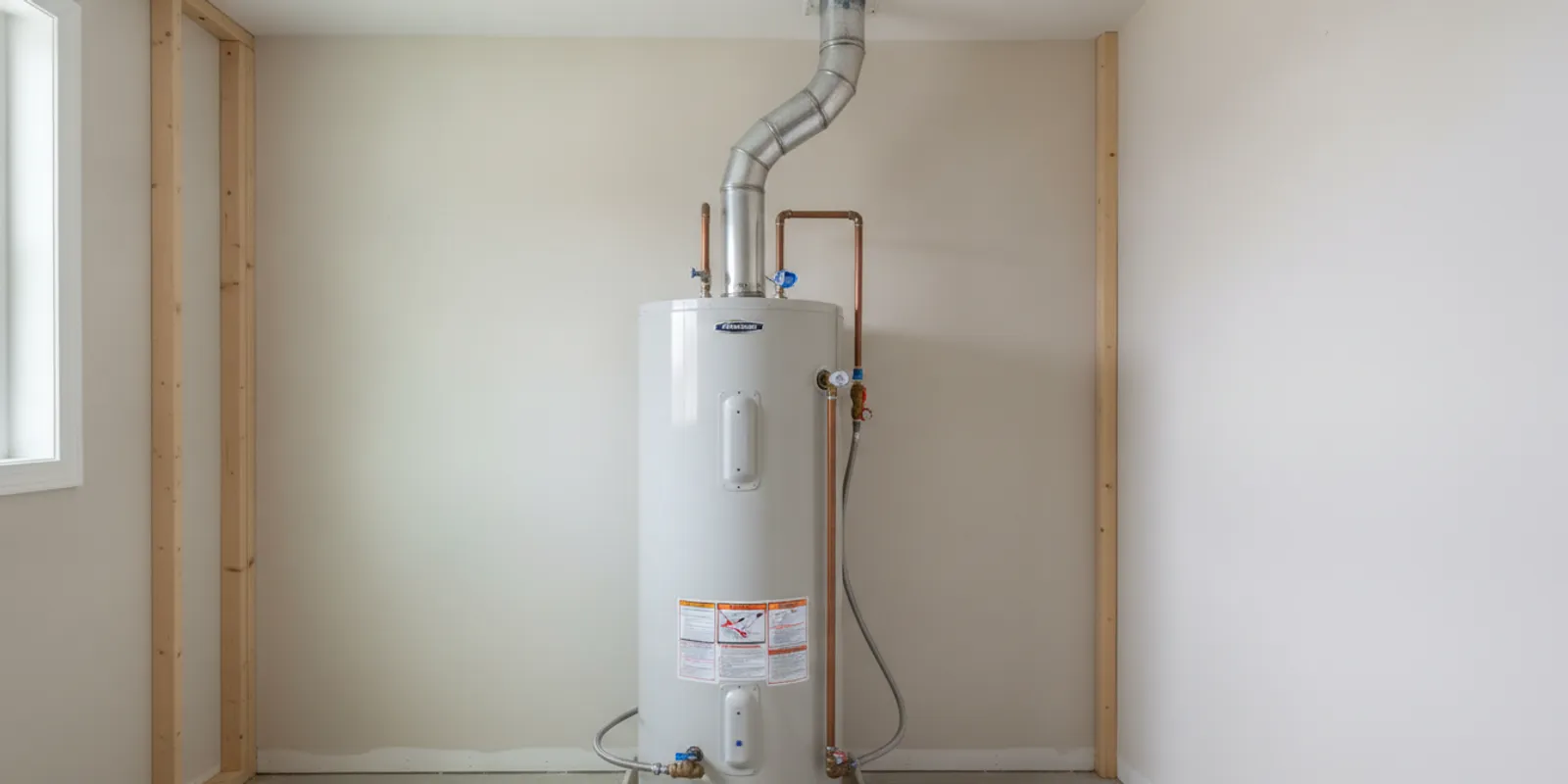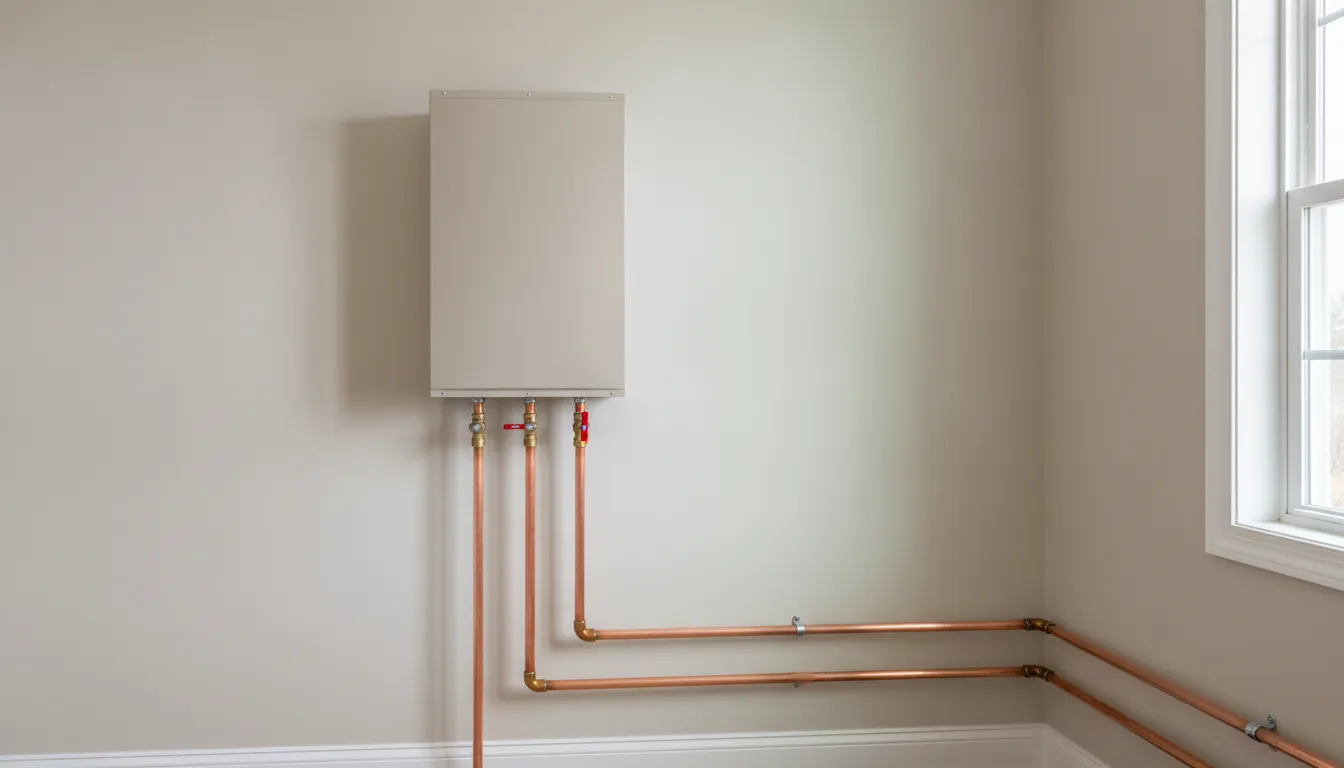
Tankless water heater descaling is a maintenance process that helps remove mineral deposits from the heat exchanger and water passages of some units. If your hot water has become inconsistent, the heater displays an error, or the unit has gone longer than its manufacturer-recommended maintenance interval, it may be time to ask whether descaling is appropriate. The right schedule depends on the equipment, water conditions, and manufacturer instructions, so there is no single interval that fits every home.
Contact Tommie’s Plumbing to discuss your tankless water heater
What does tankless water heater descaling do?
A tankless heater warms water as it passes through the unit rather than storing a tankful of hot water. Inside, water travels through a heat exchanger, where heat transfers into the flowing water. Minerals naturally present in water can gradually collect on surfaces and in narrow passages. The deposits are often called scale.
Descaling is intended to loosen and flush out those deposits using a cleaning method and solution compatible with the heater. The goal is to help maintain water flow and heat transfer through the equipment. It is not the same as replacing a filter, cleaning an air intake, repairing a leak, or fixing an ignition problem. A technician should identify what the unit needs rather than assuming every hot-water complaint is caused by scale.
Descaling is also not a guarantee that a heater will perform like new or that it will correct an unrelated fault. A unit with a failed component, a blocked vent, a water-supply issue, or another problem may need a different repair. The model’s instructions and the observed condition of the system help determine the appropriate next step.
Why can mineral scale develop?
Water contains dissolved minerals. When water is heated, some minerals can leave deposits on internal surfaces. The amount and rate of buildup vary with the water supply, how the heater is used, the system’s design, and its maintenance history. Homes do not all have the same water conditions, and a neighbor’s service schedule may not be right for your equipment.
Scale matters because deposits can interfere with the exchange of heat or reduce the space available for water to move through a passage. Depending on the unit and severity, that may contribute to reduced performance or operating issues. However, these effects are not unique proof of scale. Similar symptoms can arise from other faults, so the heater should be assessed as a whole.
Some units have maintenance requirements that include flushing or descaling at specified intervals. Consult the manual for your exact model, and keep records of prior work if available. If the documentation is missing, the model and serial information on the equipment can help a plumber identify the applicable guidance.
What signs might make descaling worth discussing?
Pay attention to changes in hot-water performance and the heater’s indicators. A change is a reason to investigate, not a diagnosis by itself. Useful observations include:
- Hot water fluctuates in temperature during ordinary use.
- The time needed to get hot water seems different than it used to be.
- The unit shows an error code or warning light.
- The heater seems to be operating differently or makes an unfamiliar sound.
- Maintenance has not been completed within the interval specified for the unit, or the maintenance history is unknown.
- More than one fixture has a hot-water issue, suggesting it may be useful to check the heater or shared plumbing rather than a single faucet.
Record what you notice, including when the problem started, whether it affects one or several fixtures, and any error code displayed. If the issue occurs only at one faucet or shower, the fixture or its supply may be involved rather than the water heater. If hot water stops altogether, note whether the heater has power or a visible alert, but do not remove covers or attempt electrical or gas repairs.
A leak, burning odor, visible damage, or another condition that seems unsafe deserves prompt attention. Follow the manufacturer’s safety instructions and contact a qualified professional. Do not continue operating equipment if its instructions say to stop under the condition you observe.
How often should a tankless heater be descaled?
Use the maintenance schedule for your specific model as the starting point. Manufacturers may specify inspections or flushing intervals, and water conditions can affect how often maintenance is appropriate. A generic schedule found online cannot account for every heater, household, or local water supply.
When speaking with a plumber, share the make and model if you can find it, the approximate installation date, and any previous service records. Mention whether the home has a water treatment system, if known, and describe any recent changes in performance. These details help the plumber consider the equipment and maintenance history without assuming the cause.
If you have no records, that does not mean you should guess at a schedule or attempt a procedure to catch up. Ask the professional to review the unit’s requirements and condition, then establish a maintenance plan that fits the manufacturer’s guidance. Keep the written notes with the manual or household records so the next inspection has useful context.
What happens during a professional descaling visit?
The work depends on the heater’s design and the manufacturer’s instructions. A plumber will generally identify the equipment, review the reported symptoms and service history, and assess whether descaling is an appropriate step. The technician may also look for other visible concerns that could affect operation. Ask what the inspection includes before the work begins.
For a unit that is suitable for service, the professional follows the model-specific procedure. This commonly involves isolating the heater from the home’s water supply, connecting appropriate service equipment at the designated connections, circulating an approved cleaning solution through the relevant passages, and flushing the system afterward. The exact process, materials, time, and required steps vary by model. Do not assume every heater has identical service valves or connections.
After the procedure, the technician should return the system to operation according to the equipment instructions and check for proper operation and leaks. Ask what was found, whether any other issue needs attention, and when the next maintenance should be considered. If the original symptom remains, the heater may need additional diagnosis; another descaling cycle should not be assumed to solve it.
Ask whether the proposed cleaning product and process are approved for your unit. Improper chemicals, excessive pressure, incorrect isolation, or incomplete flushing can create problems. A professional should be able to explain the planned work in plain language and identify any limitations or follow-up recommendations.
Can you descale a tankless water heater yourself?
Some homeowners consider doing the work themselves, but the procedure is not simply pouring a cleaner into the heater. It may require the correct service connections, pump, hoses, compatible solution, safe isolation of the water and energy sources, and careful restoration of the system. The required steps differ by model, and mistakes can cause leaks, equipment damage, or unsafe operation.
Start by reading the manual for the exact heater. If the manufacturer permits owner-performed maintenance, follow its instructions exactly and use only materials it approves. If the manual is unavailable, the unit’s setup is unfamiliar, there is a leak or error, or you are uncertain how to isolate and restore the equipment, leave the work to a qualified plumber. Never remove equipment covers or handle gas or electrical components unless the manufacturer’s directions specifically authorize the task and you are qualified to do it.
Routine observations are a safer way to help maintain the system. Keep the area around the heater clear as the manual requires, look for visible signs of leakage without opening the unit, and note warning codes. Follow instructions for any user-accessible filter, if present, rather than improvising. These observations do not replace the manufacturer’s maintenance procedure or a professional diagnosis.
How is descaling different from other tankless heater maintenance?
“Maintenance” can refer to several checks or tasks, and not every task addresses mineral scale. A unit may have separate instructions for air intake, venting, a water filter, condensate drainage, or other components. What applies depends on the heater type and installation. Descaling focuses on deposits inside water passages and the heat exchanger, while other maintenance addresses different parts of the system.
Here is a general comparison. It is not a substitute for the manual or an assessment of your specific heater.
- Descaling: A model-appropriate process intended to remove mineral deposits from water passages.
- Filter attention: Cleaning or replacing a filter only when the equipment has one and the manufacturer specifies the task.
- Vent or air-intake inspection: Checking the relevant openings and connections according to the unit’s instructions; this is not a water-side cleaning task.
- Fault diagnosis: Investigating error codes, ignition issues, leaks, or irregular temperatures to identify the cause before choosing a repair.
Do not treat a descaling service as a complete inspection of every part of a plumbing system. Likewise, a general plumbing repair does not necessarily include the manufacturer’s tankless maintenance procedure. Ask for a clear description of what is included and what is not.
What should you ask before approving service?
A useful service conversation explains the problem, the proposed work, and the estimate before you authorize a repair. Tommie’s Plumbing describes on-site estimates with Good / Better / Best options in its frequently asked questions. The exact options available depend on the situation. Consider asking:
- What observations suggest the heater needs descaling?
- Could another issue cause the symptoms I described?
- What procedure and cleaning solution are appropriate for my model?
- What work is included in the estimate, and what would be considered additional?
- Will you check operation and visible connections after the work?
- What should I expect if the symptom continues afterward?
- What maintenance interval does the manufacturer recommend for this unit?
Share the make and model, any displayed code, a description of the symptom, and prior service information. If you are unsure where to find the model label, do not remove a panel to search for it. A clear picture of an accessible label may be useful if the service team asks for it.
When an estimate is provided, take time to understand the proposed scope. An estimate should distinguish the maintenance being discussed from a repair that may be needed for a separate issue. If the technician finds an additional concern, ask for an explanation and revised scope before proceeding.
How can you prepare for a service appointment?
A few simple details can make the conversation more useful. Before requesting help, write down when the symptom began and whether it happens every time or only under certain conditions. Note which fixtures are affected and whether other household members have noticed a change. If an error code appears, copy it exactly rather than relying on memory.
Find the model information only if it is safely accessible. Gather any manual, installation paperwork, or receipts for prior maintenance. You do not need to diagnose the heater yourself. The point is to provide accurate observations that can help the plumber decide what to inspect.
Keep access to the heater clear, and mention any known leak or access limitation when arranging the visit. Do not move gas appliances, disconnect pipes, or take apart the heater in preparation. If you have questions about what to make accessible, ask when scheduling.
Tommie’s Plumbing provides plumbing repairs and water-heater services for homeowners in Northeast Tennessee. You can learn more about tankless water heater service, review the company’s plumbing services, or check its Northeast Tennessee service areas. The company describes more than 30 years of plumbing trade experience and a plumbing-focused business.
How can you tell whether the issue is at one fixture or the heater?
Comparing more than one hot-water outlet can help you describe the problem, although it cannot establish the cause. If the same temperature change occurs at several fixtures, the heater or a shared supply condition may deserve attention. If only one sink or shower is affected while other hot-water outlets work as expected, the issue may be closer to that fixture. A plumber can check both possibilities and avoid treating a single symptom as proof of a heater problem.
Notice whether the issue occurs with one person using hot water or when several fixtures operate at once. A change under heavier household demand can have several explanations, including the unit’s capacity, flow conditions, or a fault. Do not try to force the heater to run outside the settings in its instructions. Record the circumstances and tell the technician what you observed.
Temperature changes can also be affected by the fixture, mixing valve, or plumbing layout. The distance between the heater and a faucet may influence how long water takes to arrive, so a wait at one remote tap does not by itself indicate scale. These distinctions are useful clues for diagnosis, not a reason to delay service if there are warning codes, leaks, or other concerns.
What records are useful for ongoing maintenance?
A simple record can prevent guesswork later. Keep the heater’s model information, installation paperwork, manual, and service notes together. After maintenance, write down the date, what was performed, whether the technician identified any concerns, and the next interval or follow-up recommended. If a problem returns, compare the new symptom with the earlier notes and share the sequence with the plumber.
It is helpful to record changes without trying to interpret them. For example, note that two showers had fluctuating temperatures on a particular evening, rather than deciding that the heat exchanger is scaled. Include any error code exactly as shown. This gives the person inspecting the unit a clearer starting point and reduces the chance that important details get lost during a service request.
If the heater is replaced in the future, pass along the maintenance history where possible. A new unit may have different instructions, connections, or operating settings, so do not automatically apply an old service schedule to replacement equipment. Read the documentation for the installed model and ask the installer to explain any owner maintenance that is appropriate.
What should you avoid doing while waiting for service?
Do not keep resetting a heater repeatedly to clear a warning without understanding what the warning means. Follow the manual’s instructions for an error and share the code with the service provider. Repeated resets may hide useful information or fail to address the reason the unit stopped operating.
Avoid pouring household vinegar, descaling chemicals, or other products into the unit without confirming that the manufacturer permits the product and procedure. The right process depends on the equipment. Do not improvise hoses or connect a pump to an unsuitable point. Incorrect chemical use or an incomplete flush can leave residue or damage components.
Do not remove the heater’s cover to inspect internal parts, and do not adjust gas, electrical, or combustion settings. If the heater is making a sound you have not heard before, note when it occurs and describe it rather than opening the cabinet. If you notice water on the floor, keep clear of electrical hazards and follow the unit’s emergency directions while arranging qualified help.
How should you think about the estimate?
The price and scope of a service visit depend on the unit, access, the work required, and whether diagnosis reveals another issue. There is no reliable universal cost that applies to every tankless heater. An estimate should be based on the particular equipment and the actual work proposed, not only on a broad label such as “flush” or “maintenance.”
Ask whether the estimate covers evaluation, the descaling procedure, and checks after service, and whether any parts or additional repairs are excluded. If a separate issue is found, ask the plumber to explain why it matters and what options are available. You can then decide whether to approve the additional work. Do not feel that you must authorize an unfamiliar repair without understanding its purpose and scope.
Keep estimates and service records with your maintenance notes. When comparing proposals, compare the described work and assumptions, not just the final number. A lower figure may cover a different scope, while a higher figure may include diagnosis or steps that another proposal excludes. Ask for clarification whenever you cannot tell what is included.
When should you contact a plumber?
Contact a plumber when the unit repeatedly shows an error, hot-water performance changes, maintenance is overdue or undocumented, or you are uncertain how to follow the manufacturer’s procedure. A professional can assess whether descaling is relevant or whether a different issue needs attention. If you see a leak or suspect unsafe operation, follow the unit’s safety instructions and seek help promptly.
Tommie’s Plumbing works on water heaters, tankless heaters, plumbing repairs, repipes, and other plumbing projects. To request service, use the appointment request page or send a question through the contact page. For background about the company, see about Tommie’s Plumbing.
Learn more about tankless water heater service
Descaling may be worthwhile when the unit’s maintenance guidance or observed condition supports it, but symptoms alone do not confirm scale. Check the manual, note what you observe, and ask a plumber to explain the appropriate next step for your heater.