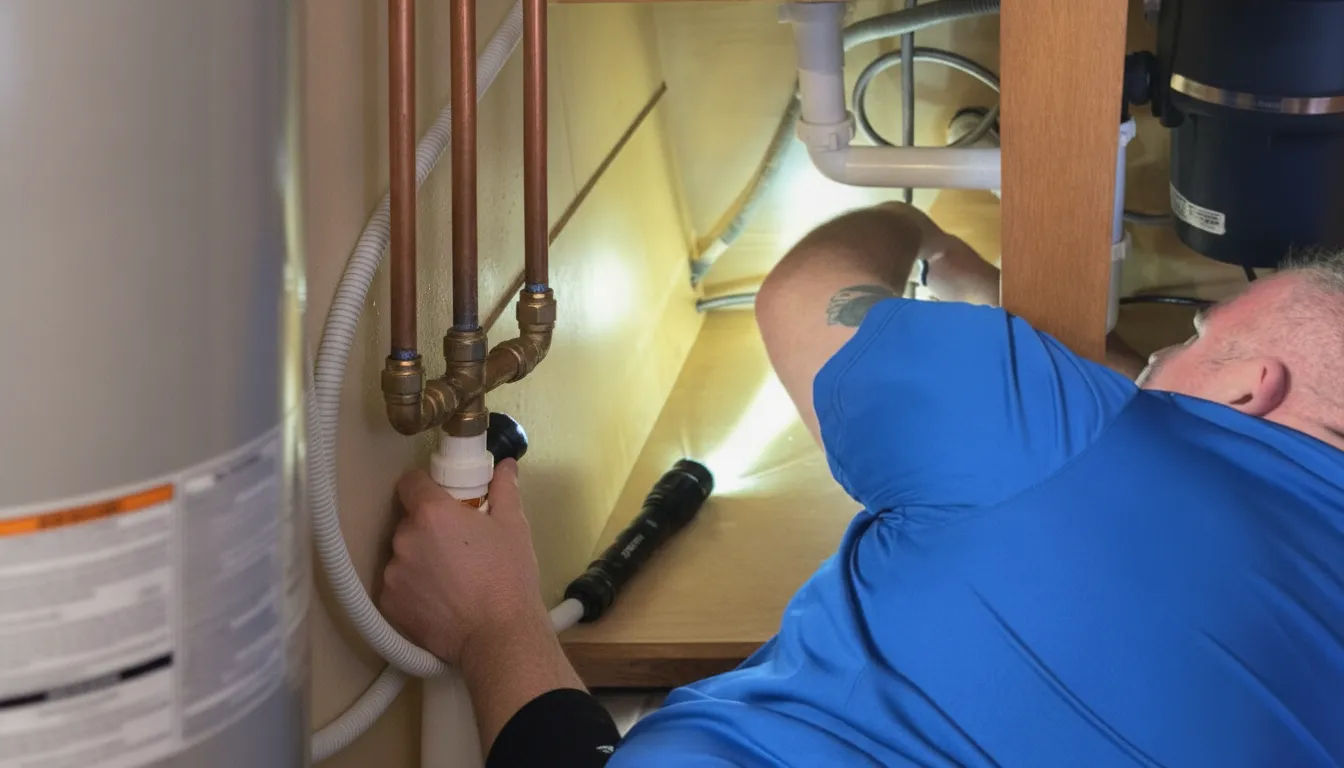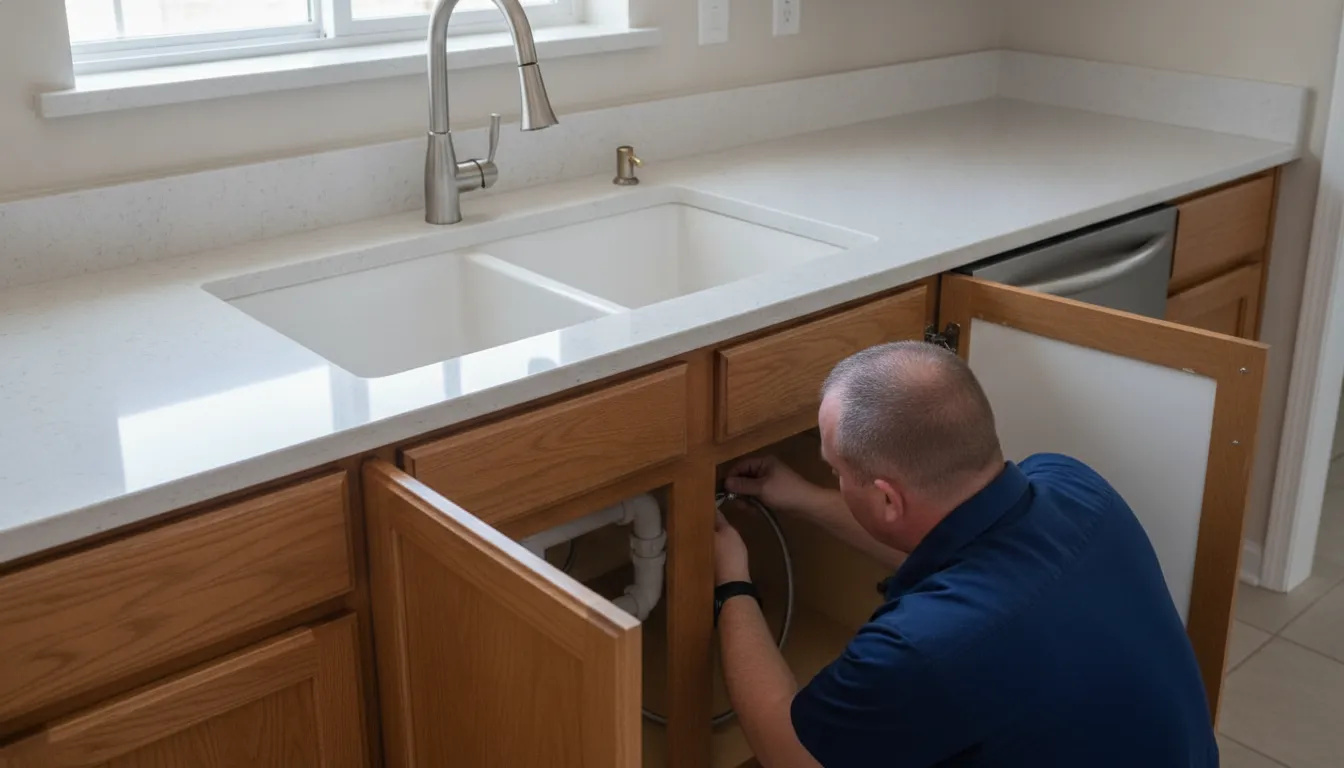
Faucet replacement cost can vary because the work is not always limited to swapping one fixture for another. The faucet you choose, the condition of the shutoff valves and supply connections, and access beneath the sink can all affect the scope. If you are planning a replacement in the Tri-Cities or elsewhere in Northeast Tennessee, understanding these factors can help you compare options and ask useful questions before approving work.
Contact Tommie’s Plumbing to discuss your faucet replacement
Why does faucet replacement cost vary?
There is no single price that applies to every faucet replacement. A straightforward installation in a sink with accessible, working connections is different from a project that also requires replacing corroded shutoff valves, adapting the water lines, or working in a tight cabinet. The fixture itself may also be selected by the homeowner or included in the project, so it is important to clarify what an estimate covers.
For a useful comparison, think of the total as a combination of the faucet, labor, and any additional plumbing work needed to make the installation fit and function properly. An estimate should describe the work being proposed rather than rely on a general price that may not match the conditions under your sink. Tommie’s Plumbing describes estimates as on-site and offered with Good, Better, and Best options; you can review the company’s frequently asked questions for more on its estimate process.
What parts of the project affect the estimate?
Which faucet are you installing?
Faucets differ in style, mounting arrangement, handle configuration, and included components. A basic replacement that matches the existing sink openings may require less adaptation than a faucet that calls for a different mounting layout. Some models include a side sprayer or other accessory, while others use a pull-down spray head built into the spout. The product choice affects the fixture portion of the project and may affect installation steps.
Before buying a faucet, check how it is meant to mount and whether it matches the sink or countertop. Look at the number and spacing of the existing holes, the faucet’s required connections, and the space available above and below the sink. If the new faucet needs a different configuration, ask whether the sink can accommodate it and whether any additional work is included in the estimate. Do not assume that a fixture will fit just because it is described as a kitchen or bathroom faucet.
Are the shutoff valves and supply lines in usable condition?
The shutoff valves under a sink let someone stop water to the faucet without turning off water to the whole home. They need to operate and connect properly for the new fixture. If a valve is stuck, leaking, damaged, or too deteriorated to reconnect reliably, it may need attention as part of the job. Supply lines may also need replacement or a different connection to match the new faucet.
These parts can be difficult to assess from above the sink. A cabinet may hide corrosion, old connections, or signs of a slow leak. If the estimate includes replacing valves or lines, ask which component needs work and why. If those items are not included, ask what would happen if a problem is found once the existing faucet is removed. That makes the scope clearer before work begins.
How much room is there to work?
Access matters. A spacious cabinet with an open area beneath the faucet is easier to reach than a crowded or unusually tight space. A deep sink basin, built-in storage, a garbage disposal, or other equipment can limit room for tools and hands. The existing faucet may also have fasteners that are difficult to reach or remove.
Clear out cleaning supplies and stored items before the appointment. This does not change the plumbing, but it can give the plumber a clear view and working space. If there is a leak or water damage inside the cabinet, mention it when requesting service so the issue can be considered during the assessment.
Does the existing faucet come off cleanly?
Some faucets are straightforward to remove. Others have been in place for years, and their mounting hardware may be rusted, seized, or difficult to access. The condition of the sink and the existing connections can affect how removal proceeds. If an old fitting will not release as expected, a plumber may need additional steps to remove it without damaging nearby plumbing or the sink.
It is not possible to know every hidden condition before the old fixture is removed. Ask how an unexpected issue would be explained and approved before additional work is done. A clear conversation about the plan helps you understand what is included and what could change.
Are there signs of a leak or damage around the sink?
Water beneath the sink, swollen cabinet material, staining, or a persistent musty smell may indicate that moisture has been present. These signs do not prove that the faucet is the only source. Water could be coming from a supply connection, drain, or another nearby plumbing component. Let the plumber know what you have noticed rather than assuming a new faucet alone will resolve it.
If the water is actively leaking, protect stored items and avoid using the affected fixture if doing so makes the leak worse. If you can safely reach a working shutoff valve, turning it off may limit the flow. Do not force a valve that is stuck or appears damaged. For broader plumbing concerns, Tommie’s plumbing service information outlines its general repair and installation work.
How can faucet and sink measurements prevent a mismatch?
Compatibility is not only about whether the faucet fits through a hole. The faucet must also sit securely, connect to the water lines, and operate without hitting nearby surfaces or accessories. A few observations can help you provide useful information when asking for an estimate, even though the plumber should verify the installation requirements in person.
- Count the mounting holes. Look at the sink or countertop around the faucet. Note how many openings are present and whether they are arranged in one group or separated. Avoid assuming that a cover plate can solve every difference between an old and new layout.
- Check the available space. Note whether a backsplash, wall, window ledge, or cabinet above the sink sits close to the faucet. A tall spout or handle that turns widely may need more clearance than the fixture currently in place.
- Consider reach and use. Think about whether the spout reaches the center of the basin and whether you need room to fill a pot or wash hands comfortably. For a pull-down or pull-out model, consider whether its hose can move freely below the sink and return as designed.
- Keep the model information. If you have selected a fixture, save its product name, model number, and installation sheet. The instructions can show the required mounting arrangement and connections, which helps a professional determine whether it suits the existing setup.
These checks do not replace an on-site assessment. They help identify questions early, before a fixture is purchased or the work is scheduled. If you are uncertain about the sink layout, take clear photos from above and below without removing plumbing parts. A plumber can use those details as a starting point and confirm the actual conditions during the visit.
What should a faucet replacement estimate include?
An estimate is easier to evaluate when it identifies the planned work and the fixture assumptions. Before approving a replacement, make sure you understand whether the proposal covers the faucet, removal and disposal of the old one, connection to existing lines, testing, and cleanup. If related parts or repairs are recommended, ask that they be described separately enough for you to understand why they are needed.
- Fixture: Confirm whether you are supplying the faucet or whether the fixture is part of the proposed work. If you have already chosen one, share the make and model so compatibility can be checked.
- Removal: Ask whether taking out the existing faucet is included and whether the estimate assumes its mounting hardware can be removed normally.
- Connections: Clarify whether the existing shutoff valves and supply lines will be reused, and what would lead to replacing them.
- Related work: Ask whether any sink, countertop, drain, or cabinet work is included or outside the plumbing scope.
- Testing: Confirm that the new connections will be checked for leaks and that hot and cold water operation will be verified.
- Changes: Ask how the plumber will explain an unexpected condition and get your approval before doing added work.
These questions do not require you to diagnose the plumbing yourself. They help you understand what a professional has observed and what the proposed work is meant to address. Tommie’s Plumbing says its estimates are conducted on-site, which gives the plumber an opportunity to look at the fixture, connections, and access before discussing options.
How do you read the scope beyond its total?
Separate the proposal into what is known now and what depends on inspection or removal. For example, one estimate may assume that the existing valves and supply lines can be reused, while another may include replacement of those parts from the start. Neither approach is automatically right for every sink. The key is whether the plumber has explained the condition that supports the recommendation and what will happen if that condition differs from what was visible.
Ask whether the estimate describes the exact faucet model or a fixture allowance, if a fixture is included. Check whether the work is limited to the faucet or also includes related plumbing connections. If an item is listed as conditional, ask what would trigger it and whether you will be asked before the scope changes. Written clarity helps prevent an avoidable misunderstanding about what the quoted work covers.
It can also help to keep your own short checklist while reviewing proposals. Write down the fixture source, removal, valves and lines, testing, and any exclusions. If two estimates use different terms, ask each provider to explain them in plain language. The aim is not to choose the longest list of work; it is to understand which work is appropriate for the actual conditions and what you are agreeing to.
Can you supply your own faucet?
Some homeowners want to select a faucet themselves. If that is your plan, check with the plumbing company before buying it. Share the product information and verify that its mounting style, connections, and dimensions are appropriate for the sink. Keep the packaging and installation instructions available. If a faucet is missing parts or does not match the existing setup, resolving that mismatch can delay the work or change the scope.
Consider the faucet as part of the whole installation rather than choosing on appearance alone. Check the spout reach and height, handle position, spray-hose movement where applicable, and clearance from a wall or backsplash. In a bathroom, consider whether the faucet works with the sink’s hole layout and drain arrangement. A product that fits the room but not the sink may require a different fixture or additional work.
Ask who is responsible for the product if you supply it and what happens if it cannot be installed as expected. Also confirm whether the estimate includes only installation or also the fixture. Those details make it easier to compare proposals fairly.
What differs between kitchen and bathroom faucet replacements?
The basic questions are similar, but the details can differ. Kitchen faucets often need adequate spout reach and height for the basin, and some models have a spray hose or separate accessory. The hose needs room to move under the sink, and nearby equipment or stored items may affect access. Bathroom faucets are often selected to match a particular sink-hole arrangement and basin size; a handle or spout that is too large may not work well in the available space.
In either room, look at the faucet and the sink as one assembly. A faucet with a different mounting format may require a deck plate or may not suit the existing openings. A change in faucet style does not automatically mean the sink must be changed, but the fit should be checked before purchase. If the sink, counter, or vanity is also being replaced, clarify whether the estimate covers only plumbing connections or broader installation work as well.
These distinctions are useful when describing the project, not a substitute for measuring and checking the product specifications. Bring the fixture details to the estimate discussion and state whether you want a like-for-like replacement or a different style. That helps the plumber assess the actual work rather than guess from a general description such as “new kitchen faucet.”
When is replacement more practical than repairing a faucet?
Replacement may be worth considering when a faucet has repeated problems, visible damage, worn components, or a leak that cannot be resolved with a practical repair. It can also make sense when you want a different style or function and the existing faucet is no longer suitable. A plumber can inspect the fixture and explain whether a repair or a full replacement is the better fit for its condition.
A single symptom does not automatically mean a faucet must be replaced. A leak may come from a connection or another part of the plumbing, and the cause should be identified before choosing a solution. If you are not sure what is leaking, Tommie’s has a dedicated page about faucet repair that can help you understand the service path. For a confirmed replacement, see the company’s schedule-service information to request an appointment.
When weighing repair against replacement, consider the faucet’s condition, whether the problem is isolated, and whether you want to keep the same configuration. A repair can be sensible if the issue is limited and the fixture otherwise meets your needs. Replacement may be a better fit when problems recur or you have a clear reason to change the fixture. Ask the plumber to explain what is causing the symptom and which options address that cause, rather than making the choice based on the symptom alone.
What can you do before the plumber arrives?
A few simple preparations can help the visit go smoothly and make the assessment more informative:
- Note the symptoms. Write down when the faucet leaks, drips, makes noise, or becomes difficult to operate. Mention whether the issue occurs with hot water, cold water, or both.
- Take a photo of the faucet. A clear photo can help communicate the style and configuration when you request service. Include a view of the sink if the mounting holes are visible.
- Clear the cabinet. Remove items beneath the sink so the valves, supply lines, and faucet connections can be inspected.
- Keep product details handy. If you bought a replacement faucet, have its model information and instructions available.
- Protect the area. Move belongings away from a known leak and tell the plumber about any water damage or previous repair attempts.
- Prepare your questions. Ask what is included, whether the existing connections can be reused, and how additional work will be approved.
Avoid taking apart the faucet or forcing old shutoff valves if you are not comfortable with the work. An attempted removal can turn a manageable replacement into a plumbing problem if a connection breaks or starts leaking. If you have already tried a repair, simply explain what was done and what changed.
What information is useful when requesting an estimate?
Describe the location of the faucet, whether it is in a kitchen or bathroom, and what prompted the replacement. If the faucet drips, leaks around its base, has a loose handle, or has another issue, identify when you noticed it and whether the condition is getting worse. Mention any water in the cabinet or visible damage, even if you are not sure it is related.
If you have already bought a faucet, provide the product details rather than just its finish or general style. Say whether you want a like-for-like replacement or are considering a different layout. You can also mention access concerns, such as a crowded cabinet or equipment under the sink. These details do not determine the final scope, but they can help the conversation start with the right questions.
Be clear about your priorities. You may want to keep the current sink, choose a particular faucet, address a known leak, or understand whether repair is still an option. The more specific your goal, the easier it is to discuss a suitable scope without assuming that every project needs the same parts or steps.
How can you compare estimates without focusing only on the total?
When reviewing more than one estimate, compare the scope line by line. A lower total may cover a different faucet, fewer replacement parts, or a narrower set of tasks. A higher estimate may include work that another proposal leaves out. Neither total tells the whole story without knowing what is being installed and which connections or related components are covered.
Ask each provider to explain the important differences in plain language. Are they proposing the same type of faucet? Does the estimate include new supply lines or shutoff valves? Is removal included? What happens if the existing hardware cannot be removed normally? Will the installer test the connections after installation? Clear answers are more useful than trying to compare a vague number with a detailed proposal.
Also make sure the scope fits your priorities. If you want to keep the existing sink and change only the faucet, state that. If you are considering a broader fixture update, ask which parts of the project are plumbing work and which may require another trade. A professional assessment can help separate necessary plumbing work from optional changes.
How might two replacement projects differ?
Imagine one sink has a matching faucet layout, accessible connections, and shutoff valves that work as intended. The discussion may focus on selecting a compatible fixture, removing the old one, installing the replacement, and checking operation. In a second home, a faucet with a different mounting pattern may be selected, the cabinet may have limited access, and a valve may be difficult to turn. That job needs a different assessment and may include work beyond the fixture itself.
These examples show why a general online figure cannot reliably describe every home’s project. They do not predict a particular charge or guarantee that a specific part must be replaced. The on-site conditions and agreed scope determine what work is proposed. When estimates differ, ask whether the difference comes from product selection, access, included parts, or a finding about the existing plumbing.
How does a faucet replacement visit usually proceed?
The plumber first reviews the problem and the requested fixture, then looks at the faucet, sink, shutoff valves, supply connections, and access beneath the sink. That inspection helps determine whether the requested replacement appears compatible and whether any related plumbing issues need attention. The plumber should explain the proposed work and answer questions before proceeding.
After the work is approved, the existing faucet is disconnected and removed, and the new faucet is installed according to its configuration. The supply connections are made, and the fixture is operated to check its function and look for leaks. If a hidden problem changes the work, ask for an explanation and approval of the revised scope before the additional work is done.
Once installation is complete, look over the area with the plumber. Check that the handles and spray function work as expected, that the cabinet is dry, and that you know where the shutoff valves are. If you see moisture later, stop using the fixture if needed and contact a plumber rather than assuming the issue will clear on its own.
What should you check after installation?
Operate the faucet as you normally would and make sure hot and cold water are available as expected. If it has a spray head, test its movement and return. Look around the base and underneath the sink for signs of moisture while the fixture is running, then check again after using it. Ask the plumber to show you the shutoff valves and explain any care or operating details specific to the installed faucet.
Keep the product paperwork and any information about the work together for future reference. If you notice a drip, loose connection, or unexpected change in operation, note when it occurs and contact a plumbing professional for guidance. Do not assume that a new faucet will resolve a separate issue with the drain or nearby plumbing.
Frequently asked questions
How much does faucet replacement cost?
The cost depends on the faucet selected, labor, access, the condition of existing connections, and whether additional plumbing work is needed. Since those details vary from one sink to another, an on-site estimate is the best way to understand the scope for your home. Ask for a clear explanation of what the proposal includes.
Does replacing a faucet include new shutoff valves?
Not necessarily. Existing valves may be reusable if they are in suitable condition and work with the installation. If a valve is stuck, damaged, leaking, or otherwise unsuitable, replacement may be recommended as additional work. Ask whether valves are included in the estimate or would require approval as a separate item.
Should I buy the faucet before requesting service?
You can choose a faucet in advance, but check compatibility before purchasing it. The number of sink holes, mounting style, connection requirements, and available clearance can affect fit. Share the product details with the plumbing company and confirm whether you or the plumber will provide the fixture.
Can a plumber install a faucet I already own?
Ask the plumbing company before scheduling. Provide the faucet’s make or model and confirm that it is complete and appropriate for the sink. Also clarify what happens if the product is incompatible or missing a required component when the plumber arrives.
Is a dripping faucet always a reason to replace it?
No. A drip can have more than one cause, and some problems may be repairable. An assessment can help identify whether the issue is in the faucet itself or in a nearby connection. Compare the repair option with replacement based on the fixture’s condition and your goals.
Request help with a faucet replacement estimate
With the fixture, connections, access, and scope understood in advance, you can make a more informed decision about replacing a faucet in your Northeast Tennessee home.