

When a home is not connected to a municipal sewer, its plumbing may send wastewater to an onsite septic system. So, how does a septic tank work? It temporarily holds household wastewater, separates some solids from liquid, and sends the liquid effluent to a drainfield for further treatment in the soil. The tank is an important part of the process, but the complete system includes more than the tank. Knowing how the parts work together can help homeowners recognize problems early and avoid habits that place extra strain on the system.
Call Tommie’s Plumbing to discuss a plumbing concern
What Is a Septic System?
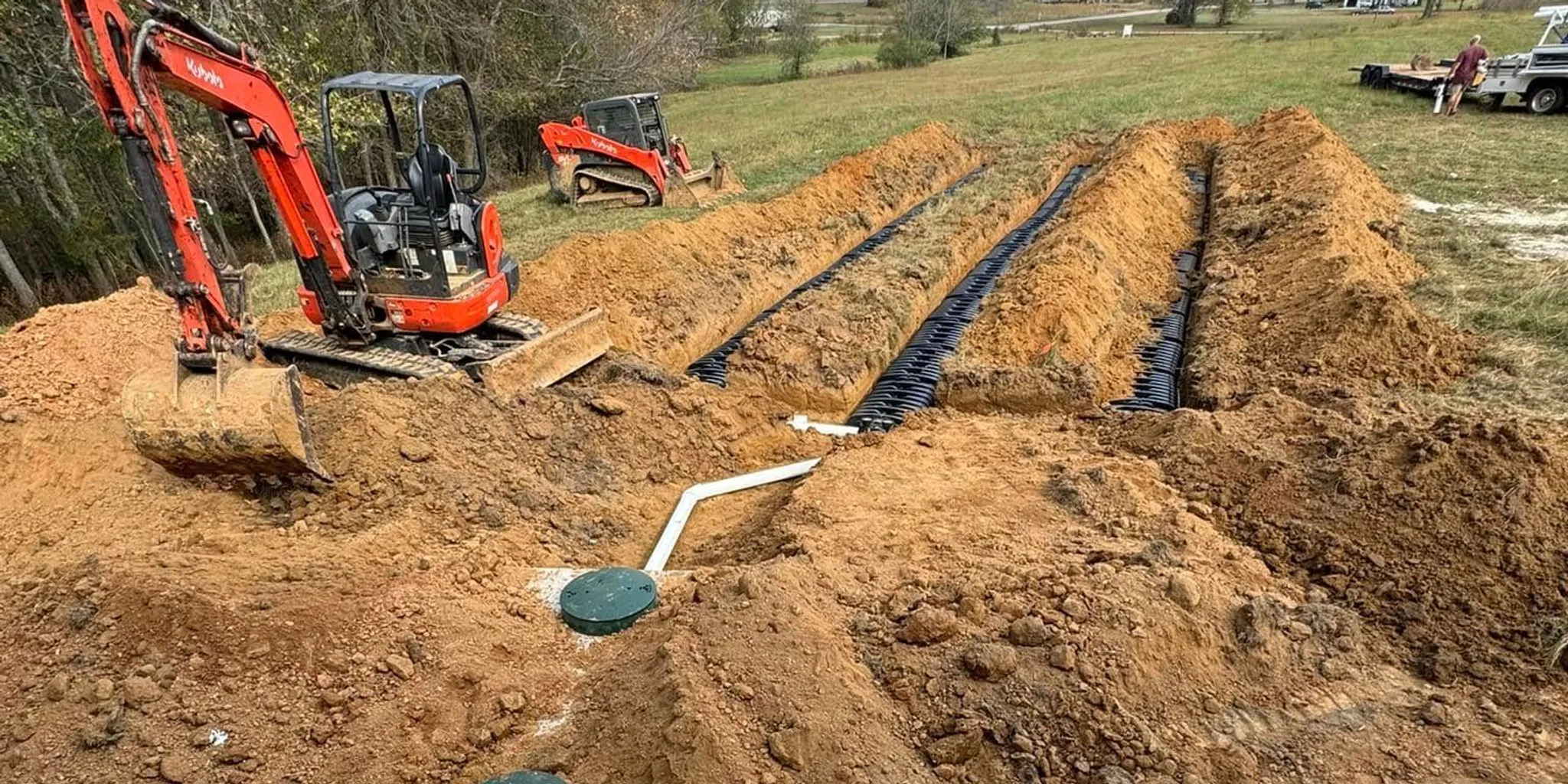
A septic system is an onsite wastewater treatment arrangement that handles wastewater from a home or building where the plumbing is not connected to a public sewer. In a typical setup, pipes carry wastewater away from the building and into a buried, watertight tank. From there, liquid flows toward a drainfield, also called a leach field or soil absorption area. Soil provides additional treatment as the effluent moves through it.
The term “septic tank” is often used as if it refers to the whole system. It does not. The tank is one component in a chain that includes household plumbing, the inlet pipe, the tank, an outlet or distribution arrangement, and the drainfield. Some systems also include components such as a pump chamber or an effluent filter. A specific property may have a different layout or equipment, so this overview describes the usual process rather than every design.
That distinction matters because wastewater has to move through each part in the intended way. A tank can be intact while the drainfield is having trouble. A slow fixture may be caused by a localized drain issue rather than the septic system. Conversely, symptoms at several fixtures can point to a broader drainage concern that deserves professional evaluation. Looking at the whole system helps avoid assuming that every plumbing symptom has the same cause.
Septic systems rely on a combination of settling, natural biological activity, and soil treatment. They are not miniature versions of municipal treatment plants, and they are not simply storage containers that can be ignored. Normal use creates solids that remain in the tank and eventually need to be managed. The liquid portion continues through the system, while the soil helps filter and treat it. Each component has a role, and damage or blockage in one part can interfere with the next.
How Does a Septic Tank Work Step by Step?
The basic flow is straightforward: wastewater leaves the home, enters the tank, separates into layers, and exits as liquid effluent toward the drainfield. The steps below explain what usually happens, from the moment someone uses a sink or toilet to the final stage in the soil.
1. Household wastewater travels through a pipe
Water from toilets, sinks, showers, tubs, and appliances enters the home’s drainage plumbing. A main building sewer pipe carries this wastewater toward the septic tank. Wastewater from the home is often called sewage or influent once it enters the system. It contains water, organic material, suspended particles, and solids that need to be separated and treated.
Everyday water use affects the flow into the tank. Several loads of laundry, long showers, and multiple fixtures running at once can send a larger volume of water into the system over a short period. A septic system has to receive and process household flow while retaining solids. Spreading out high-water-use activities can help avoid sudden surges, though it does not replace inspection or other maintenance recommended for the particular system.
2. Wastewater enters the tank
The inlet pipe delivers wastewater into a buried, watertight tank. An inlet fitting or baffle helps direct incoming flow and limit disturbance of the layers inside. The tank provides time and space for separation. It is not designed to make all waste disappear, and it is not a place for household garbage, wipes, or chemicals to be discarded.
As wastewater enters, the tank’s liquid level changes and an approximately corresponding amount of liquid leaves through the outlet under normal conditions. The outlet arrangement is positioned to draw liquid from between the heavier settled material and lighter floating material. Baffles, tees, or other components help reduce the chance that scum and settled solids will flow out. The exact arrangement differs among system designs.
3. Solids and lighter materials separate
Inside the tank, heavier solids settle toward the bottom and form a layer commonly called sludge. Grease, oils, and some other lighter materials float to the top and form a layer called scum. Between those layers is a liquid zone. This separation is based largely on the relative weight and buoyancy of material, and it gives the tank time to hold back a portion of the solids.
Separation is not the same as complete treatment. Some suspended particles remain in the liquid, and the tank’s contents continue to change as new wastewater enters. Certain bacteria and other microorganisms break down some of the organic matter under the conditions inside the tank. This biological activity reduces some material, but it does not eliminate the need to manage accumulated solids. Nor does it mean that everything sent down a drain is safe for the system.
A properly functioning outlet helps keep the floating scum and settled sludge inside the tank. If too much solid material escapes, it can move toward the drainfield and clog or impair the soil’s ability to accept effluent. This is one reason not to treat a septic system as a disposal route for grease, wipes, or other non-wastewater items.
4. Liquid effluent leaves the tank
After some solids have settled or floated out of the liquid, effluent flows through the tank outlet. An outlet baffle or filter, when present, can help retain solids and protect downstream components. An effluent filter can become obstructed and may require service according to the system’s design and maintenance instructions. Homeowners should not assume they can safely inspect or service buried equipment themselves.
Effluent is not clean drinking water. It still requires further treatment. The septic tank’s job is primarily to collect wastewater and separate solids before the liquid reaches the next treatment stage. The outlet pipe then carries the effluent to the drainfield or to another part of the system, depending on its design.
5. The drainfield distributes effluent into soil
A drainfield typically uses a network of perforated pipes or other distribution components in a prepared area of soil. The layout allows effluent to disperse over a wider area rather than leaving through one point. As it moves into and through the soil, natural physical, chemical, and biological processes help treat it. The soil is an active part of the treatment system, not merely a place to bury pipes.
For the drainfield to work, the soil needs to accept the liquid at an appropriate rate and remain in conditions the system was designed for. Excess water at the surface, compaction, or damage to the distribution area can interfere with that function. A system’s actual boundaries may not be obvious from the yard, so do not dig, pave, or make major landscape changes in a suspected system area without first understanding the property’s layout and getting qualified guidance.
6. Soil continues the treatment process
As effluent percolates through suitable soil, the soil and the microorganisms living in it help remove or transform contaminants. The amount and type of treatment depend on the system design, soil, site conditions, and proper operation. The effluent then continues through the soil profile. This is why a drainfield is more than a final pipe outlet: it provides a critical treatment stage.
The system works best when wastewater flow, tank retention, and soil absorption remain in balance. If the tank sends excessive solids downstream, the field may become impaired. If the field is saturated or compacted, it may not accept effluent as intended. If household water use overwhelms the system, wastewater may move through the tank too quickly or create backup symptoms. Problems in the home, tank, pipes, and soil can overlap, so diagnosis should consider the complete path.
What Happens to Solids Inside the Tank?
Three broad zones are present in a typical septic tank: floating scum at the top, a liquid layer in the middle, and settled sludge at the bottom. These layers are not neatly separated like shelves, and their thickness changes over time. Household wastewater continually enters, while liquid effluent leaves. Some organic matter is broken down by microorganisms, but resistant or nondegradable material remains.
Biological activity is part of the normal process. Microorganisms use some organic material as they live and reproduce. That process can reduce some waste, but it does not turn every solid into liquid or make a tank self-cleaning. Material that does not break down, along with residual sludge and scum, accumulates. If the volume of solids gets too high, it can reduce the tank’s effective capacity and increase the chance that material reaches the outlet.
Think of the tank as a settling and holding chamber, not a trash can or a device that destroys all waste. Toilet paper made for flushing and human waste are the expected inputs from a toilet. Other products marketed as flushable may not break apart like toilet paper under the conditions in a septic system. Wipes, paper towels, hygiene products, dental floss, cotton items, and similar materials can remain intact, tangle, or collect with other solids. The safest everyday rule is to put only human waste and toilet paper in the toilet.
Kitchen sinks also deliver substances that do not belong in large quantities. Cooking grease and oils can float and add to the scum layer. Food scraps can increase the solids load. A garbage disposal sends ground food into the plumbing; grinding it smaller does not make it vanish. If the home has one, using it sparingly and following system-specific advice can help limit added material. Pouring grease into a container for disposal instead of down the drain is a practical way to avoid adding it to the system.
Household cleaners and chemicals require common sense. Normal household use of products as directed is different from pouring concentrated chemicals, solvents, paints, medicines, or large quantities of disinfectants into a drain. Such discharges can affect plumbing or the biological conditions within a system, and some are hazardous for other reasons. Follow product labels and local disposal guidance rather than using the septic tank as a convenient dumping place.
What Does the Drainfield Do?
The drainfield receives effluent after it has passed through the tank. Its distribution pipes or other components spread the liquid into the surrounding soil. Soil pores allow water to move, while the soil structure and its living organisms contribute to treatment. The field must be sized and placed for the site and the system design; a generic diagram cannot tell a homeowner exactly where a particular field begins or how it is arranged.
Effluent needs room to disperse. If vehicles or heavy equipment compact the soil above the field, the ground may accept water differently. Building, paving, or excavating in the area can damage pipes or change drainage. Deep-rooted plants may create problems if roots reach system components. For those reasons, the drainfield is not a good place for a driveway, shed foundation, or other heavy-use area. The property owner’s system records or a qualified professional can help identify areas that should be protected.
Surface water matters, too. Roof runoff, sump discharge, and landscape drainage directed toward the field can add water the system was not designed to process. A persistently wet area over a field or an unusual sewage odor deserves attention, but neither observation alone proves a specific failure. Weather, grading, plumbing leaks, and system condition can all affect what a homeowner notices. Avoid walking through wastewater or digging into the area to investigate.
A drainfield cannot be treated like a filter cartridge that is simply replaced on a routine calendar regardless of condition. Its performance depends on the interaction of the tank, wastewater flow, soil, and site. Keeping solids from escaping the tank and managing water use are helpful, but they cannot undo damage or correct a design or site issue. If there are signs of trouble, evaluation should include the tank and the downstream area rather than focusing on one part in isolation.
What Are the Main Parts of a Typical Septic System?
System layouts vary, but the following components are common. A property may not have every item in this list, and equipment can be buried or difficult to identify visually. Do not open a cover or enter a tank to look for parts. Septic tanks can contain dangerous gases and an oxygen-deficient atmosphere, and entry can be fatal. Inspection and service should be left to qualified professionals using appropriate safety procedures.
- Building drain and sewer pipe: Carry wastewater from fixtures in the home toward the tank. A blockage or break in this pipe can create symptoms that resemble a tank problem.
- Inlet pipe and baffle: Direct incoming wastewater into the tank and help limit disruption of the separated layers.
- Septic tank: Holds wastewater long enough for some solids to settle and lighter material to float. It also provides an environment where some biological breakdown occurs.
- Outlet baffle or filter: Helps prevent solids from leaving the tank. A filter, if installed, must be maintained according to its design and service guidance.
- Distribution piping or chamber: Carries or divides the effluent flow toward the drainfield. Pumped systems may use additional equipment to move wastewater.
- Drainfield: Spreads effluent into soil, where further treatment occurs.
- Access covers, risers, and inspection ports: Allow qualified personnel to locate or service certain components. Their presence and arrangement vary by property.
Some systems depend on gravity for flow, while others use pumps or additional treatment components. A pump may be needed where elevation or the design requires wastewater to be lifted or distributed in a particular way. Alarms and controls, when present, can warn that equipment needs attention. If an alarm sounds, consult the system’s instructions or service provider. Do not silence it and forget about it, and do not open electrical or tank equipment unless qualified to do so.
Because these components connect in sequence, a symptom at one point does not automatically identify the failed part. For example, a slow drain can result from a fixture trap, a branch drain, a building sewer, or a system issue. If several fixtures are affected at once, or wastewater is backing up, the problem is more urgent and needs prompt assessment. The distinction between an ordinary drain clog and a wider system concern is discussed in this guide to clogged drains.
What Can a Homeowner Do to Help the System Work Properly?
Homeowners cannot control every factor that affects an onsite system, but daily choices influence the amount and type of material entering it. The goal is not to make the tank sterile or to add special products. It is to use the plumbing normally while avoiding unnecessary solids, excess water, and harmful discharges, and to arrange appropriate professional care for the system’s design.
Use toilets and sinks for their intended purpose
Flush human waste and toilet paper, and place other items in the trash. Do not flush wipes, paper towels, diapers, cotton swabs, dental floss, cigarette butts, cat litter, or hygiene products. A product’s “flushable” label does not guarantee that it will break down quickly enough for a septic tank. These materials may accumulate, obstruct piping, or contribute to a solids layer that needs attention.
Keep fats, oils, and grease out of drains. Scrape food scraps into the trash or compost where appropriate, and wipe greasy cookware before washing. Avoid relying on a garbage disposal to handle all food waste. The less unnecessary solid material the system receives, the less burden is placed on the tank and downstream components.
Be mindful of water use
A septic system processes wastewater as it arrives. Repair leaking faucets and running toilets because even a seemingly small ongoing flow adds water. Spread laundry and other high-volume water uses over time rather than sending many loads through in a short period. This advice is about reducing sudden hydraulic loading, not about restricting normal handwashing, bathing, or other ordinary household use.
Multiple drains slowing down at once, gurgling, or backing up can point to an issue beyond a single fixture. If only one sink is slow, the cause may be limited to that sink or its branch piping. For ideas about how plumbing symptoms can have different causes, see the article on common plumbing problems. A septic system concern should be evaluated in context instead of treated repeatedly with harsh drain chemicals.
Protect the system area
Do not drive or park heavy vehicles over the tank or drainfield unless the area is specifically designed to carry that load. Avoid building over system components, changing the grade, or directing runoff toward the field. Before landscaping or digging, confirm where the tank and field are located. A site plan, property records, or professional assistance may help; do not assume that a visible lid marks the full extent of the system.
Keep trees and shrubs from being planted where roots could interfere with pipes or other components. Exact planting recommendations depend on the system layout and the plants involved. When in doubt, choose a location away from the system and ask a qualified professional about the property. Be cautious about major changes that could alter drainage or compact the soil.
Keep records and follow system-specific maintenance advice
Keep any available system plan, inspection notes, pump-out records, repair invoices, alarm information, and details about installed equipment together. If a home changes ownership, these records can help the next owner understand the layout and past work. When a professional identifies a filter, pump, or alarm, write down the model and the recommended service instructions.
There is no one maintenance interval in this general explanation that can responsibly fit every home. The right inspection and solids-management schedule can depend on tank size, household use, the number of occupants, the system design, and local requirements. Ask a qualified septic professional or appropriate local authority about the system at your property. Do not infer a schedule solely from a neighbor’s experience or from a generic online rule.
Products advertised as additives are not a substitute for inspection or needed service. A claim that a product eliminates solids or makes maintenance unnecessary should not be treated as proof that the tank no longer needs professional attention. Ask the professional familiar with the system before adding products, especially chemicals or materials not intended for household wastewater.
What Warning Signs Should You Watch For?
Septic-related problems can appear inside the home, outside, or both. No single symptom proves that the tank is full or that the drainfield has failed. The same sign may have more than one cause, so use symptoms as a reason to seek an evaluation rather than as a do-it-yourself diagnosis.
- Several fixtures drain slowly: A pattern involving multiple sinks, tubs, or toilets may indicate a shared drainage problem rather than one fixture clog.
- Gurgling or unusual sounds: Gurgling can occur when air and wastewater do not move normally through plumbing. It should be considered along with other symptoms.
- Wastewater backing up: Sewage coming into a tub, floor drain, or other fixture requires prompt attention. Avoid contact with wastewater and keep people and pets away from affected areas.
- Persistent wet or unusually green ground: A consistently saturated or notably lush patch near system components may merit investigation, especially when combined with odors or plumbing symptoms. Rain and other drainage issues can also affect the yard.
- Sewage odors: Persistent odors inside or outside should not be ignored. Odors can have more than one source, and a qualified professional can help identify it.
- An alarm or pump issue: If an installed alarm activates, follow the system-specific instructions and contact the service provider. A pump-related problem may need prompt attention to avoid a backup.
If wastewater is backing up, stop adding water where practical and contact a qualified professional promptly. Do not open the tank, stand over an open access point, or enter any tank. Gases inside can be toxic, flammable, and immediately dangerous. Do not try to pump, probe, or repair buried components without the training and equipment required for that work.
Pay attention to the number of affected fixtures and whether the problem repeats. A single slow bathroom sink may be a local clog. Several fixtures slowing together, a backup at a low drain, or outdoor wetness paired with indoor symptoms may call for a broader system assessment. These observations can help the professional understand what is happening, but they do not replace testing or inspection.
Why Can a Septic System Stop Working as Intended?
Septic issues can result from different points in the system, and more than one factor may be involved. A tank with excessive accumulated solids may allow material to move toward the outlet. A damaged or blocked pipe may interfere with flow. A filter, pump, or distribution component can need service. The drainfield may be affected by excessive water, soil compaction, changes to drainage, or accumulated solids. These possibilities require different remedies, so a single generic fix is not appropriate.
Household overload is another possible factor. A sudden increase in water use can push more flow through the tank than usual. Leaking plumbing can add water continuously. Items that do not break down can collect in the tank or piping. Grease can add to floating scum. Each habit may seem minor, but ongoing inputs influence how the system performs over time.
Some problems are not caused by daily behavior. A system may have damaged or aging components, a site limitation, or a previous repair that needs reassessment. Heavy equipment or construction can also affect buried parts. It is not possible to determine the cause by looking at one symptom or assuming that every issue means the tank needs pumping.
A proper evaluation considers the observed symptoms, system design, records, tank and component condition, and the property’s drainage. The professional may need to inspect different parts of the system to identify the source. Ask what was found, what evidence supports the recommendation, and whether there are options to address the immediate symptom and its underlying cause. Clear explanations make it easier to understand the work being proposed.
How Is a Septic System Different from a Public Sewer?
In a public sewer arrangement, a pipe carries wastewater from the property to a shared municipal or regional collection and treatment system. In a septic arrangement, treatment begins on the property: the tank separates solids and the drainfield distributes effluent into soil for additional treatment. In both cases, the home uses interior plumbing to carry wastewater away from fixtures, but the path after it leaves the property plumbing differs.
This difference affects who is responsible for the components and where a problem may be located. With an onsite system, the tank and drainfield are part of the property’s wastewater infrastructure. A public sewer connection instead leads to a larger network, although the property still has its own building sewer pipe. A homeowner should confirm which arrangement serves the property rather than infer it from the home’s age, neighborhood, or appearance.
It is also helpful to distinguish septic issues from sewer-line issues. Both may involve wastewater backing up or slow drains, and some symptoms overlap. But the equipment, location, and evaluation are not identical. If the property uses a public sewer, a septic-tank maintenance article does not apply to the shared public treatment system. If it uses an onsite system, the tank and soil absorption area matter together.
For a look at how a sewer installation project differs from the onsite treatment process described here, read this overview of sewer-line installation. A professional can help clarify which kind of system serves a home and which portion of the plumbing needs evaluation.
What Should You Ask About Your Own System?
If you have just moved into a home or do not know how its wastewater system works, begin by gathering information rather than guessing. Ask whether the property is connected to public sewer or served by an onsite system. Look for records that identify the tank and field location, installed equipment, previous inspections, and repairs. If records are missing, a qualified professional or local authority may be able to explain what information is available and what steps are appropriate.
When arranging an inspection or repair, explain what you have observed and when it began. Note which fixtures are affected, whether the symptoms are constant or intermittent, whether an alarm sounded, and whether there has been recent heavy water use, rainfall, construction, or landscaping. These details can help guide the evaluation. Do not delay urgent attention when wastewater is backing up or a system alarm indicates a problem.
Useful questions for the professional include:
- Which parts of this property’s system did you inspect, and what did you find?
- What evidence points to the recommended repair or maintenance?
- Is the concern related to household plumbing, the tank, a pump or filter, the distribution components, the drainfield, or more than one part?
- Are there immediate precautions we should take while the system is being evaluated?
- What maintenance schedule and operating guidance fit this system’s design and household use?
- Are there records or system plans we should keep for future service or a property sale?
These questions can make a service discussion more useful without asking the homeowner to make a technical diagnosis. A dependable explanation should connect the observed problem to the component or conditions involved, distinguish confirmed findings from possibilities, and describe the next step in plain language.
How Does Water Use Affect a Septic System?
A septic system receives water whenever someone uses a connected fixture or appliance. It does not process wastewater in one batch at a time like a sink full of dishes. Instead, new wastewater enters as the household uses water, and liquid leaves the tank through its outlet. The system must hold solids while allowing liquid flow to continue. Large or repeated surges can change how quickly wastewater moves through the tank and place extra hydraulic demand on the drainfield.
Consider the difference between a steady pattern and several high-volume activities happening together. A household that runs back-to-back laundry loads while people shower and use sinks may send a noticeable volume through the plumbing within a short period. If the system is already struggling, that added flow can bring symptoms to the surface. Spacing out laundry and fixing leaks are practical steps, but they are not a repair for a damaged tank, obstructed pipe, or impaired drainfield.
Water-saving fixtures may reduce the volume of wastewater, but changes should be made with attention to the home’s plumbing and the needs of its occupants. A reduction in water use does not remove accumulated solids or correct a broken component. Similarly, adding water to a septic system to “test” it is not a reliable homeowner diagnostic. If the system has a backup or alarm, avoid creating more flow and seek advice rather than deliberately stressing it.
Pay attention to changes that persist. A single slow drain after a sink stopper catches debris may be unrelated to the septic system. A group of fixtures slowing down at the same time, especially when the condition recurs, suggests a shared drainage concern worth checking. Keep a note of the timing and fixtures affected. This simple record can help a professional distinguish a one-time issue from a pattern.
What Should You Know Before Landscaping or Building?
Buried septic equipment can be easy to overlook when planning outdoor improvements. A tank lid may show one access point, but it does not reveal where the entire tank, connecting pipes, or drainfield lie. Before adding a patio, driveway, retaining wall, shed, fence post, garden bed, or play structure, find reliable information about the system’s location and ask whether the project could affect it. Do not rely on guesswork or a rough memory of where a previous owner said the tank was.
Construction can create more than one kind of risk. Excavation may strike or crush a pipe. A heavy vehicle can compact soil above a drainfield. A new hard surface can change how water drains across the property. Even work that does not dig directly into a component can redirect runoff toward an area that needs to remain unsaturated. A contractor should be told about the onsite system before work begins, and the project should be planned to protect both buried equipment and the soil treatment area.
Landscaping choices deserve similar care. Plants need water, roots grow, and garden beds may change the grade or drainage pattern. Avoid planting trees or large shrubs over system components unless a qualified professional confirms that the location and species are appropriate. Do not install an irrigation system that routinely saturates the field. When grading or managing roof runoff, keep water from being directed toward the tank or drainfield.
If you cannot locate the system, do not probe the ground with a sharp tool, remove covers, or dig exploratory holes. Look for available property or system records and request help from a qualified professional. Knowing the layout is useful for maintenance, repairs, and ordinary yard planning. It can also help prevent accidental damage during future work.
What Should New Homeowners Ask About a Septic System?
Buying or moving into a home with an onsite system can leave a new owner with practical questions. The system may have been installed years earlier, and its components may not be visible. Ask for whatever records are available, including a system plan, inspection findings, service records, information on pumps or alarms, and the location of the tank and drainfield. Records can be incomplete, but even partial documentation is better than assuming the layout.
Clarify what kind of wastewater system serves the home. A property may connect to public sewer, use a conventional septic system, or have another onsite arrangement. The distinction affects which components are on the property and who should be contacted about them. If the system type is unclear, ask the appropriate professional or local authority how to confirm it.
Learn whether the system has equipment that needs power or produces an alarm. If a pump, control panel, or alarm is present, find out what a normal indicator looks like and whom to call when it signals trouble. Do not disconnect an alarm simply because it is inconvenient. A warning may indicate that a component needs attention, and ignoring it could allow a smaller issue to become a backup.
Ask what kinds of use the system was designed to support and what guidance fits the current household. A change in occupancy, a home addition, or a substantial increase in water use can affect loading. Do not assume that a system suitable for a previous household necessarily matches every future use. Questions about capacity, repairs, and local requirements are property-specific and should be answered by someone familiar with the actual system and applicable rules.
Finally, identify the right contact for different problems. A plumbing professional may be the appropriate first call for indoor drainage or pipe symptoms, while a septic specialist may be needed for tank or drainfield assessment. The best starting point can depend on the symptom and local service arrangements. When contacting anyone, state clearly that the home uses an onsite system and describe what is happening without trying to diagnose the equipment yourself.
What Are Common Misunderstandings About Septic Tanks?
“The bacteria take care of everything.”
Microorganisms play a role in breaking down some organic material, but that does not mean the tank disposes of every solid. Sludge and scum accumulate, and nondegradable products can remain. Normal biological activity is not a reason to put extra waste, chemicals, or additives into the plumbing, nor is it proof that inspection and service are unnecessary.
“A clear-looking liquid is safe to touch or drink.”
Effluent leaving a tank has not completed treatment. It is not drinking water, and visible clarity does not establish that it is safe. Do not come into contact with sewage or wastewater from a backup, and keep children and pets away from affected areas. Arrange professional attention and follow appropriate cleanup advice.
“A septic problem always means the tank needs pumping.”
Slow drains, odors, or wet areas can have several causes. A tank’s solids level is only one part of an assessment. A pipe, filter, pump, distribution component, or drainfield could also be involved. Pumping without understanding the cause may fail to resolve a blockage or a field problem. A professional evaluation can identify the appropriate next step.
“If the yard looks normal, the system must be fine.”
Some issues do not create an obvious outdoor symptom at first. A system may still need routine professional attention even when the lawn appears ordinary. Likewise, an isolated wet patch can result from rain or other drainage conditions and does not prove septic failure. Consider the full set of signs, keep records, and seek advice when something changes.
“A septic system can be ignored until it backs up.”
Waiting for an emergency is not a maintenance plan. Homeowners benefit from knowing the system type, location, history, and service guidance before an urgent problem arises. Keeping records and protecting the drainfield are simple preparations that can make future evaluation more informed. For a maintenance interval or technical recommendation, rely on a professional who can account for the property and system design.
Frequently Asked Questions
Does a septic tank treat all wastewater completely?
No. A typical tank separates some solids and allows some biological breakdown, but the liquid leaving it still needs further treatment. The drainfield and surrounding soil are important parts of the overall process. The tank should not be viewed as a device that turns all wastewater into clean water.
Does everything that enters the tank eventually disappear?
No. Some organic material is broken down, but other solids remain and accumulate as sludge or scum. Nondegradable items can persist and create problems. That is why a septic tank is not a garbage disposal and why professional maintenance recommendations still matter.
Can I tell that the tank is full just from slow drains?
Not reliably. A slow drain can come from a local fixture clog, a branch pipe, a building sewer, or a system concern. Several affected fixtures or wastewater backups make a broader problem more urgent, but the cause still needs to be evaluated rather than assumed from one symptom.
How often should a septic system be inspected or serviced?
There is not one interval that fits every property. Tank size, system type, household use, and local requirements can affect the appropriate schedule. Ask a qualified professional familiar with the system or the relevant local authority for guidance based on the actual property.
Is it safe to open or enter a septic tank?
No one should enter a septic tank. Dangerous gases and low oxygen levels can cause death in minutes. Do not open access points yourself or lean over an opening. Qualified professionals use appropriate safety practices to inspect and service the system.
Get Help Understanding a Plumbing Problem
A septic tank works as part of a connected system: household plumbing carries wastewater to the tank, solids separate and accumulate there, liquid effluent moves onward, and the drainfield and soil provide further treatment. Protecting the system means being thoughtful about what goes down drains, limiting unnecessary water surges, keeping heavy activity away from system components, and following maintenance guidance suited to the property.
Call Tommie’s Plumbing to talk through a plumbing concern
If you notice repeated backups, several slow fixtures, persistent odors, or an alarm from system equipment, do not guess at the cause or open the tank; arrange an evaluation from a qualified professional.