

A sudden drop in water pressure, a wet area that keeps returning, or a water bill that rises without an obvious explanation can make any Northeast Tennessee homeowner uneasy. Those clues do not prove that the buried service line is failing, but they are good reasons to document what you are seeing and have the water system evaluated before a small concern becomes a larger disruption.
Call Tommie’s Plumbing at 423-638-3662 or schedule plumbing service to discuss possible water-line trouble.
Main water line replacement may be appropriate when a professional evaluation finds damage or deterioration that a localized repair cannot reasonably address. The right recommendation depends on the line’s condition, route, connections, access, and the specific property, not on one symptom alone.
Start by separating what you can observe from what still needs confirmation. Unexplained usage, discoloration or staining, mold growth, and hissing or running-water sounds can point to hidden leaks. The next step is understanding what this line does, how it differs from interior plumbing, and what an evaluation can reveal.
What Is a Main Water Line Replacement?
Your main water line, also called a service line, is the pipe that carries incoming water from the public supply connection toward your home. Depending on the property and the location of the problem, that line may run through a yard, beneath a driveway, or into the building before connecting to the interior plumbing. A problem in this section can affect the home’s overall water supply, but visible symptoms alone do not confirm where the issue is located.
Main water line replacement means removing and replacing some or all of that incoming line after the condition and project scope have been evaluated. It is different from repairing a single fixture connection or a short, accessible pipe section. A localized repair may be appropriate when the defect is limited and the surrounding line remains suitable. Replacement becomes a topic for discussion when the affected section is damaged more broadly, has recurring problems, or cannot be reliably restored through a smaller repair. The right recommendation depends on the specific property.
It is also not the same as interior repiping. Whole-home repiping considerations focus on the network of supply pipes inside the house, while a main water line project focuses on the incoming route between the supply connection and the building’s plumbing system. The two projects can overlap in a property with multiple plumbing concerns, but one does not automatically require the other.
Tommie’s Plumbing handles water-line repairs, damaged copper-section work, and replacement of entire copper lines, while the appropriate approach and material should be confirmed for the individual job. A professional evaluation helps separate a main-line concern from an interior leak, fixture problem, or another source of low pressure or water loss.
What Warning Signs Point to a Main Water Line Problem?
A main water line issue can develop gradually, and the first clue is often a change you notice rather than a visible break. These signs can point to several plumbing problems, so treat them as reasons to investigate, not as a diagnosis.
Watch for water pressure that suddenly drops, fluctuates, or feels weaker at multiple fixtures. A pressure change may involve the main line, but it can also come from a fixture, shutoff valve, or another part of the plumbing system. A recurring wet area near the foundation, along a driveway, or in the yard is another useful observation. Soggy soil, unusually lush growth, or pooling that returns after the area dries can suggest water is escaping below ground, although rainfall and drainage can create similar conditions.
Review your water bills and usage history, especially if household routines have not changed. An unexpected spike can be a useful reason to investigate possible water loss. Indoors, look for unexplained staining, discoloration, dampness, or mold on walls, ceilings, and floors. These observations may help locate water damage, but the visible mark is not always next to the source.
Do not ignore sounds that begin without an obvious explanation. Hissing, a steady running-water sound, or noise behind a wall or beneath a floor can indicate a hidden leak. Tommie’s guide to signs of a hidden plumbing leak offers additional context for tracking these clues. If you hear unusual pipe noises, note when they occur and which fixtures are in use.
Discolored water or staining around plumbing connections deserves attention as well, but appearance alone cannot identify the cause. For example, lead in drinking water cannot be seen, tasted, or smelled, so water quality concerns require appropriate testing rather than visual judgment. Record what changed, where it occurs, and whether shutting off fixtures affects the symptom. A plumber can then evaluate the pattern and determine whether the concern involves the main line or another part of the system.
When Is Repair Enough, and When Is Replacement Worth Discussing?
A damaged main water line does not automatically mean the entire line must be replaced. A localized defect that can be reached, isolated, and repaired may call for a different approach than a line with recurring failures or problems spread across a difficult route. The useful question is not whether a single symptom crosses a universal threshold. It is whether the condition of this property makes a focused repair dependable, or whether broader work deserves discussion.
| Situation | What it may suggest | What should be evaluated |
|---|---|---|
| One localized, accessible defect | A targeted repair may be reasonable when the damaged area can be identified and the surrounding line appears serviceable. | Cause of the failure, condition of nearby sections, access requirements, and whether the repair addresses the actual source of the problem. |
| Repeated failures in the same line | Recurring trouble may justify discussing a broader solution instead of treating each incident as an isolated event. | Repair history, the age and condition of the line, connections, route, and whether additional weak points are likely. |
| Problems that are widespread or difficult to isolate | Replacement may be worth considering when the affected area is unclear, access is unusually difficult, or symptoms extend beyond one spot. | How the line is routed, where water is escaping, what access or restoration may involve, and which options fit the property. |
These categories are starting points, not a remote diagnosis. A plumber may need to review the symptoms, inspect accessible conditions, and explain what the available options mean for the specific home or business. Tommie’s Plumbing describes services that include water-line repairs, damaged copper-section repairs, and replacement of entire copper lines, but the appropriate scope and material should be confirmed for the property rather than assumed in advance. You can learn more about water-line repairs when you are ready to discuss the issue.
Main water line work also differs from replacing aging pipes throughout a home’s interior. For that separate question, review these whole-home repiping considerations. Keeping those projects distinct can help you ask more precise questions and avoid treating an interior plumbing-system concern as proof that the main line needs replacement.
How Is Main Water Line Replacement Evaluated?
A main water line concern cannot be confirmed from one symptom alone. A useful evaluation connects what you have noticed with the home’s plumbing layout, usage history, and the condition of accessible components. The sequence may vary by property, but homeowners can expect the discussion to focus on questions such as these:
- Document the symptoms. Note when pressure changes, wet areas, unusual sounds, discoloration, or unexplained water use began. An unexpected spike in a water bill or a persistent hissing sound can be a useful reason to investigate possible water loss. These signs suggest an issue, but they do not prove that the main line is the cause.
- Check the fixture and shutoff context. A plumber may compare what happens at multiple faucets, toilets, and appliances rather than relying on one fixture. The location and condition of accessible shutoffs can also help clarify whether the concern is inside the home, near the service entry, or farther along the incoming line.
- Review water-use history. Recent bills, occupancy changes, irrigation use, and periods when the home was empty can help separate a normal usage change from a persistent unexplained increase. Share repair history and any previous leaks, freezing, or line work as well.
- Identify the route and access questions. The evaluation should consider where the line enters the property, where it may run, and what surfaces or landscaping could affect access. Existing records, visible pipe sections, shutoff locations, and property features can help establish possible routes. The practical scope depends on the specific site.
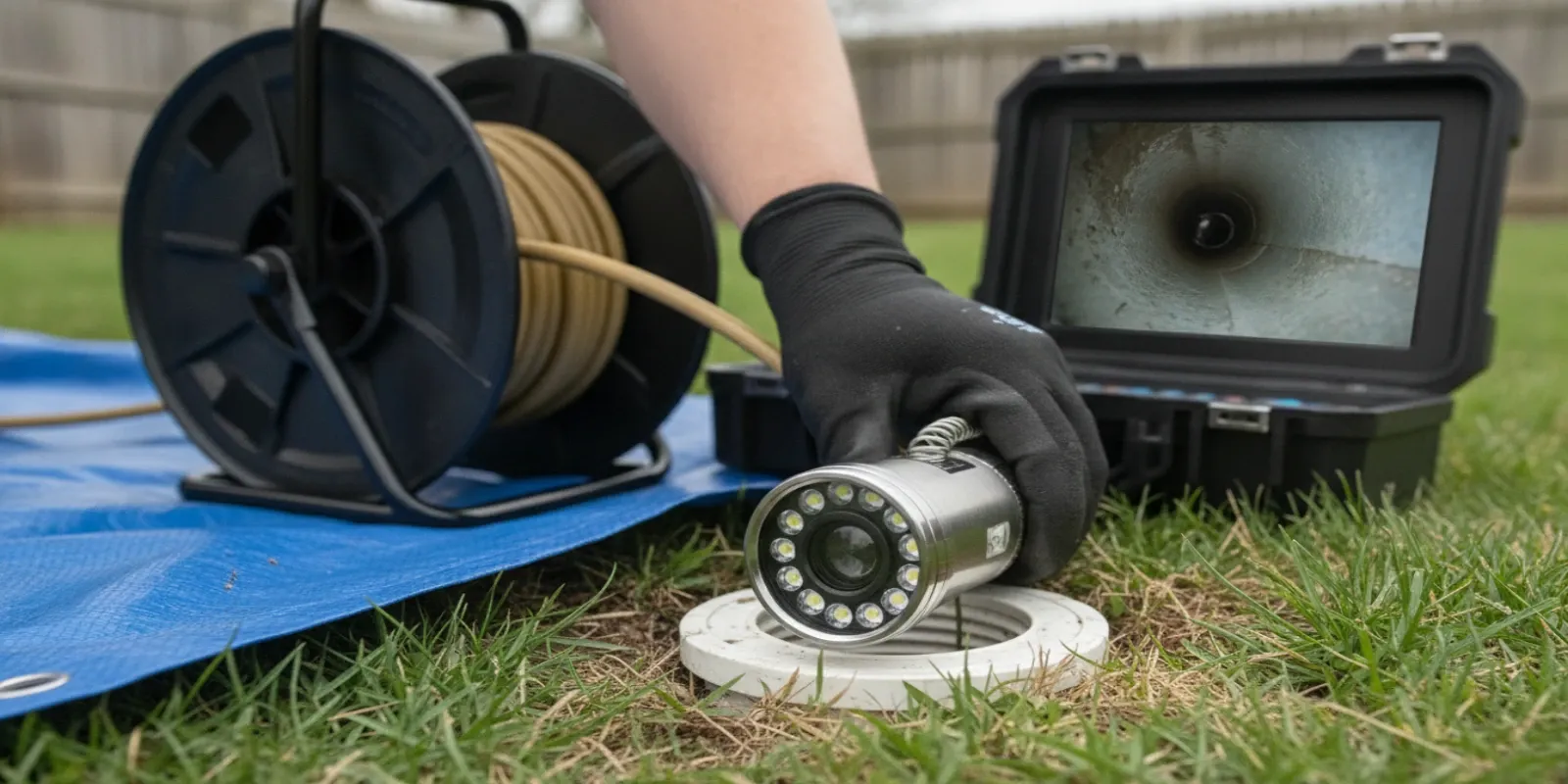
- Consider tools for concealed problems. Depending on the symptoms and access, a plumber may use moisture, thermal, or acoustic tools to investigate concealed problems. These tools support investigation; they are not a substitute for interpreting the property’s full plumbing context.
- Ask water-quality and service-line questions when relevant. If the property’s age or records raise a lead concern, contact the local water authority first for information about tap-water testing and potential service-line identification. The CDC says lead cannot be seen, tasted, or smelled in drinking water and recommends asking the water provider whether a lead service line serves the home and whether removal assistance may exist: CDC drinking-water guidance.
- Get a property-specific recommendation. The final discussion should explain what was observed, what remains uncertain, and whether a localized repair or broader replacement is worth considering. Ask which findings support that recommendation, what access or restoration questions may affect the work, and which details still need confirmation before making a decision.
This approach helps keep a suspected main water line replacement grounded in evidence instead of assumptions. It also gives you a clearer basis for comparing the available options for your home.
What Should Northeast Tennessee Homeowners Plan For?
Before work begins, think about how the project may affect access to the property and your household routine. A plumber may need a clear path to the suspected line, shutoff points, entry areas, or portions of the yard. Move belongings that could block access, but do not excavate or expose a buried line yourself. The likely route may not be obvious from the indoor plumbing, especially when older records are incomplete.
Ask how the work could affect water use in the home. A main water line replacement may require water to be turned off for part of the project, but the exact interruption depends on the property and the work involved. Plan around cooking, bathing, pets, and anyone who needs reliable water access. Your plumber should explain what is known, what remains uncertain, and what decisions need to be made before work starts.
Property and utility questions matter in Northeast Tennessee, including who controls the connection, where the line crosses the property, and whether other buried utilities may affect access. Terrain, recent rain, freezing conditions, and the condition of the surrounding ground can also influence how a route is evaluated. These variables should be confirmed for the specific home rather than assumed from a neighboring property or a general service description.
If you are concerned about the line material or drinking-water safety, contact the local water authority first. The CDC recommends asking the water provider whether a lead service line serves the home and whether assistance programs may exist for removal. Lead cannot be seen, tasted, or smelled in drinking water, so appearance alone cannot confirm safety. Share water-bill changes, pressure symptoms, prior repairs, property plans, and any utility information with the plumber. Clear communication helps the evaluation stay focused and gives you a more useful property-specific recommendation.
What Affects the Scope and Cost of the Project?
The scope of a main water line replacement depends on the specific property, not on a standard package. An on-site estimate should account for what the plumber can confirm about the existing line, its route, and the work needed to reach and reconnect it. Tommie’s Plumbing describes on-site Good, Better, Best options, but its customer information does not establish a fixed replacement price or universal project method.
Route, access, and pipe condition
A longer water line may involve more work than a short, accessible section. The route also matters. A line beneath a driveway, finished area, landscaping, or other obstruction can require different access and restoration planning than a line in an open, reachable area. The condition of the pipe affects the recommendation as well. A localized damaged section may be evaluated differently from a line with repeated failures, widespread deterioration, or uncertain material.
Connections, testing, and restoration
The estimate may also reflect how the line connects at the home and at the water source, along with the condition of shutoffs, fittings, and other connection points. Testing after the work helps confirm that the system is functioning as expected. Restoration is another separate consideration, especially when access affects soil, concrete, plants, flooring, or other finished surfaces. The exact restoration needs depend on what the evaluation finds and what areas must be opened.
Local requirements and property questions
Utility responsibilities, local requirements, easements, and site conditions can influence planning, but they should be confirmed for the property rather than assumed. Ask which details the plumber needs from you and what questions should be directed to the water provider. A careful evaluation gives you a project-specific explanation of the work, its variables, and the choices available before you decide how to proceed.
What Should You Do Before Calling a Plumber?
A little preparation can help a plumber understand what changed and evaluate the property more efficiently. Start by writing down when you first noticed the problem and what you observed. Note pressure changes, damp areas, unusual sounds, discolored water, unexplained water use, or whether the issue appears after a particular fixture runs. Photos of visible moisture or yard conditions can also preserve details that change before the appointment.
Do not excavate the yard, open walls, or remove flooring to search for a suspected line problem unless a qualified professional has given you specific instructions. Digging or dismantling surfaces can create new damage and may interfere with locating the actual route. Avoid assuming that one symptom proves a main-line failure. A professional evaluation can help separate a service-line concern from an interior leak, fixture issue, or another plumbing problem.
Gather recent water bills if usage has changed, and identify the location of the main shutoff if you know it. Make a short list of questions about access, water interruptions, landscaping, driveways, property boundaries, and whether a water provider needs to be contacted. If you have concerns about lead or other water-quality issues, ask your water provider about testing and service-line information rather than relying on appearance, taste, or smell.
When you are ready, schedule plumbing service and share these details during the request. Tommie’s Plumbing can review the situation and confirm the appropriate scope for your property.
Need help understanding possible water-line trouble? Request an evaluation before attempting disruptive work yourself.
Frequently Asked Questions
How much does it cost to replace a main water line?
There is no reliable one-size-fits-all price. The total depends on the line’s length and route, access, existing pipe condition, connections, excavation or surface restoration, and any property-specific requirements. A plumber should evaluate the site and provide an estimate based on the actual scope rather than an online range.
Can I replace my main water line by myself?
Main water-line work is usually not a good do-it-yourself project. Finding the route, protecting other utilities, making dependable connections, managing water interruption, and restoring the property can create significant risks. You can document symptoms and locate accessible shutoffs, but have a qualified plumber assess the line before digging or opening the ground.
Does homeowners insurance cover main water line replacement?
Coverage depends on your policy, the cause of the damage, the location of the line, and exclusions such as wear, deterioration, or earth movement. Contact your insurance provider before authorizing major work and ask what documentation or inspection it requires. Do not assume that a covered interior leak means an outside service-line replacement is covered.
When is repair better than main water line replacement?
A localized, accessible defect may be a candidate for repair, while repeated leaks, widespread deterioration, or a line that cannot be reliably restored may make replacement worth discussing. The right choice depends on the specific pipe, route, condition, and history of the problem. An on-site evaluation can compare practical options without assuming that every damaged line needs full replacement.
Schedule a Property-Specific Evaluation
Possible main water line problems can have more than one cause, so an evaluation can help clarify the next step for your property. Tommie’s Plumbing can review the situation, explain what the findings may mean, and discuss whether repair or replacement should be considered.
Schedule plumbing service for a property-specific evaluation.