

Septic tank replacement is a major decision, and a warning sign does not automatically mean the tank itself has failed. A backup, wet area, odor, or slow drain can have several causes, so the first step is to identify what is happening and which part of the system is involved. A careful inspection and clear estimate help you understand the options before you commit to work.
Request help with a septic system concern
What does septic tank replacement mean?
A septic system handles wastewater from a property that is not connected to a public sewer. The tank is one part of that system. Wastewater flows into the tank, where heavier material settles and lighter material forms a layer at the top. The liquid then moves onward to the next part of the system, which may include a distribution component and a soil-based treatment area. The exact layout varies by property.
Replacing a tank means removing or decommissioning the existing tank and putting a suitable tank in its place, with the connected system assessed as part of the work. It does not automatically mean every component on the property needs replacement. It also does not mean that a tank replacement by itself will solve a problem caused elsewhere, such as a blocked pipe or a concern with the drainfield.
People sometimes use “septic system replacement” and “septic tank replacement” to mean the same thing, but they can describe different scopes. Ask the professional to state whether the estimate covers only the tank, the connections, related components, or a larger system repair. A precise description makes it easier to compare proposals and avoid misunderstanding what is included.
Which signs make an inspection important?
Some symptoms deserve prompt attention, but no single symptom proves that a tank needs replacement. Look for patterns and tell the service professional when they began, how often they occur, and which fixtures or areas are affected. Useful observations include:
- More than one plumbing fixture drains slowly or backs up, especially when water is used in the home.
- Wastewater returns through a floor drain, toilet, or other low fixture.
- A strong sewage odor is present indoors or outdoors and does not go away after ordinary household cleaning.
- A patch of ground near the system stays unusually wet or shows persistent wastewater surfacing.
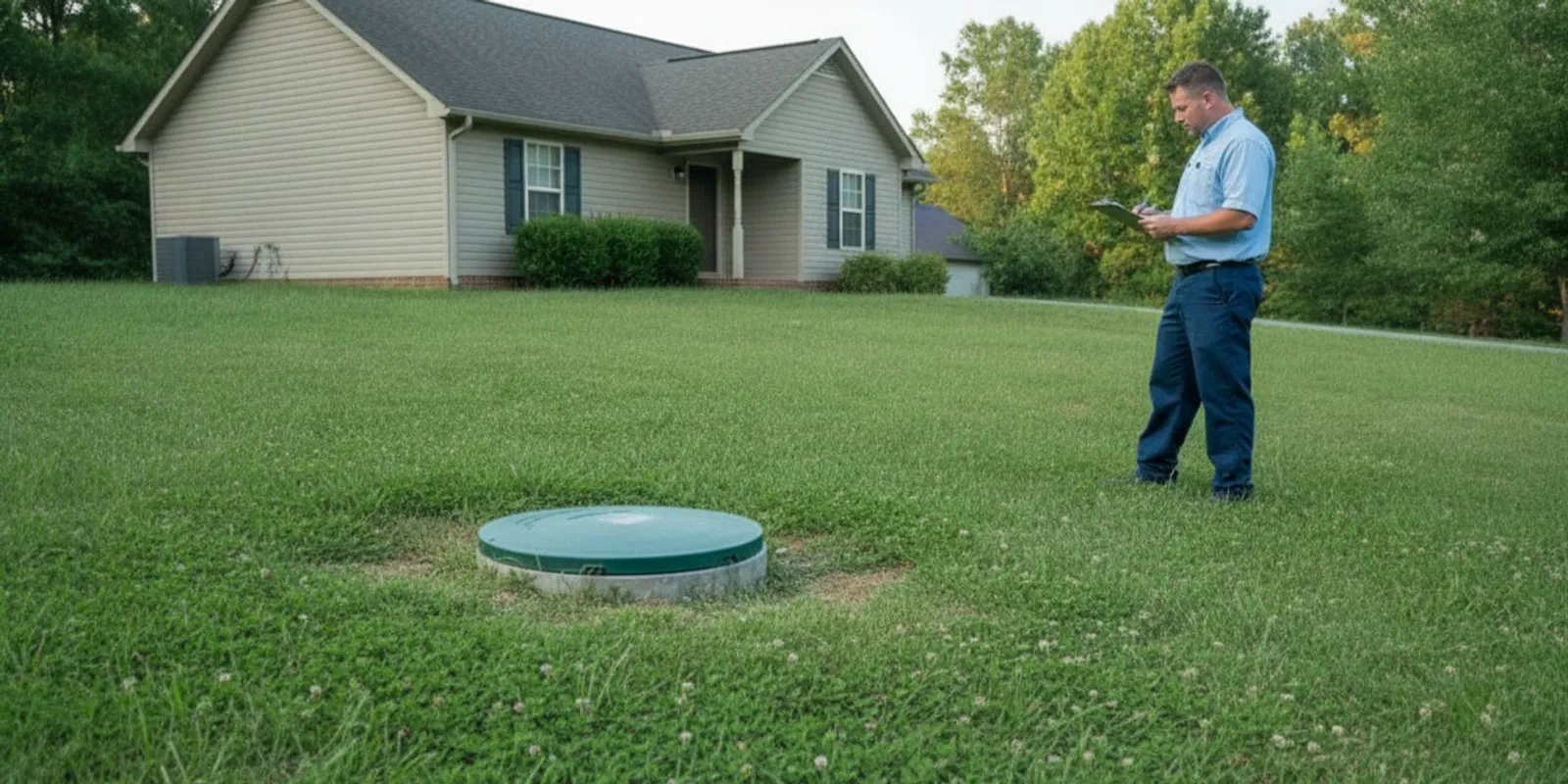
- There is a visible change around an access point, such as a damaged lid or an area that appears to have settled.
- Recurring problems continue after a prior repair, pumping visit, or drain clearing.
These clues have different possible explanations. A local drain blockage may affect one fixture, while a building drain problem can affect several. A waterlogged or damaged system component may create symptoms outside. Heavy rain and changes in water use can also make an existing weakness more noticeable. Do not open a tank, enter a tank, or lean over an access opening to investigate. Septic tanks can present dangerous conditions, and inspection should be left to trained professionals using appropriate procedures.
Make note of whether symptoms are constant or intermittent and whether they change after laundry, showers, or other heavy water use. If sewage is backing up indoors or surfacing outdoors, reduce water use and contact a qualified service provider promptly. Keep people and pets away from wastewater and from open or damaged access points.
Could another problem look like a failed tank?
Yes. A symptom can originate in a pipe, a tank, or another part of the system. A slow drain in one sink, for example, may be a fixture or branch-line issue rather than evidence about the septic tank. Several affected fixtures point to a broader drainage concern, but that still does not identify the failed component by itself.
Other possibilities include a blocked or damaged pipe, a problem with a tank inlet or outlet connection, a full tank, an issue with the distribution area, or a drainfield that is not accepting effluent as expected. The site and how the household uses water matter as well. A technician needs to gather information and inspect relevant accessible components before recommending replacement.
Ask what evidence supports the diagnosis. The explanation should connect the observed condition to the recommended work: what was inspected, what was found, and why that finding makes repair or replacement appropriate. If the evidence is uncertain, ask what additional inspection would answer the open question. Avoid approving a large scope solely because a symptom sounds serious or because a single warning sign is present.
If you are unsure whether a problem is inside the plumbing or part of the wider system, describe what you observe and ask what kind of evaluation is appropriate. Tommie’s plumbing service information explains its broader plumbing work, while the frequently asked questions page is another place to start with general service questions.
What should an inspection establish?
An inspection should help determine the condition of the tank and how the symptoms relate to the rest of the system. The specific steps depend on the system layout, site conditions, access, and reason for the visit. Before work is proposed, ask the professional to explain what could be evaluated during the appointment and whether any part of the system cannot be checked without additional work.
Bring forward details that can help with the assessment. Useful information may include the approximate age of the system if known, previous service records, prior repairs, the location of access points, and any known changes to the property. Tell the professional about recurring backups, unusual odors, wet ground, or recent changes in water use. If you have a property plan or system record, let them know it is available.
Do not guess at the system’s age or layout if you are unsure. It is better to say that a detail is unknown than to make a confident but inaccurate claim. Ask which components were actually observed and which conclusions are based on reported symptoms. A clear distinction between observed facts and open questions helps you understand the recommendation.
For a concern that might extend beyond one property feature, a service professional may explain that another qualified specialist or local authority needs to be involved. Ask who is responsible for each part of the process, what must happen before work begins, and what information you should obtain in writing. Requirements can depend on the specific site and project, so do not rely on a general online checklist as a substitute for confirming the applicable requirements for your property.
What details can change the replacement scope?
There is no single scope that fits every property. The appropriate work depends on the diagnosis and the physical conditions at the site. When reviewing an estimate, ask which of these factors have been considered and which remain unknown.
Tank condition and size
The condition, configuration, and capacity of an existing tank help inform a recommendation. The right choice should be based on the actual property and system needs, not simply on the size of the old tank or a guess based on the number of people living in the home. Ask what information was used to identify a suitable replacement and whether the proposed tank changes any existing connection or arrangement.
Access and work area
Access can affect the steps needed to reach the tank and carry out work. The distance from a driveway, gates, landscaping, slopes, and the location of buried utilities or other features may matter. Before scheduling, point out narrow access, fragile landscaping, retaining walls, fences, or areas where equipment should not travel. Ask what parts of the yard may be disturbed and how the work area will be protected where practical.
Connections and other system components
A tank does not operate alone. Inlet and outlet connections and the path that wastewater takes beyond the tank should be considered when diagnosing the issue. If a proposal includes work beyond the tank, ask what finding justifies each added item. If the estimate excludes other components, ask whether they were checked and what that exclusion means for the expected outcome.
Site conditions and project requirements
Ground conditions, drainage, property layout, and the location of the existing system can affect planning. The professional should explain whether the proposed approach depends on conditions that have not yet been confirmed. Ask which approvals, inspections, or other steps may apply to your specific project and who will verify them. Do not assume that one property’s process or timeline is the same as another’s.
When might repair be worth discussing instead?
Replacement is not the only possible recommendation when a system has a problem. Depending on what an inspection finds, a localized repair, clearing an obstruction, or work on a connection may address the cause without replacing the tank. Repair will not suit every situation. The key is to understand what is damaged, whether the proposed repair can address it, and whether other components appear affected.
Ask the professional to explain the practical limits of repair. Would the repair address the source of the symptom or only provide a temporary change? Is there visible damage that cannot be corrected reliably? Does a prior repair history affect the recommendation? What risk remains if you choose a limited repair rather than broader work? These questions help you weigh the choices without assuming that the smallest scope is always best or that a full replacement is always necessary.
If the estimate includes more than one possible approach, ask for the differences in writing. The comparison should describe the expected work, the problem each option is meant to address, and what would not be included. It should also identify any condition that could change the recommendation after more of the system is accessible. That gives you a clearer basis for deciding whether to proceed, ask for another evaluation, or seek clarification.
A second opinion may be reasonable when the diagnosis or scope remains unclear, particularly for a substantial project. Share the first inspection findings and estimate so the next professional can understand what has already been evaluated. Ask whether the second assessment can independently verify the diagnosis rather than simply restating a total. Avoid delaying urgent attention to sewage backup or surfacing wastewater while you compare non-urgent proposals.
How can you compare estimates fairly?
Compare scope before comparing totals. Two estimates may look different because one covers a limited repair and the other includes more components, site work, or follow-up. Ask for the description in writing so that you can see what is included, what is excluded, and what could change after work starts.
Use these questions to make a practical comparison:
- What condition did the inspection identify, and what evidence supports the diagnosis?
- Does the proposal cover the tank only, or does it include connections and other system components?
- What work, materials, removal, disposal, or site restoration are included in the stated scope?
- What is excluded, and could an exclusion prevent the recommended work from resolving the reported problem?
- Which site conditions could change the scope or estimate once the work area is accessible?
- Are there required approvals or inspections that need to be confirmed before or during the project?
- How will changes to the scope be explained and approved?
- What preparation should the homeowner complete before the service visit or work date?
Ask for a clear explanation rather than relying on a broad label such as “replace the system.” A written scope should state the work being proposed in terms you can understand. If the estimate has an allowance or a condition that could lead to additional work, ask what triggers it and how the change will be communicated. A professional should be able to explain the reasoning without pressuring you to make a decision before you understand the proposal.
Cost depends on the actual scope, access, materials, and site conditions. There is not enough information to give a reliable price for an individual property without an evaluation. Be cautious about treating an online range as a quote for your home. Instead, ask for an on-site estimate that describes the work and its assumptions. Tommie’s FAQ describes on-site estimates using Good, Better, and Best options; ask which choices, if any, are relevant to the work being considered.
How should you prepare for an appointment?
A little preparation helps the visit focus on the issue. Before the appointment, write down the symptoms, when they started, and whether they affect one fixture or several. Note any indoor backup, outdoor odor, unusual wet area, or change that seems to make the issue worse. Share any service history or system records you have, but do not delay asking for help because a record is missing.
Make access points and the route to the work area easy to identify if it is safe to do so. Keep pets and children away from the area, and tell the service professional about gates, locked areas, or obstacles. Do not dig to locate a tank or open an access point yourself. If you know the general location but are not sure, explain that uncertainty when arranging the visit.
Ask what should remain available during the appointment and whether anyone needs to be present to answer questions about the property. Confirm the requested appointment window and how you will receive confirmation. Tommie’s service scheduling page describes how to submit a service request, and the service-area information can help you check whether your community is listed. Serviceability should be confirmed for the specific address.
What should you expect after the evaluation?
After the assessment, ask the professional to summarize the diagnosis, the proposed work, and any uncertainty. If more than one option is appropriate, ask what each option addresses and what it does not address. If replacement is recommended, have the professional explain why repair is not suitable or why the existing tank’s condition calls for a different solution.
Before approving work, make sure you understand the written scope and the sequence of next steps. Clarify who handles any applicable coordination, what access is needed, how changes will be approved, and what the homeowner should do while waiting. Ask how the work area will be left and whether any follow-up or inspection needs to be arranged. Keep a copy of the estimate and any records you receive.
Do not assume a symptom will disappear just because a tank is replaced if the underlying cause has not been identified. Ask how the recommended work relates to the specific symptoms you reported, and whether any separate problem remains outside the scope. A useful service conversation leaves you with a clear understanding of what is being addressed and what is not.
When should you seek help promptly?
Contact a qualified professional promptly if wastewater backs up into the home, sewage surfaces in the yard, or a strong sewage odor persists near the system. Reduce water use if additional wastewater could worsen the situation. Keep children and pets away from any affected area. Do not enter a tank or attempt to move, open, or repair a damaged cover.
If the problem is limited to one fixture and there is no sewage backup, you can still arrange an evaluation, especially if it keeps returning. When you call, describe the symptoms plainly rather than diagnosing the tank yourself. A homeowner can report what is visible and when it occurs; determining the failed component takes an appropriate assessment.
Frequently asked questions
Does a slow drain mean the septic tank needs replacement?
No. A slow drain may have a local plumbing cause, and even multiple affected fixtures do not identify the failed component on their own. Tell the service professional what is affected and ask for the cause to be assessed before agreeing to tank replacement.
Can a tank be replaced without evaluating the rest of the system?
The tank should be considered in the context of the system it connects to. Ask which connections and related components were checked, which were not evaluated, and whether any separate concern could remain after the proposed work.
How long does septic tank replacement take?
The schedule depends on the property, access, scope, site conditions, and any steps that need to be completed before work begins. Ask the service provider for a project-specific sequence and what could affect the timing rather than relying on a general duration.
Can I inspect or open the tank myself?
No. Do not enter a septic tank or open an access point to investigate. Have a qualified professional inspect the system safely, and keep people and pets away from an open or damaged access area.
Septic tank replacement decisions are easier when the diagnosis, scope, and next steps are explained clearly. Gather the symptoms and records you have, ask what the inspection found, and make sure the written estimate answers your questions before you approve work.