

Sewer line repair cost is not a single figure that applies to every home. The estimate depends on what failed, where the damaged section is, how the plumber can reach it, and what work is needed to restore reliable drainage. For homeowners in the Tri-Cities and Northeast Tennessee, understanding these factors can make it easier to compare an estimate with the actual problem instead of relying on a generic online number.
Contact Tommie’s Plumbing to discuss a sewer line concern
Why can sewer line repair cost vary so much?
A sewer line is a buried system, so a problem that looks similar inside the house can require very different work outside. One homeowner may have a small, reachable section with a clear defect. Another may have a break under a driveway, a long distance from an access point, or several damaged areas. The symptom alone does not show the full extent of the work.
That is why a responsible estimate starts with the condition and location of the line, not an assumption about the repair. A slow drain, recurring blockage, or wastewater issue can have more than one possible cause. A plumber needs to identify what is happening and where before recommending work. If the cause is not yet clear, the first step may be diagnosis rather than an immediate repair.
Online prices can be misleading because they may describe different jobs, pipe conditions, access requirements, or service areas. A published amount might exclude locating the problem, excavation, restoration, or work beyond a specific repair. It may also refer to replacement or installation rather than repair. Those differences matter. An estimate for one property should be based on that property’s conditions and the scope of work being proposed.
It also helps to separate a drain-clearing visit from a sewer line repair. Clearing may remove an obstruction and restore flow, but it does not necessarily repair a cracked, displaced, or otherwise damaged pipe. If a blockage returns, ask whether the plumber has identified an underlying pipe condition or whether the cause remains uncertain. Paying for a particular repair without confirming that it addresses the recurring problem may not answer the real question.
Think of an estimate as a description of a planned job, not only a price. The amount is meaningful when you can connect it to the area involved, the work steps, and what the plumber expects the work to accomplish. If a proposal uses unfamiliar terms, ask for a plain-language explanation. It is reasonable to pause and understand what you are authorizing before excavation or repair begins.
What does the estimate need to identify first?
Before comparing amounts, make sure you know what problem the estimate addresses. A useful estimate should connect the observed condition to the work being recommended. If a plumber finds a damaged section, the explanation should identify the affected area as clearly as practical and describe why the proposed repair is appropriate.
Ask whether the estimate is based on a confirmed defect or on a likely cause that still needs verification. Ask how the plumber reached that conclusion and whether any part of the line remains unexamined. If there are multiple symptoms, clarify whether the proposed work addresses all of them or only one specific issue.
Diagnosis can involve checking fixtures and drains, assessing the line through an appropriate inspection method, or locating the affected area. The steps depend on the symptoms and the property. A diagnostic visit is not the same as a repair, and a preliminary finding may not establish every condition along the full line. Knowing what has and has not been confirmed helps you understand the estimate and avoid treating a guess as a final scope.
When contacting a plumber, share the timeline and pattern rather than only saying the sewer is clogged. Explain which drains are affected, whether the problem is constant or intermittent, when you first noticed it, and whether previous clearing or repair work was done. These details do not replace an inspection, but they can help the plumber decide what to check.
How does the location of the damage affect the estimate?
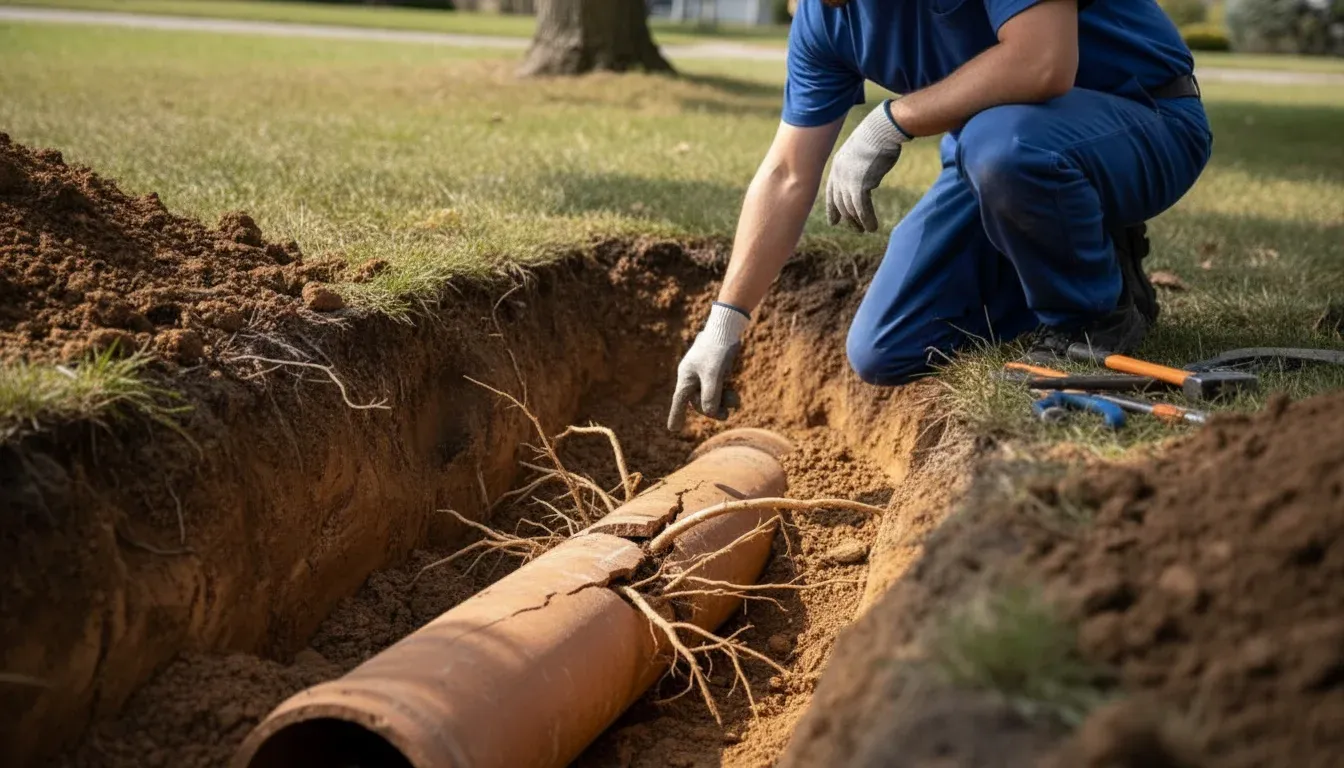
Location influences how much work is required to reach the pipe and complete a repair. A damaged section in accessible soil may be simpler to expose than one beneath a slab, paved area, landscaping, a structure, or another obstruction. The line’s depth and its route across the property can also affect the work plan.
Access is more than the distance from the house. The crew may need room to work safely, protect nearby property, remove material, and move equipment. Tight side yards, steep ground, established landscaping, retaining features, and nearby utilities can make access more complicated. A location that is easy to point to from indoors may still be difficult to reach from outdoors.
The route matters as well. If the affected section is near a point where the line changes direction or connects to another part of the system, the plumber may need to consider how the repair ties into the existing pipe. If a line runs under a hard surface, reaching it could involve additional removal and restoration. A clear estimate should explain the access assumptions, not simply list a repair task without describing where it will happen.
Homeowners can help by sharing information they already have, such as prior plumbing work, known line routes, or areas where digging should be avoided. Do not assume that an old drawing or remembered route is exact. The plumber should verify conditions before work begins. Marking private utility lines or digging without appropriate precautions can create safety and property risks; leave excavation planning to qualified professionals.
How do the pipe condition and repair size change the work?
The scope depends on the type and extent of damage. A localized crack, separated connection, crushed area, or other defect may call for a different repair plan than widespread deterioration or several failed sections. The material, size, alignment, and condition of the existing pipe can affect how a new section connects and whether the surrounding pipe appears suitable to remain in service.
It is important to distinguish a repair from a larger replacement project. A repair addresses a defined problem area. Replacement may be considered when damage is extensive, multiple sections are failing, or the remaining pipe cannot reasonably support a durable localized fix. That decision should be explained based on the observed condition, not presented as an automatic response to one symptom.
Ask the plumber to describe the limits of the proposed repair. How much pipe is included? What will happen at the connections to the existing line? Is the recommendation based on a specific damaged segment or concern about the broader system? If a repair is expected to restore flow but not correct a separate condition elsewhere, ask that distinction be made clear.
Older piping or previous repairs can add uncertainty. A newly opened area may reveal conditions that were not visible before access was gained. This does not mean every job will change once work starts, but the estimate should explain how hidden conditions will be handled. Before authorizing work, ask what would prompt a change in scope and how you will be informed if the actual condition differs from what was initially found.
What role do digging and property restoration play?
When a buried line needs repair, access work can be a meaningful part of the project. The estimate may account for exposing the pipe, removing the damaged portion, making connections, checking the repair, and closing the work area. The amount of excavation depends on the location, depth, soil, line layout, and the repair method that is appropriate for the confirmed condition.
Restoration is another point to clarify. Ask what the estimate includes after the plumbing work is complete. Does it cover backfilling the excavation? Does it include replacing a section of concrete, paving, or landscaping, or is that work outside the plumbing scope? If restoration is excluded or limited, ask what condition the area will be left in and who is responsible for any separate finishing work.
Do not compare two estimates as though they cover the same job until you have checked these details. One may include a particular access or cleanup step that the other excludes. The lower initial amount may not represent the lower overall project cost if separate work will be needed afterward. On the other hand, a higher amount is not automatically better. The scope and assumptions explain what the number means.
There may also be site conditions that cannot be confirmed until the work area is opened. Ask how the plumber will communicate about unexpected obstacles or additional damage before proceeding beyond the approved scope. Agreeing on that process helps prevent confusion if the actual conditions differ from what was visible during the initial assessment.
Surface restoration can be easy to overlook when attention is focused on getting the pipe repaired. A lawn, walkway, driveway, or planting bed may require different steps to return it to a usable condition. Ask whether the estimate describes temporary work-area cleanup or finished restoration, since those are not necessarily the same thing. If a separate contractor may be needed for paving or landscaping, factor that responsibility into your project planning rather than assuming it is part of the plumbing work.
Ask how access will affect normal use of the property during the repair. A work area may limit access to a path, parking space, or part of the yard while the pipe is exposed. The plumber can explain the expected work area and any known disruption. This is not a substitute for the cost breakdown, but it helps you evaluate the full practical impact of the proposed scope and plan around the visit.
Does the repair method affect sewer line repair cost?
Different repair methods can involve different equipment, access needs, and amounts of disruption. The suitable method depends on the location and type of damage, the pipe’s condition, and whether a targeted repair is practical. A method that is appropriate for one line should not be assumed to suit another property.
Ask why the recommended method fits the problem found at your home. What section will be repaired? How will the plumber access it? What work is included to connect the repaired section and verify the result? If more than one approach is appropriate, ask what differs in scope, expected disruption, and restoration responsibilities. The answer should be tied to the actual line rather than a general promise about a method.
Be cautious about choosing a proposal solely because it describes a method as faster or less disruptive. Those benefits depend on the site and the pipe. A method that minimizes one kind of work may not solve the underlying issue if the affected area has not been correctly identified. The key is a clear diagnosis followed by a repair plan that fits the confirmed condition.
When a plumber explains a recommended approach, listen for how it addresses the specific defect. A useful explanation connects the observed condition to the repair steps and notes what parts of the system are not included. If the proposal is for one section, ask whether the rest of the line was evaluated and whether there are known concerns beyond that section. A narrow repair can be reasonable when the issue is localized, but it should not be mistaken for an assessment of every part of the sewer line.
Ask what will be checked after the repair and what the confirmation can tell you. The exact check depends on the work and site, so avoid assuming that every repair uses the same test. The goal is to understand how the plumber will verify the completed work and what result is expected. If the work restores a damaged segment but another symptom persists, ask how the plumber would investigate that remaining concern.
For more information about the types of sewer line work a plumber may evaluate, see Tommie’s Plumbing’s sewer line repair service information. The appropriate work and estimate still depend on the specific line and property.
How can you compare two sewer repair estimates?
Start by comparing the scope line by line, not just the total. If one estimate describes the damaged section, access, pipe connection, and cleanup while another gives only a brief label, ask for the details needed to make a fair comparison. An estimate should be understandable enough for you to know what you are approving.
- Problem identified: What condition was found, and where is it located?
- Work included: What section will be repaired, and what steps are part of the job?
- Access: What excavation, surface removal, or other access work is assumed?
- Materials and connections: What is being repaired, and how will it connect to the existing pipe?
- Testing or confirmation: How will the plumber check the completed work?
- Restoration: What cleanup, backfill, or surface repair is included or excluded?
- Unforeseen conditions: How will changes be explained and approved?
- Timing and site disruption: What should you expect while the work area is open?
Ask each plumber to clarify the same points. If a proposal includes a larger scope, ask what evidence supports it. If it includes a narrower repair, ask what remains outside the work and what limitations that creates. A clear explanation is more useful than trying to decide from a total alone.
Make sure you are comparing the same stage of the process, too. One proposal might cover an evaluation or locating work, while another might describe repair work after the damaged area has been identified. Check whether a charge applies to the assessment, whether it is separate from the repair, and what the estimate says about that. Do not assume that two documents use the word “estimate” to mean the same included work.
If there is a difference between proposals, ask about the reason rather than asking a plumber simply to match a number. The difference may come from distinct findings, access plans, or restoration assumptions. A helpful answer should identify the difference and let you decide whether the scopes are comparable. You can also ask which parts of the project are certain and which depend on conditions that have not yet been exposed.
It can also help to ask for the estimate in writing and keep any inspection findings with it. Written details reduce the chance of misunderstanding the affected location or restoration responsibilities. If you are unsure about terminology, ask the plumber to explain it in plain language before deciding.
What information should you have ready before requesting an estimate?
You do not need to diagnose the sewer line yourself. A concise description of what you have noticed is enough to help start the conversation. Try to collect the following information, if you know it:
- Which fixtures or drains are affected, and whether more than one area is involved.
- When the issue began and whether it happens continuously, occasionally, or under certain conditions.
- Whether wastewater has appeared inside or outside, and where you saw it.
- Any prior sewer clearing, repairs, renovations, or known changes to the property.
- Known concerns about access, such as paving, a building, steep ground, or landscaping near the likely route.
- Any available records or diagrams that may help locate the line, while recognizing that they may not be exact.
Describe what you observed without assigning a cause. For example, “Several drains have slowed since last week” is more useful than deciding in advance that a particular pipe has collapsed. Avoid repeated attempts to clear a problem if wastewater is backing up or the symptoms are worsening. A plumber can advise what to do next based on the situation.
Before approving work, ask what the estimate covers, what is excluded, and how additional work would be discussed. Tommie’s Plumbing’s FAQ describes on-site estimates with Good, Better, and Best options; you can review the plumbing estimate and service FAQs and confirm the details that apply to your project directly.
When should a sewer problem be assessed promptly?
Do not ignore sewage or wastewater coming up through a drain, a persistent sewage odor, or repeated drainage problems that affect multiple fixtures. These signs do not by themselves prove that the buried sewer line is damaged, but they are reasons to have the cause assessed. If wastewater is present indoors, limit contact with it and keep children and pets away from the affected area.
Tell the plumber what is happening now, whether it is getting worse, and whether any part of the home is unusable. If you see a suspected leak outdoors, avoid disturbing the area. Prompt evaluation can help identify whether the issue involves the sewer line or another plumbing condition and what action is appropriate.
Cost questions are reasonable, especially when a repair may involve excavation or property restoration. The best way to get a useful estimate is to explain the symptoms, have the issue evaluated, and review the proposed scope before work begins. For general information about plumbing repairs and services, visit Tommie’s Plumbing online.
Request help evaluating a sewer line problem
Frequently asked questions
Can you get an accurate sewer line repair cost without an inspection?
A phone description or online average cannot confirm the location, extent, or accessibility of damage. A plumber may be able to discuss the information needed and likely next steps, but a project-specific estimate generally requires assessing the condition and the work involved.
Does a sewer line repair estimate include digging and restoration?
It depends on the scope stated in the estimate. Ask specifically whether access, excavation, backfill, cleanup, and replacement of affected surfaces are included. Do not assume that every estimate covers restoration in the same way.
Is repairing a sewer line always less expensive than replacing it?
Not necessarily. A repair may be suitable when there is a clearly defined, localized defect, while more extensive damage may call for a broader solution. The right comparison depends on the observed pipe condition, the work included, and the limitations of each proposal.
Why might the estimate change after work starts?
Some conditions are hidden until a pipe is exposed or further inspected. Ask in advance what kinds of findings could change the scope, how the plumber will explain them, and whether you will be asked to approve additional work before it proceeds.
A clear sewer repair estimate explains the problem, the proposed work, and the assumptions behind the cost. With those details in hand, you can make a more informed decision for your home in Northeast Tennessee.