

Water leak detection cost depends on what may be leaking, how easily a plumber can inspect it, and how much work is needed to narrow down the source. A stain, recurring dampness, or an unexplained increase in water use can have more than one cause, so an estimate should reflect the situation rather than an assumed diagnosis. Tommie’s Plumbing brings more than 30 years of plumbing trade experience to families and businesses across the Tri-Cities and Northeast Tennessee. Its water leak source service is the place to start when you need help finding where water is coming from.
Call (423) 638-3662 to discuss a suspected leak
Why can water leak detection cost vary?
There is no single estimate that fits every leak. A visible drip beneath a sink is different from moisture appearing on a ceiling while the pipe above it remains hidden. The work may involve listening to your description, checking accessible plumbing, following evidence, and deciding whether more specialized testing or access is warranted. Ask the plumber to explain which charges cover evaluation and which cover any repair.
Several practical factors can shape the scope:
- Likely source: A fixture connection, supply line, drain, water heater, or another system can call for different checks. A wet mark alone does not identify the source.
- Access: Exposed piping is generally easier to inspect than a line behind finished walls, beneath flooring, or in a tight space. Opening and restoring a surface may be a separate part of the work.
- Symptom clarity: A steady drip or a localized wet area may offer a useful starting point. Intermittent moisture, an odor, or a bill increase without visible water can take more investigation.
- Extent of the affected area: Water can travel along framing or other surfaces before it becomes visible. The stain may be some distance from the point where water escaped.
- Timing and urgency: Active water that is continuing to wet materials raises the importance of promptly limiting further damage and arranging an assessment.
- Follow-up work: Locating a leak and fixing it are separate steps. Repair scope depends on the failed component and what is required to reach it.
These factors interact. For example, a small ceiling stain that appears only after a shower could involve a drain, a supply connection, or water escaping at the shower itself. A plumber may first ask about timing and inspect accessible fixtures before recommending any access to a concealed space. The estimate should make clear what is known, what remains uncertain, and what could change the scope.
What does a leak evaluation involve?
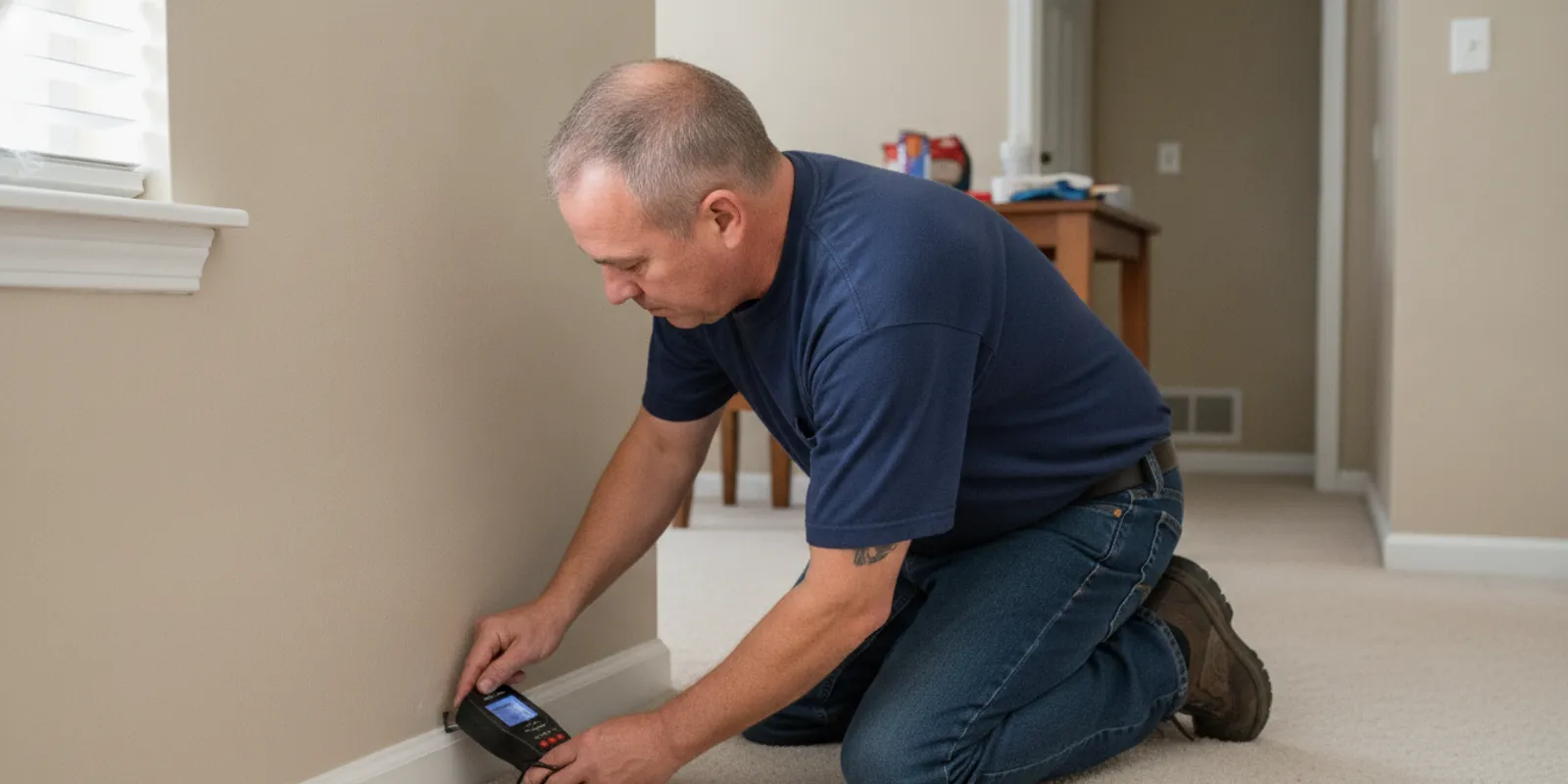
A plumber typically begins with the history and visible evidence. Be ready to explain when you first noticed the issue, whether it is constant or intermittent, what fixtures were in use, and whether the affected area has changed. The plumber may inspect accessible pipes and fixtures, observe the area, and use suitable diagnostic methods to narrow the possibilities. The approach depends on the building, the symptoms, and the suspected system.
Detection is not always one test that provides an immediate answer. Moisture on a wall could be related to plumbing, water entering from another route, or a fixture used at a particular time. A careful assessment separates observations from assumptions: a damp patch is an observation; a particular pipe being the cause is a conclusion that needs supporting evidence. If more testing or access is needed, ask why and what that next step is expected to clarify.
Where a pipe is suspected, its material, location, and accessibility can affect the investigation. The company handles plumbing repairs and larger pipe projects, including repipes; its plumbing services page describes its broader work. For a suspected issue with copper piping, see the information about copper pipe repair. These pages provide context, but the right repair depends on what an inspection finds in your home.
How can you narrow down the likely source?
You do not need to diagnose the leak before asking for help. A short, accurate record can help the plumber focus the evaluation and reduce repeated guesswork. Avoid opening walls or taking apart plumbing to investigate on your own.
- Record when it happens. Note whether moisture is constant, appears after a shower or laundry, or follows use of a particular fixture. If it comes and goes, write down the approximate time and what was being used.
- Map the visible evidence. Identify the room, surface, and approximate size of the affected area. If practical, take dated photos from the same position so changes are easier to compare.
- Look at accessible fixtures. Check visually beneath sinks, around toilet connections, at faucet bases, and near the water heater. Do not touch electrical equipment or standing water near it.
- Consider water use. If the meter is accessible and it is safe to check, observe whether it changes while no water is being used. A meter observation can be useful context, but it does not prove where a leak is or establish a diagnosis.
- Recall recent changes. Mention recent plumbing work, a new appliance, an unusual change in water use, or changes in water pressure.
- Keep a simple timeline. Record whether the area dried, returned, or spread after a fixture was used. This can be especially helpful when the problem is intermittent.
A higher bill can be a reason to investigate, but it has several possible explanations and does not by itself confirm a hidden leak. Tommie’s article on high water bills offers related context. If you do see water, the overview of common causes of water leaks explains why similar symptoms may point to different sources.
What should you ask before approving the work?
Ask for a plain description of the proposed evaluation and the possible next steps. You do not need technical knowledge to compare scopes. You do need to know what the estimate includes, especially if a concealed pipe could require access through a finished wall, ceiling, or floor.
- What observations point toward the suspected source?
- Which inspection or diagnostic steps are included in this estimate?
- Is opening a surface expected, possible, or not included? Who handles restoring it?
- Does the estimate cover only locating the issue, or does it include a repair?
- What might require additional time, testing, or access?
- Will you explain the findings and proposed work before proceeding?
- What should I do about water use while waiting for the evaluation?
A helpful estimate describes the work rather than using a vague label alone. For instance, it can distinguish an initial inspection from additional testing, access, and repair. If the source is not yet confirmed, ask what would establish it and whether you will be asked before the scope expands. Tommie’s FAQ describes on-site estimates with Good / Better / Best options. That does not mean every leak investigation will have three options, so ask which choices apply and what each includes. See the plumbing FAQ as you prepare questions.
How can you compare estimates fairly?
Two estimates are only comparable when they cover similar work. One may include a limited inspection, while another may include diagnostic steps, access, or a repair. A lower initial figure does not tell you whether the source will be confirmed or whether more work is excluded. Compare the stated scope and the assumptions behind it.
| Estimate detail | What to clarify | Why it matters |
|---|---|---|
| Initial evaluation | Which areas and accessible components will be checked? | It defines the starting scope and helps distinguish a site assessment from further testing. |
| Additional diagnostics | What condition would make another test appropriate, and is it included? | Unclear or intermittent symptoms may need more than a basic visual check. |
| Access to concealed piping | Is opening a wall, floor, or ceiling included, and who restores the finish? | Access can add a separate task and should not be confused with locating the leak. |
| Repair | Is a repair included, or will a separate proposal follow the findings? | Detection and repair solve different parts of the problem. |
| Possible change in scope | What new evidence could change the proposed work, and will approval be requested? | It gives you a chance to understand and approve the next step. |
For example, imagine two proposals after a ceiling stain appears following laundry use. One covers inspection of accessible connections only. Another includes a defined diagnostic step if the first check does not identify the cause. They are not directly equivalent until you understand what happens if the initial inspection is inconclusive. Ask each provider to state what result you should expect from the quoted work, and what remains outside it.
Do not assume that the repair must happen during the same visit or that any surface work is automatically included. A clear conversation can prevent surprises: first identify the evaluation, then discuss the likely repair once the source is supported by evidence. Tommie’s Plumbing serves homeowners and businesses throughout Northeast Tennessee; the service-area information gives local context for the communities served.
How can you limit further trouble while waiting?
If water is actively escaping, use a fixture shutoff or the home’s main water shutoff if you know where it is and can operate it safely. Do not force a stuck valve. Keep people away from wet outlets, cords, and electrical equipment. If water is close to electrical components, do not enter the area to investigate. Move belongings away from the affected area when safe, and use a container or towels for a small drip without delaying help for a worsening leak.
Make a note of any step you take, such as shutting off a fixture or supply, and tell the plumber. Avoid treating a temporary patch as proof that the source has been fixed. Water may have traveled behind a surface, and a dry-looking spot does not confirm that the plumbing is sound. If shutting off water is not safe or the leak is worsening, prioritize people’s safety and seek appropriate assistance.
Try to preserve useful clues without disturbing the area. Keep photos, note when water appeared, and avoid removing trim or cutting into a wall to chase a stain. If you need to move items, do so only when the floor and surrounding area are safe. These simple steps can help the evaluation start with a clearer record.
What additional factors can make investigation more involved?
Some situations require more careful sequencing than a visible drip at an exposed connection. The complexity is not necessarily a sign that the repair itself will be extensive; it means the evidence may need to be gathered in stages before anyone can responsibly describe the work. Ask what the next step is intended to determine, and what the result would mean for the estimate.
Intermittent leaks and fixture use
A leak that appears only during a particular activity can be harder to reproduce than a steady drip. For instance, a ceiling mark that returns after a bath may be associated with water entering the tub, a drain connection, or a nearby supply component. Record the activity and approximate delay before moisture appears. Avoid repeatedly running water to recreate the problem if doing so could worsen damage. Share the sequence with the plumber so the evaluation can focus on relevant areas instead of treating the stain as proof of one cause.
Water that travels before becoming visible
Moisture can follow a pipe, framing, or a surface before appearing at a seam or low point. The visible mark may therefore be a clue about where water collected rather than a precise map of the failure. Describe the whole pattern: where it begins, whether it spreads, and what is above or beside it. A plumber may need to consider more than the closest fixture. This is one reason a confident repair recommendation should follow investigation rather than rely on the location of a stain alone.
Several possible systems in one area
A bathroom or laundry area can contain supply piping, drains, fixture connections, and appliances close together. Water appearing nearby does not automatically identify which system is involved. A useful check is to note whether the symptom changes when a specific fixture is used, while leaving other fixtures unused; do not conduct a test that risks additional water damage. Tell the plumber what you observed, including when the symptom did not occur. Negative observations can help narrow the question too.
Access and the condition of finished surfaces
A pipe behind cabinetry, tile, or a finished ceiling may take a different path to inspect than exposed piping in an unfinished area. Before any opening is considered, ask what evidence supports that location, how much access may be needed, and whether surface repair is included. If the first opening does not reveal the source, ask how the next decision will be made. Separating diagnosis, access, plumbing repair, and finish restoration helps you understand which work is included and which may need another estimate or trade.
How should you prepare for a plumber’s visit?
A little preparation can make the evaluation more focused without requiring you to do risky investigative work. Gather the practical facts in one place: first noticed date, times or activities linked to moisture, rooms affected, photos, recent plumbing changes, and any water-use observations. If the issue has appeared in more than one place, note each location rather than assuming they share a cause.
Clear a safe path to the relevant fixtures and affected area. If the suspected location is beneath a sink, move stored items only if the floor and cabinet are dry and safe. If there is a ceiling stain, do not climb on an unstable surface or disturb a bulging or wet ceiling. Keep children and pets away from active water, and tell the plumber about any shutoff you used. A concise account is more useful than a guess about which pipe failed.
It can also help to identify what decision you need to make. You may want to know whether plumbing is responsible, whether immediate repair is appropriate, or whether the estimate includes access and restoration. Bring those questions forward before work begins. Tommie’s Plumbing describes its approach as having experienced plumbers arrive prepared and explain what is going on; the company’s about page shares more about its background and service approach.
When should you arrange an evaluation?
Arrange plumbing help for recurring moisture, a persistent drip, a growing stain, or unexplained water use that continues. A sudden flow or damage that is increasing calls for prompt attention and safe steps to limit water. Not every wet spot comes from plumbing, but an evaluation can help determine whether plumbing is involved and what should happen next.
Tommie’s Plumbing serves the Tri-Cities and Northeast Tennessee, including Greeneville, Johnson City, Kingsport, Bristol, and Elizabethton. The company brings more than 30 years of plumbing trade experience, and its plumbers aim to arrive prepared, explain the issue, and do the work correctly. You can use the contact page to describe what you have observed and ask about arranging an evaluation. Do not assume a specific price or repair scope before the situation is assessed.
Frequently asked questions
Does leak detection include the repair?
Not necessarily. Assessing or locating a likely source and repairing a failed component are separate scopes. Ask whether the proposal covers diagnosis, repair, access, or a combination, and what would be priced separately.
Can a plumber find a leak without opening a wall?
Sometimes a source can be narrowed down without opening a finished surface, but that depends on the symptoms and piping layout. Ask what can be confirmed through accessible inspection and what evidence would make further access necessary.
Is a high water bill proof of a hidden leak?
No. A bill increase may be a clue, but it does not identify the cause or location. Share the timing, water-use changes, and any meter observations with the plumber, who can evaluate those details with other evidence.
What should I prepare before the plumber arrives?
Write down when and where moisture appears, take photos if useful, and clear a safe path to the affected area. Mention recent plumbing changes and any steps you took. If water is active, shut off a supply only if you can do so safely and keep clear of electrical hazards.
Why can the final scope differ from the first estimate?
An initial estimate may be based on symptoms before the source is confirmed. If inspection reveals a different location, an inaccessible pipe, or a need for additional diagnostic work, the next step may change. Ask the plumber to explain the new evidence and proposed scope before you approve additional work.
Call (423) 638-3662 to discuss a suspected plumbing leak
Careful observations and a clear explanation of what the estimate covers can help you choose a sensible next step. If you gotta leak, let Tommie’s take a peek.