

Tankless water heater maintenance service can help homeowners understand how their unit is operating and address buildup or wear before a small concern becomes a disruption. If you have a tankless heater in your Tri-Cities or Northeast Tennessee home, routine attention matters, but the right work and timing depend on the specific unit, water conditions, and manufacturer instructions.
Why does a tankless water heater need maintenance?
A tankless water heater heats water as it passes through the appliance rather than storing a tankful for later use. Water flows through a heat exchanger, and the unit uses its controls and energy source to deliver hot water when a fixture calls for it. That on-demand design does not mean the heater is maintenance-free.
Minerals naturally present in water can accumulate inside components over time. The rate and effect of that buildup vary with local water conditions, how much hot water the household uses, the model, and its operating environment. Dust, blocked air pathways, drainage concerns, or a neglected filter can also affect operation on some systems. The exact components and maintenance requirements are not identical across brands and models.
Maintenance is not a promise that a unit will never need repair. Instead, it provides an opportunity to inspect the appliance, follow the manufacturer’s care requirements, and identify conditions that may need attention. A qualified plumber can also help distinguish routine maintenance from a repair or a larger replacement decision. Tommie’s Plumbing serves homeowners across Northeast Tennessee and has more than 30 years of plumbing trade experience.
What can a maintenance service visit include?
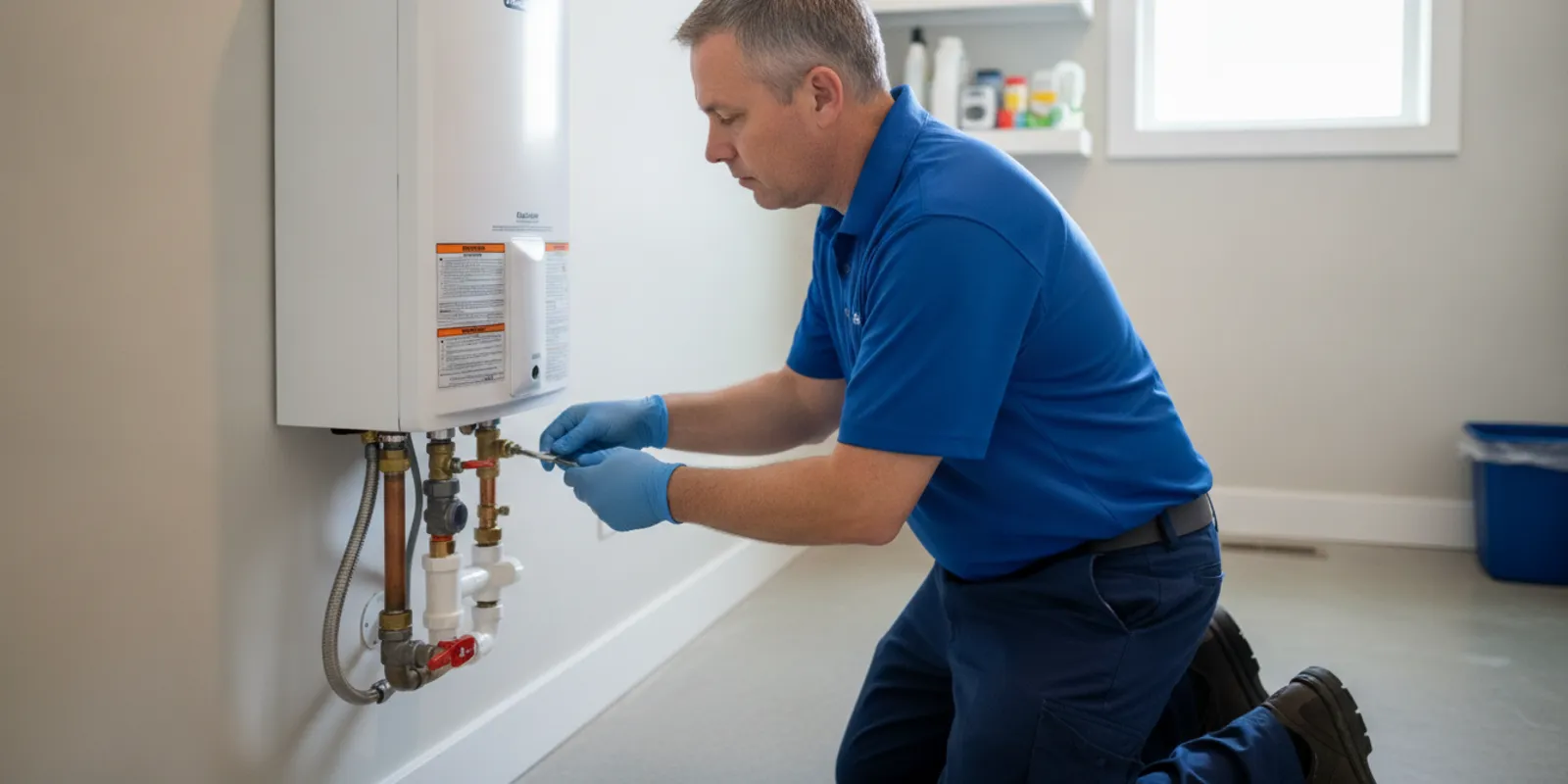
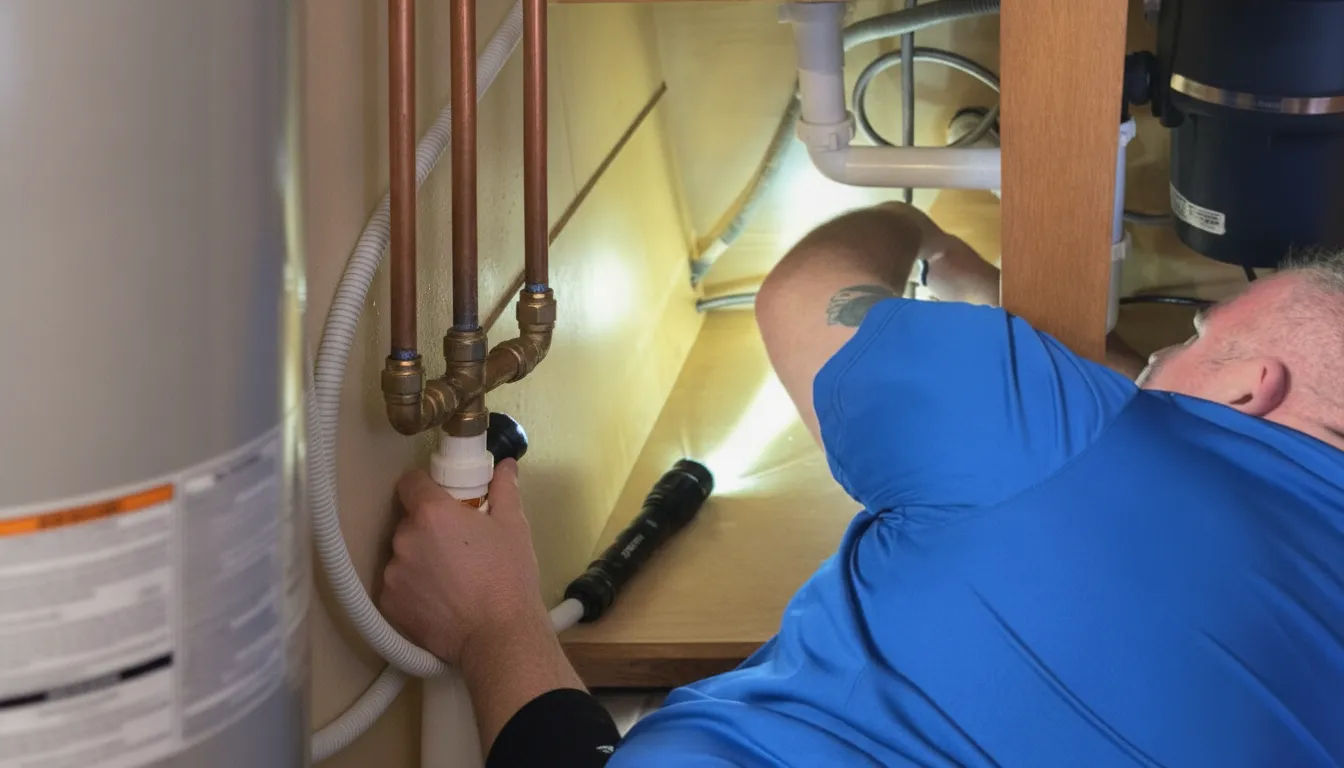
The work should be appropriate for the equipment installed in your home. A professional visit may include reviewing the model and its service history, checking accessible connections and components, looking for visible leaks or corrosion, and assessing whether the manufacturer’s recommended cleaning or descaling procedure is due. The plumber can also consider any error messages, changes in hot-water delivery, or unusual sounds you have noticed.
On a unit that calls for it, descaling generally involves circulating an approved cleaning solution through the heat exchanger to help clear mineral deposits. This is a specific service procedure, not the same as randomly pouring a cleaner into the appliance. The technician should follow the manufacturer’s instructions and use compatible equipment and materials. Some models may have additional maintenance steps; others may not require every task at every visit.
The plumber may inspect the water and gas or electrical connections that are accessible and relevant to the service, along with venting and condensate arrangements on applicable models. The scope depends on the heater type and the condition of the installation. Maintenance does not necessarily include replacing worn parts, modifying venting, correcting an installation problem, or repairing a leak. If an issue is found, ask what was observed and what work is being proposed before approving additional repairs.
A useful service conversation should make the scope understandable. Ask the plumber to identify which maintenance tasks apply to your model, which checks are included, and whether any observation would require a separate repair estimate. You can also ask whether a written summary of work completed is available. A clear record helps you know what was done, what was not part of the visit, and whether the technician suggested a future follow-up.
These details matter because the phrase “maintenance” can describe different tasks for different systems. A gas-fired unit and an electric unit do not have identical components, and a model installed indoors may have different venting or clearance considerations from a unit installed elsewhere. The service provider should identify the appliance configuration before deciding which checks and procedures are appropriate. Homeowners should not remove covers or handle fuel, electrical, vent, or condensate components to prepare for the visit.
For a clearer picture of the company’s broader plumbing services, review the service information and describe the specific heater concern when requesting help.
How often should a tankless water heater be serviced?
There is no single schedule that fits every household and every tankless model. The owner’s manual is the starting point because it describes the manufacturer’s maintenance recommendations for that appliance. Water quality, water use, installation conditions, and the unit’s history can affect what a plumber recommends in addition to the manual’s guidance.
In areas where water contains more minerals, scale may develop more quickly than it would under different conditions. A larger household with frequent hot-water use may also put more demand on the appliance than a lightly used unit. These factors do not establish a precise service interval by themselves. They are reasons to discuss the model’s requirements and past performance rather than assuming that a generic calendar schedule applies.
If you have the manual, check its maintenance section and note the last date the heater was serviced. If the history is unknown, tell the plumber. Do not guess that a procedure is overdue based only on the unit’s age, and do not ignore a clear manufacturer instruction because the heater still produces hot water. A service professional can assess the appliance and explain which maintenance steps make sense now.
It can help to think of the service interval as equipment-specific rather than a universal household chore. Two homes in the same neighborhood may have different heater models, different water use, and different maintenance histories. Likewise, two identical-looking units may have different requirements based on their manuals and installation details. A general online schedule cannot account for those differences.
If your home has a water treatment system or you know that mineral content is a concern, mention that during the service request. Do not assume that a softener or filter eliminates the heater’s maintenance needs; the appliance instructions and actual configuration still matter. If the household’s hot-water use has changed substantially, note that too. The information is context for the technician, not a substitute for an inspection or a precise test of the water.
What signs suggest that the heater needs attention?
A change in how the system behaves is useful information, even if it does not identify the cause. Make a note of what changed, when it began, and whether it happens at one fixture or throughout the home. That description can help a plumber decide what to examine.
- Hot water takes longer to arrive or fluctuates. A temperature change or inconsistent delivery can have several causes, including demand, settings, a plumbing issue, or a heater fault. It is not proof that the unit simply needs descaling.
- The heater displays an error code or warning light. Record the full code and, if safe and convenient, take a photograph. Avoid repeatedly resetting the equipment without checking the instructions, since a code may point to a condition that requires diagnosis.
- You hear a new or unusual sound. Describe when it happens and whether it continues. Noise alone does not establish the source, but it is worth mentioning during a service request.
- You notice water, corrosion, or a persistent odor near the unit. Do not assume that a leak or odor is part of routine maintenance. If you suspect a gas leak, leave the area and contact the appropriate emergency service or utility from a safe location; do not operate switches or try to troubleshoot the appliance.
- Hot-water performance has changed across several fixtures. This can help distinguish a heater-related concern from a problem limited to a faucet or branch of plumbing, though a professional assessment may still be needed.
Some symptoms call for diagnosis rather than a standard maintenance appointment. If the heater is not producing hot water, has an active leak, repeatedly shuts down, or displays a persistent warning, explain that when you contact a plumber. If the problem is limited to one tap, the issue may be at that fixture or in the piping serving it; Tommie’s also provides information about faucet repair.
What should homeowners check before calling?
A few simple observations can make the appointment more productive. You do not need to open the heater or remove panels. Leave internal inspection and service procedures to a qualified professional, especially when the appliance uses gas, electricity, combustion air, or specialized venting.
- Find the make and model. A label on or near the appliance may provide this information. Do not remove a cover to locate it. A clear photograph of the label can be useful if it is safely accessible.
- Write down the symptoms. Note when the issue began, which fixtures are affected, whether the problem is constant or intermittent, and any changes in household hot-water use.
- Record displayed codes. Copy the complete code as shown, rather than relying on memory. Do not attempt a repair based solely on a code found online.
- Gather service history. Keep any prior maintenance notes, installation paperwork, warranty information, and the owner’s manual available if you have them.
- Make the area accessible. Clear stored items away from the heater where practical. Do not block required clearances or move pipes, wiring, or vent components.
If the manufacturer’s manual is available, share the relevant maintenance instructions with the plumber. A service provider can then check the model-specific requirements and explain which steps are included in the visit. If the manual is missing, the make and model can still help identify the correct guidance.
Can you maintain a tankless water heater yourself?
Homeowners can safely keep records, watch for visible changes, and follow basic care instructions that the manufacturer clearly assigns to the owner. For example, the manual may describe an external filter check or a way to keep the appliance’s surrounding area clear. Follow the exact directions for your model, and do not treat instructions for one brand as universal.
Descaling and internal service are different from ordinary observation. The work may require isolating the appliance, connecting service equipment, handling a cleaning solution, and following a sequence specific to the model. Incorrect steps can damage equipment, cause leaks, or create safety risks. Gas connections, electrical components, combustion venting, and internal controls should not be adjusted as a do-it-yourself experiment.
Do not use an unapproved chemical, force a stuck valve, bypass a warning, or open a sealed appliance compartment. If a maintenance task is unclear, stop and consult the manual or a plumber. An owner check should not replace professional diagnosis when there is an active leak, a fault code, loss of hot water, or a suspected fuel or electrical problem.
How is maintenance different from repair or replacement?
Maintenance focuses on inspecting and caring for the existing equipment according to its needs. Repair addresses a specific fault, damaged component, leak, or failure. Replacement is considered when the unit cannot be repaired appropriately, no longer meets the household’s needs, or the homeowner chooses a different system. These categories can overlap: an inspection may uncover a repair that is outside the maintenance scope.
Age alone does not tell you whether a heater must be replaced. Nor does a single symptom prove that maintenance will solve the problem. A plumber should explain the condition found, what the recommended work is intended to do, and whether any other options are available. Ask for an explanation of the scope and estimate before authorizing work. If the equipment is approaching a decision point, ask whether repair, continued maintenance, or replacement is practical for your situation.
When discussing replacement, account for the home’s hot-water demand, available fuel and electrical service, installation arrangement, and venting needs. Choosing a different model may require work beyond swapping one appliance for another. Tommie’s offers information about tankless water heaters and water heater installation, which can help you prepare questions about a future project.
What should you ask when arranging tankless water heater maintenance service?
Before scheduling, describe the heater type, its make and model if known, and whether you have a maintenance request or a symptom that needs diagnosis. Clear details help the plumbing company understand the request without assuming what the appliance needs. If you are unsure whether the issue is urgent, say what you are seeing and ask how to proceed.
- What information should I have ready about the unit?
- Does the service include model-specific inspection and any recommended cleaning or descaling that is due?
- Will you tell me before performing work beyond the agreed maintenance scope?
- If you find a repair issue, will you explain the condition and estimate before proceeding?
- Should I make the owner’s manual or prior service records available?
Ask how the visit will be confirmed and what access the technician will need. Tommie’s describes its service-request process on the schedule service page; homeowners can also contact the team to explain the concern. The company’s Northeast Tennessee service-area information can help local readers check the locations it lists.
How can you prepare for the service visit?
Plan for the technician to reach the heater and any related shutoff or service connections that are safely accessible. Keep pets and household activity away from the work area if needed. If the unit is in a closet, attic, garage, or utility room with limited access, mention that when requesting service so the company can understand the setup.
Make a short list of your questions and the symptoms you have observed. Include whether the problem occurs during a particular activity, such as running more than one shower, and whether it affects the entire home or just one fixture. This is more useful than trying to diagnose the unit yourself. Share any prior repair or maintenance information, even if you are not sure it is relevant.
After the visit, ask what was checked, what maintenance was completed, and whether the plumber noticed anything that needs follow-up. Keep the service record with the owner’s manual. That history can help with future troubleshooting and make it easier to compare a new symptom with the unit’s normal behavior.
Schedule a plumbing service request
Frequently asked questions
Does every tankless water heater need descaling?
Not necessarily at the same frequency or in the same way. The model’s manual, water conditions, usage, and service history all matter. A plumber can check the manufacturer’s guidance and assess whether descaling is appropriate for your unit.
Will maintenance fix inconsistent hot water?
It may help if the cause is related to a maintenance need, but inconsistent hot water can have other causes. Share which fixtures are affected, when the change happens, and any error code. Diagnosis is needed before anyone can say what repair or maintenance will resolve it.
Can I wait until the heater stops working?
You can follow the maintenance schedule in the owner’s manual, but waiting for a complete failure may leave you without hot water and can make it harder to plan. A change in performance, a warning code, or a visible leak is a reason to seek guidance rather than assuming the unit can safely wait.
What if I do not know when the heater was last serviced?
Tell the plumber that the service history is unknown and provide the make and model if you can find them safely. The technician can review the unit’s condition and instructions, then explain a reasonable next step without relying on a guessed service date.
Is tankless water heater maintenance the same as a repair visit?
No. Maintenance is planned inspection and care, while a repair visit addresses a specific problem. If you report a fault, leak, or loss of hot water, explain it when requesting service so the visit can account for diagnosis rather than assuming routine maintenance alone is needed.
With model-specific care, clear service records, and prompt attention to changes in performance, homeowners can make more informed decisions about a tankless water heater. When you need help understanding the unit or planning appropriate plumbing work, contact Tommie’s Plumbing and describe what you have noticed.