

Water heater maintenance can help you notice leaks, corrosion, unusual operation, or changing hot-water performance before a small concern becomes a bigger disruption. A few observations are simple to make, but work involving hot water, gas, electricity, pressure, or internal components calls for care. This checklist explains what homeowners can look at, what depends on the type of heater, and when to ask a plumber for help.
Contact Tommie’s Plumbing about water heater service
What does routine water heater maintenance include?
Maintenance is not one identical procedure for every home. A conventional tank stores heated water, while a tankless unit heats water as it flows through the equipment. The design, fuel or power source, manufacturer instructions, water conditions, and age all affect what care is appropriate.
A useful routine has three parts. First, look and listen for changes around the equipment. Second, follow the model’s instructions for any homeowner care that is specifically allowed. Third, arrange professional service for tasks that involve opening the unit, handling fuel or electrical connections, managing hot water, or working with safety controls.
Do not treat a calendar reminder as permission to perform a procedure you are unsure about. The heater’s manual is the first reference for model-specific instructions. If it is missing, the model and serial information may help a plumber identify the equipment and explain an appropriate service plan.
What can you check safely throughout the year?
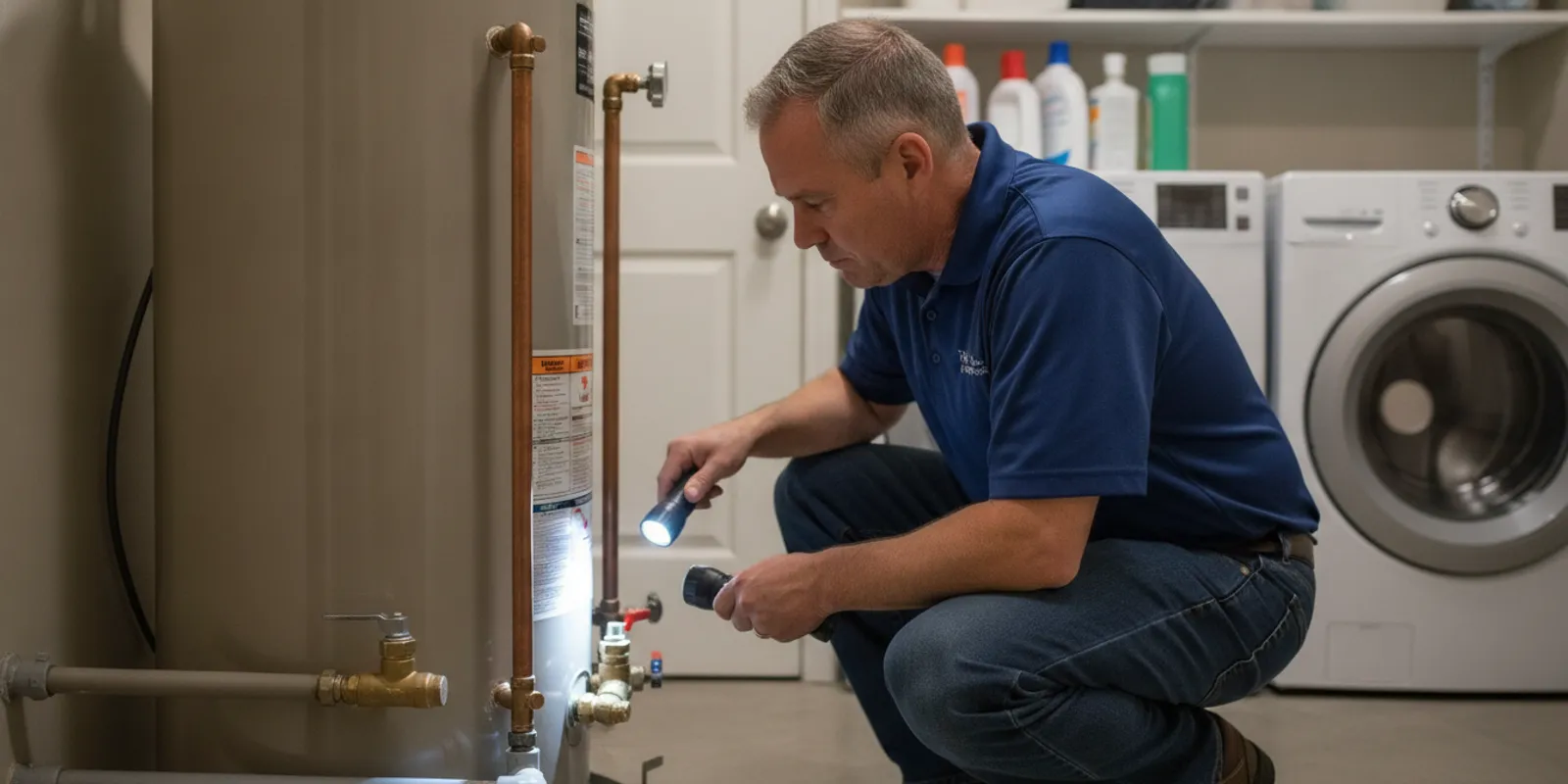
A brief visual check can reveal a change worth investigating. Choose a time when the area is well lit, and do not remove panels or touch hot pipes. Keep children and pets away while you inspect.
- Look at the floor and nearby surfaces. Check for fresh moisture, water stains, or a growing damp area near the heater and its visible connections.
- Look for visible rust or corrosion. Note changes on the outer tank, fittings, or exposed piping. Do not scrape, tighten, or dismantle anything to investigate.
- Notice new sounds or smells. Record when a noise happens and whether it is new. If you smell gas, leave the area and contact the appropriate emergency service or gas provider from a safe location; do not operate switches or try to locate the source yourself.
- Pay attention to hot-water changes. Take note if the water runs out sooner than usual, takes longer to heat, or has an unexpected change in temperature or appearance.
- Keep the area accessible. Avoid storing items against the heater or blocking access to its shutoffs and service space. Follow the clearances in the equipment instructions.
- Check for visible damage to nearby venting or lines without touching them. If something appears loose, damaged, or out of place, arrange an inspection rather than attempting a repair.
These observations do not identify the cause on their own. For example, a leak could come from a connection, a drain component, or the tank itself. A professional inspection can determine where the water is coming from and what work is appropriate.
How often should you inspect a water heater?
There is no single inspection schedule that fits every model and household. Start with the owner’s manual and any service history for your unit. As a practical habit, take a quick look at the surrounding area from time to time, and inspect promptly after you notice a change or after work has been done nearby.
Keep a simple record with the heater’s make and model, installation or service dates if known, and any symptoms you observe. Note whether the issue is continuous or occasional, when it happens, and whether it affects all hot-water fixtures or only one. These details can help a plumber assess the concern without guessing.
For a home with an older heater or an unclear maintenance history, ask a plumber what should be checked for that specific equipment. Avoid assuming that age alone means the heater needs replacement or that a routine task will resolve a performance problem. An inspection can help distinguish ordinary maintenance from a repair or a replacement discussion.
What maintenance is different for tank water heaters?
A storage-tank heater holds a volume of water in a tank. Its maintenance may involve components and procedures that are not part of every homeowner’s routine. Manufacturers may provide instructions about inspection or draining, but the steps and cautions vary by model. A tank can contain very hot water, and incorrect handling of a drain or shutoff can cause burns, leaks, or equipment problems.
Before considering any tank-draining or flushing procedure, read the unit’s manual and make sure you understand how to shut the heater down and restore it safely. Gas and electric models have different shutdown considerations. If instructions are unclear, the valve is difficult to operate, the drain outlet has no safe discharge route, or you see leaking or corrosion, stop and contact a qualified plumber. Do not improvise with an unfamiliar valve or leave a draining heater unattended.
Ask the plumber to explain what the proposed work includes. Depending on the unit and its condition, the conversation may cover checking accessible connections, assessing operation, and whether a manufacturer-recommended cleaning or flushing task is appropriate. A recommendation should account for the actual model and symptoms, rather than apply the same procedure automatically to every heater.
Do not use a maintenance visit as a reason to adjust the thermostat without understanding the manufacturer’s guidance and the needs of the household. If water temperature seems inconsistent, mention it and ask for an assessment. Avoid touching controls or safety devices that you cannot identify.
What should you check on a tankless water heater?
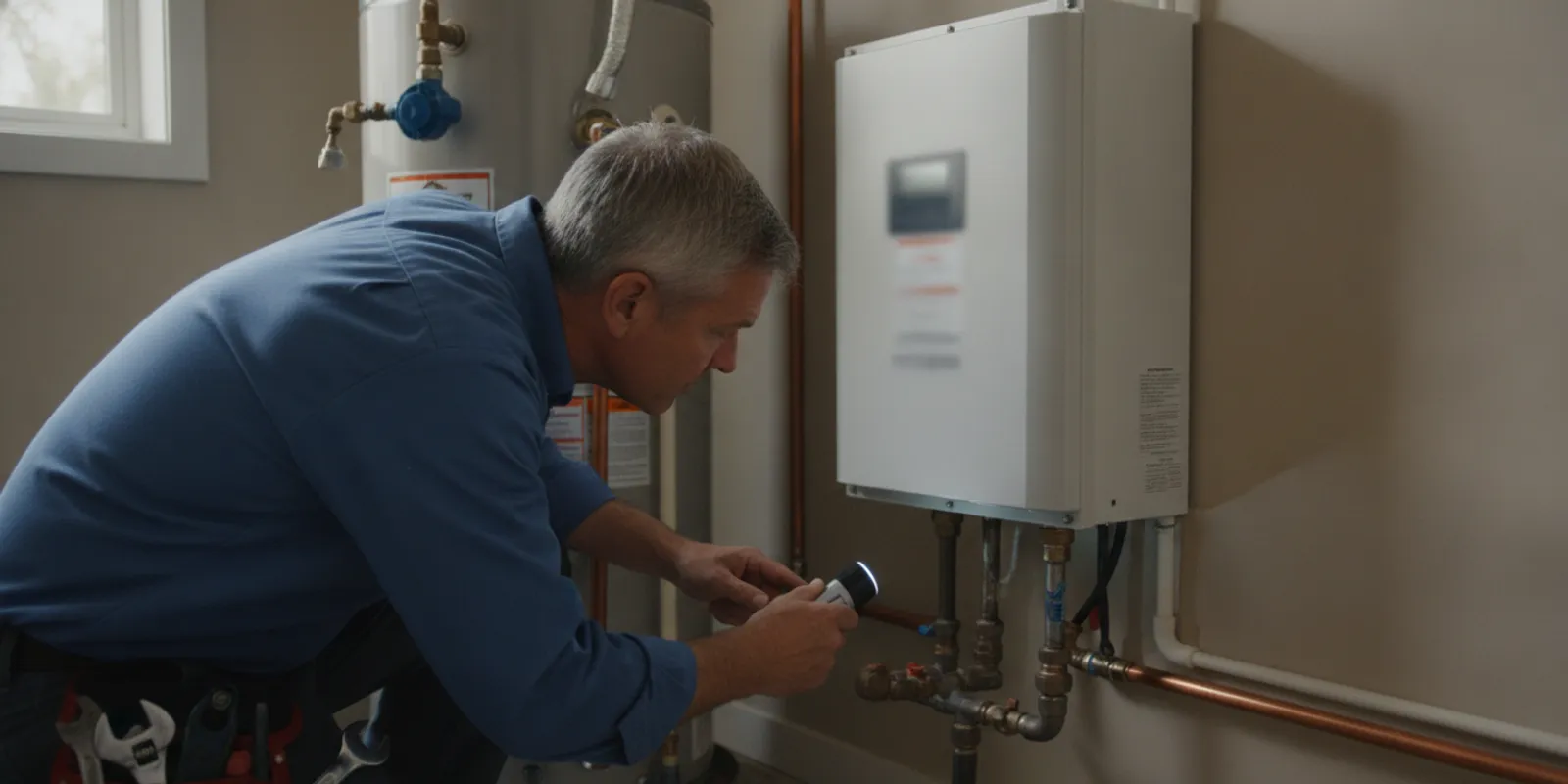
Tankless heaters do not store a large tank of hot water, but they still need model-specific care. Depending on the design, the manufacturer’s instructions may cover periodic cleaning or descaling, an inlet filter, and the clearances around the unit. Frequency and process can differ based on the heater and the water conditions in the home.
Start by checking the manual and the unit’s status display, if it has one. Write down any error code exactly as shown. Do not repeatedly reset the equipment or remove its cover to investigate. A display code can be useful to a technician, but it does not by itself prove which part has failed.
Homeowners can keep the space around the heater clear and watch for visible water, corrosion, or a change in hot-water delivery. Cleaning an inlet screen or performing a descaling cycle may be recommended for some equipment, but do not assume the same steps apply to every model. These tasks can involve shutting off water, handling valves, and following a prescribed procedure. Ask a plumber if you do not have the manual, cannot identify the valves, or are unsure how to complete a step safely.
If you are comparing equipment or planning a change, learn about tankless water heater options and ask how maintenance requirements differ for the model being considered. A plumber can also explain what access the equipment needs and which upkeep tasks are recommended by its manufacturer.
Which warning signs should not wait for a routine check?
Some changes deserve attention sooner than the next scheduled look. Contact a plumber when you find active leaking, persistent moisture, visible corrosion, a sudden loss of hot water, repeated changes in temperature, or a new sound that continues or returns. A small amount of water can still have a source that needs identification; do not assume it is harmless condensation.
If the unit is gas-fired and you smell gas, leave the area and contact the gas utility or emergency services from a safe location. Do not use a flame to check for a leak. If you see smoke, smell burning, or suspect an electrical hazard, stay clear and contact the appropriate emergency service. If water is actively spreading, protect people from the area and use a shutoff only if you can reach and operate it safely.
When you call, describe what you observed rather than diagnosing it. Include the heater type if known, whether the issue is ongoing, any visible water location, and any displayed code. Avoid restarting equipment that has shut itself down repeatedly. A plumber can determine whether the issue calls for repair, maintenance, or a broader evaluation.
What should a professional maintenance visit cover?
The useful scope depends on the unit’s make, model, condition, and reported symptoms. Before work begins, ask what the visit will include and whether it is inspection, maintenance, repair, or a combination. Clear expectations help you understand which observations led to a recommendation.
A visit may involve reviewing the heater’s operation and accessible components, checking visible connections, and discussing maintenance actions the manufacturer recommends for that model. For tankless equipment, ask whether the proposed care includes cleaning or descaling and what steps are involved. For a tank unit, ask whether any flushing is advisable given its condition and service history. Not every unit needs the same work at the same interval.
If a repair or replacement is recommended, ask the plumber to explain the reason, the options, and the work each option involves. Tommie’s Plumbing describes its approach as explaining plumbing problems and providing estimates on-site. You can learn more about the company’s plumbing experience and team, or review its water heater installation service if replacement becomes part of the discussion.
How can you prepare for a water heater appointment?
A little preparation can make it easier to explain the issue and review the work. You do not need to move or disconnect the equipment yourself.
- Write down the symptoms. Include when they began, how often they occur, and which fixtures are affected.
- Find available equipment information. If the labels are easy to see without touching hot or electrical parts, note the brand and model. Do not remove a cover to find a label.
- Gather records you already have. Prior invoices, warranty paperwork, or the manual can help establish what work has been completed.
- Keep a clear path to the heater. Move ordinary stored items if it is safe to do so, but leave piping, wiring, and controls alone.
- Ask what the estimate includes. Confirm which inspection or maintenance steps are proposed, whether parts or repair work are separate, and what the next step would be if another issue is found.
If you are in Northeast Tennessee, Tommie’s Plumbing serves homeowners and other customers across the Tri-Cities and surrounding areas. You can check the Northeast Tennessee service area and request a plumbing appointment online. Service details and availability should be confirmed when you contact the company.
How can household use and water conditions affect maintenance?
Maintenance plans should fit the equipment and the way a household uses hot water. A busy home may notice hot-water limits sooner than a household with lighter use, but that observation does not establish a fault by itself. If the supply seems to run out sooner than it used to, note how many people were using hot water and which fixtures were running. This context can help a plumber distinguish a change in equipment performance from a change in demand.
Water conditions and the heater’s installation can also influence which maintenance guidance applies. Do not assume that a particular mineral buildup or internal problem is present based only on a sound, a display message, or a change in delivery. Instead, describe the symptom, share the model information, and ask whether the manufacturer’s maintenance recommendations call for a particular inspection or cleaning step.
If the home will be unoccupied for an extended period, consult the heater’s manual or a plumber before changing settings or shutting the equipment down. The right steps can depend on the type of unit and the home’s plumbing. Avoid turning valves or adjusting controls based on generic advice that may not fit your system.
How should you keep a useful maintenance record?
A short service log can prevent repeated guesswork. Keep the manual and service documents in one place, along with notes about changes in operation. A simple entry can include the date, what you noticed, whether the concern continued, and what a technician inspected or recommended.
After a service visit, save the written estimate and invoice. If the plumber recommends additional work, note the reason and whether it is needed to address a current symptom or is a maintenance suggestion. Ask for clear descriptions of any options, and keep model or part information that may be useful later. Written records make it easier to compare a future concern with the heater’s previous condition.
Records are not a substitute for inspection, and a past service does not guarantee that a new symptom has the same cause. They simply give you and the plumber a clearer history to discuss. If you are unsure whether an old recommendation still applies, share the paperwork and ask for an assessment based on the unit as it is now.
When does maintenance become a repair or replacement conversation?
Routine upkeep and repair are different decisions. Maintenance follows the instructions for keeping a particular heater in suitable operating condition. Repair responds to a fault or a symptom that requires diagnosis. Replacement is a separate choice that may come up when an inspection finds a significant issue or when the unit no longer meets the household’s needs. A maintenance checklist alone cannot determine which option is right.
Ask the plumber to show or describe what prompted a recommendation and to explain the scope of each option. Find out what the proposed work addresses, what it does not address, and whether another inspection is needed before you decide. For a replacement discussion, compare the equipment type and installation requirements rather than relying on a general rule based only on age.
Tommie’s Plumbing handles water heaters and tankless heaters as part of its plumbing work. You can read about plumbing services in East Tennessee and ask for an on-site explanation of the issue and estimate. The goal is to understand the condition of the current equipment and make a decision based on the specific home, not a generic checklist.
What should you avoid doing yourself?
Do not open sealed panels, adjust gas connections, handle exposed wiring, or bypass a safety control as part of routine care. Do not place your hands near hot discharge water or attempt a procedure when you cannot identify the correct shutoff. A manufacturer’s instructions may describe homeowner tasks, but that does not make every task suitable for every person or every installation.
Also avoid relying on online instructions for a different model. A procedure that is appropriate for one heater may not apply to another, and older or damaged valves can behave unpredictably. If a control is stuck, a connection is wet, or the steps do not match your equipment, stop and get professional guidance.
Maintenance is meant to support safe, dependable operation. It should not create a new leak, expose you to hot water, or leave the equipment improperly restarted. When in doubt, a careful inspection by a plumber is the better next step.
Ask Tommie’s Plumbing about water heater maintenance
Frequently asked questions
Can I flush my own water heater?
That depends on the heater, its condition, the manufacturer’s instructions, and whether you can safely follow the procedure. Tank draining can involve hot water and valves that may be difficult to operate. If the manual is unclear or you notice corrosion or leaking, ask a plumber rather than improvising.
Does a tankless water heater need maintenance?
Yes, tankless equipment can have maintenance requirements. The recommended tasks and timing depend on the model and the conditions where it is installed. Consult the unit’s instructions and ask a plumber about cleaning, descaling, or filter care if the steps are not clear.
How do I know whether a water heater needs repair or maintenance?
Symptoms such as leaking, inconsistent hot water, a repeated error code, or a new persistent sound should be assessed rather than treated as a routine checklist item. A plumber can inspect the equipment and explain whether maintenance, repair, or another option fits what they find.
Should I adjust the temperature as part of maintenance?
Do not change the setting simply because a general checklist suggests it. Follow the equipment instructions and consider the household’s needs. If the water is unexpectedly hot, cool, or inconsistent, tell a plumber so the cause can be evaluated.
What information should I share when requesting service?
Share the heater type and model if known, the symptoms and when they occur, any visible moisture, and any error code displayed. Mention previous service if you have those records. This information helps the plumber understand the concern before arriving.
Regular observation, model-specific care, and timely professional attention make a practical maintenance plan. If your water heater has changed in appearance or performance, contact a plumber to discuss the next safe step.