Water pipe insulation is a practical way to reduce heat loss from exposed plumbing, especially where pipes run through an unheated part of a home. In Northeast Tennessee, a short cold snap can expose weak spots in a crawl space, garage, basement, or cabinet. Insulation is useful preparation, but it does not guarantee that a pipe cannot freeze. The best plan starts by finding the vulnerable run, understanding its surroundings, and choosing measures that fit the actual conditions.
Contact Tommie’s Plumbing for help
Where does water pipe insulation help most?
Begin with plumbing in places that stay colder than the living areas. Common locations include unheated crawl spaces, garages, basements, attics, utility rooms, and cabinets set against exterior walls. Pipes near foundation vents, gaps, or drafty openings may also be exposed to cold air. A room’s name does not tell the whole story: a heated basement can have a cold corner, while a well-sealed utility area may stay relatively warm.
Walk through accessible areas and look for visible water supply lines along outside walls or in spaces with little or no heat. Follow the line as far as you can safely see it, rather than checking only the section beside the water heater or main shutoff. Make a simple list that records the location, nearby drafts, and any past trouble. If you cannot safely reach a pipe, note it for a professional instead of crawling into an unsafe space or moving wiring and equipment.
Insulation is most useful when it fits the pipe and covers the vulnerable length without gaps. It slows heat loss; it does not make heat. If the surrounding space remains very cold for a long time, or cold air blows directly over the line, insulation alone may not be enough. The same pipe can pass through warm and cold areas, so focus on the exposed section rather than assuming every part of the plumbing has the same risk.
Which pipes should you address first?
Prioritize pipes in unheated areas, near exterior walls, or beside openings that let outdoor air reach them. Include plumbing that serves an outdoor faucet and lines running through a garage, addition, or room that is not heated consistently. A history of freezing is important. If one faucet has lost flow during a past cold spell, identify the route that supplies it and check whether that route passes through a cold area.
- Unheated crawl spaces: Check accessible supply lines and note foundation openings or drafts near them. Do not enter if the space is unsafe, wet, unstable, or difficult to exit.
- Garages: Look along exterior walls and near garage doors, where gaps may admit cold air. A pipe near a frequently opened door can face changing conditions.
- Basements and utility areas: Check cold corners and lines near foundation walls, especially where the room has little heat.
- Exterior-wall cabinets: Look behind or beneath sinks. During severe cold, opening cabinet doors can help room air reach pipes when the room itself is safely heated.
- Outdoor hose connections: Disconnect and drain garden hoses before cold weather. A connected hose can retain water and affect the faucet assembly.
- Rooms that are closed off: A spare room, enclosed porch, or addition may cool more than the rest of the house. Check whether plumbing runs through it and whether the heat is kept on.
Do not assume every pipe needs the same product or treatment. Pipe material, diameter, location, access, nearby heat sources, and exposure to moisture all matter. A short, accessible straight run is different from a line with several bends, valves, or connections in a cramped space. Tommie’s plumbing services page describes the company’s broader plumbing work if an assessment or repair is needed.
How do you choose and fit pipe insulation?
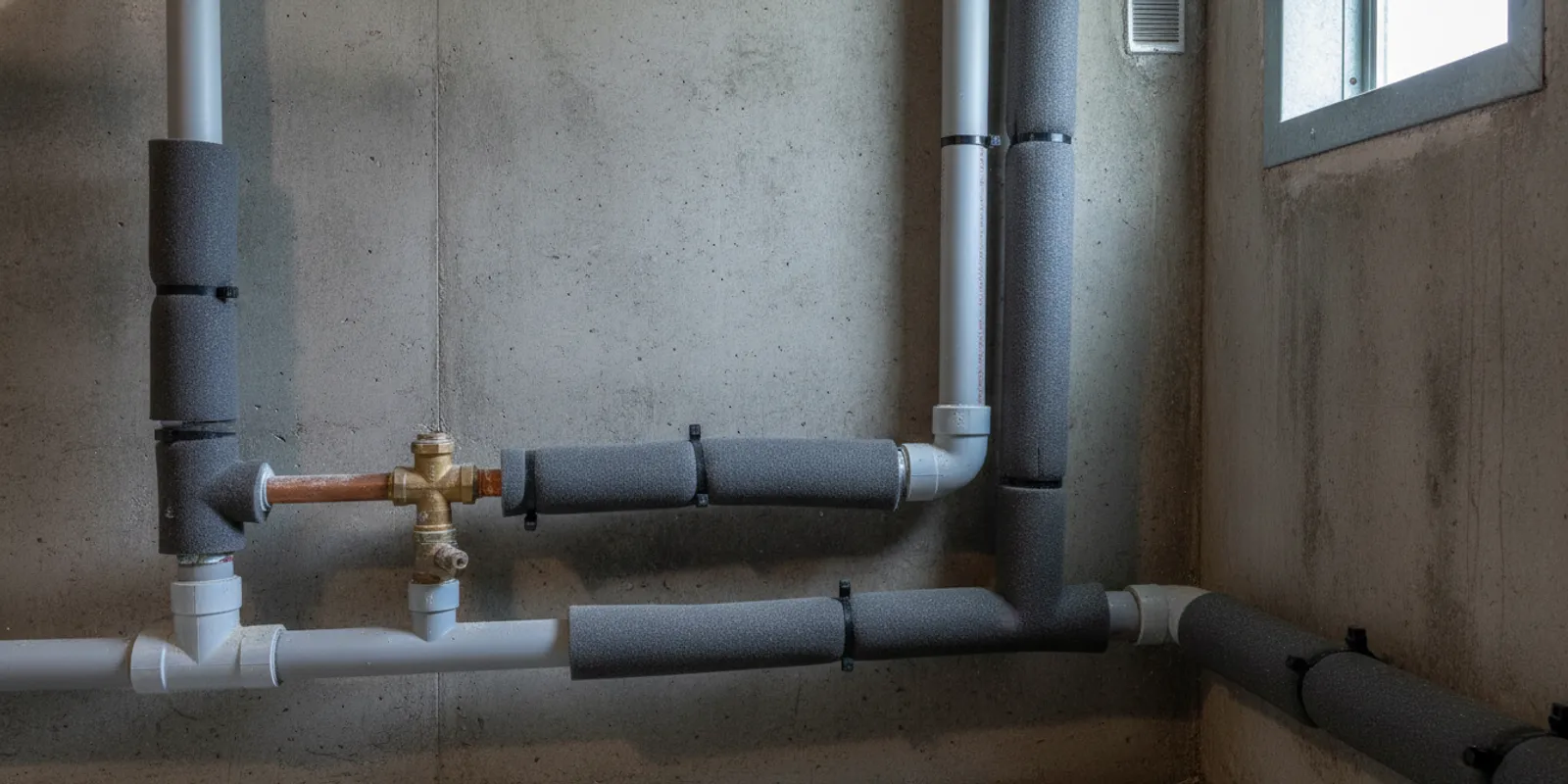
For an accessible straight run, pre-formed foam sleeves are a common option. Match the sleeve to the pipe’s outside diameter and measure the full length you intend to cover before buying supplies. Check the label for compatible pipe materials, temperature limits, and directions for installation. Products designed for one environment may not be suitable near a hot appliance or outdoors. Do not pick a product only because it looks thick; it must fit correctly and be appropriate for the location.
Before fitting a sleeve, inspect the pipe for moisture, corrosion, drips, or signs of earlier damage. Insulation can conceal a developing leak, so address visible problems first and make sure the pipe is dry. Clean the surface if the product instructions call for it. Cut the sleeve to length with a suitable tool, then close its seam as directed. Cover bends, tees, and joints carefully. A neat run with a small exposed gap at a fitting still has an unprotected spot.
Take a moment to plan around shutoffs, valves, labels, and connections that need inspection. Do not cover a control or joint in a way that makes it difficult to reach. Where a sleeve must be removable, follow the product instructions and leave it possible to inspect the pipe. Do not compress insulation to force it into a tight opening: compression can reduce its insulating value. Avoid placing insulation against flames, hot flues, or surfaces identified as unsafe by the product manufacturer.
Foam sleeves are not the only kind of pipe insulation. Flexible wraps may help where a rigid sleeve will not fit neatly, while some locations need a professional to determine whether insulation is appropriate at all. A wrap still needs to be installed as its label directs, with attention to seams and fittings. Avoid layering materials without checking compatibility. Trapping moisture against a pipe or blocking access can make future inspection harder.
Heating tape or cable is a different measure, not a casual add-on. It must be listed for the intended pipe and location and installed exactly as directed. Some systems require a thermostat, a suitable electrical connection, or a specific arrangement of insulation over the cable. Not every cable may be crossed, overlapped, or covered in the same way. If the product requirements are unclear, or the pipe is near electrical equipment or combustible material, ask a qualified professional rather than improvising.
How can you compare common freeze-protection measures?
Different measures address different parts of the problem. Insulation slows heat loss, draft control reduces exposure to cold air, and maintaining safe heat helps keep the surrounding space warmer. A heating cable may be considered for a specific pipe under its product instructions. The table below is a planning aid, not a substitute for an inspection or manufacturer directions.
| Measure | What it does | Best planning question | Important limit |
|---|---|---|---|
| Foam sleeve or approved wrap | Slows heat loss from the covered pipe | Does the product fit the pipe and location? | Does not create heat or eliminate all freeze risk |
| Draft control | Reduces cold air reaching the plumbing | Can the gap be addressed without blocking a required vent? | Must not interfere with appliance combustion air or ventilation |
| Safe, consistent room heat | Helps keep the surrounding space from becoming as cold | Can the area be heated safely and reliably? | A power loss or prolonged cold can change conditions |
| Disconnecting outdoor hoses | Removes a hose that can hold water at the faucet | Are hoses detached, drained, and stored? | Does not protect other exposed supply lines |
| Listed heating cable | Provides heat to a pipe when installed and powered as specified | Is this exact product approved for this pipe and setting? | Incorrect installation or power arrangements can be hazardous |
In many homes, combining simple measures is more sensible than relying on one product. For example, an exposed line in a drafty garage may need a correctly fitted sleeve and attention to the source of the draft. A pipe in a room that is left unheated may need a plan for maintaining safe heat. A line that has frozen repeatedly deserves a closer look at its route and surroundings, not merely another layer of material.
How can you prepare pipes before a cold snap?
Preparation is easier when temperatures are moderate and you can inspect the plumbing calmly. Use this sequence to make the work manageable and avoid overlooking the conditions around the pipe.
- Map the accessible plumbing. Check unheated rooms, cabinets, and visible pipe routes along exterior walls. Make a note of lines you cannot safely reach instead of attempting a risky inspection.
- Look for drafts and moisture. Notice gaps around doors, windows, and pipe penetrations. Check for dampness, drips, corrosion, or staining before covering a pipe. Do not use insulation to hide an active leak.
- Address air gaps carefully. Close obvious drafts using an appropriate method, but do not block required vents or change combustion-air openings for appliances. If you are uncertain whether an opening is required, get advice before sealing it.
- Fit suitable insulation. Measure the pipe, select a compatible product, and follow its installation instructions. Cover fittings carefully while preserving access to shutoffs, labels, and service points.
- Disconnect garden hoses. Remove hoses from outdoor faucets, drain them, and store them. If a separate shutoff or a particular winterizing procedure applies, follow the directions for that system or ask a plumber.
- Keep vulnerable areas from becoming colder than necessary. Maintain safe, consistent heat in the home. If plumbing runs through a room normally left unheated, consider a safe plan for that room rather than relying on a makeshift heater.
- Know the main shutoff location. Make sure household members know how to reach it. If a pipe leaks or bursts, shutting off the supply can limit additional water damage.
- Recheck after completing the work. Confirm that sleeves remain closed, valves are reachable, and no material touches a hot surface. Record what you changed and where so you can inspect it again before the next cold spell.
Think of the inspection as following the water line through the house. Start where the supply enters, then trace visible runs toward fixtures. Pay attention where a line changes direction, passes through a floor or wall, or enters an attached garage. A cold draft may affect only a short stretch even when the rest of the same line is in a warmer space. Write down exactly where the vulnerable section begins and ends.
It can help to make a small cold-weather checklist for the household. Include which outdoor hoses need to come off, where the main shutoff is, which rooms contain exposed plumbing, and which areas should not be entered without help. If you have a caretaker or will be away, make sure the person responsible knows not to turn off heat without considering pipes in colder rooms. Keep the plan practical and specific to the house rather than assuming one routine works everywhere.
Do not use an open flame or an improvised high-heat device to warm a pipe. Keep heat sources away from insulation and combustible materials. If a pipe is already frozen, avoid forceful thawing; a plumber can advise on a safe response, especially if the pipe is hidden, damaged, or near electrical equipment.
Does insulation alone prevent frozen pipes?
No. Insulation slows heat loss but does not create heat. A long freeze, strong cold-air draft, power outage, or very low temperature in an unheated area can still put plumbing at risk. Insulation can buy time under some conditions, but it should not be treated as a guarantee. The best plan combines pipe insulation with sensible draft control, reasonable indoor heat, hose disconnection, and a response plan if water flow changes.
Local conditions differ from house to house. A pipe in a well-sealed basement may face less exposure than a line in a drafty crawl space. A pipe near an exterior wall can be at risk even if the nearby room is comfortable. Consider the pipe’s route, the temperatures of the spaces it crosses, and whether air can reach it. If one stretch repeatedly gets cold, ask what is making that point vulnerable rather than treating every pipe identically.
Insulation also does not repair a leak, corrosion, or a damaged fitting. A pipe can look protected from the outside while a hidden section remains exposed, and insulation can make a small leak harder to spot if it is fitted over wet plumbing. Check the pipe first and inspect it periodically. If the plumbing is concealed or the problem area cannot be reached, have it assessed before deciding what protection is suitable.
For general questions about arranging plumbing help, review the company’s plumbing FAQ. The right response depends on the layout and condition of the home’s plumbing, not just the weather forecast.
What should you do if a pipe may be frozen?
A sudden reduction or stop in water flow during freezing weather can indicate a frozen section. Check whether other faucets still work, but do not force a handle or apply intense heat. If you see a leak, a bulging pipe, or water where it should not be, shut off the main supply if you can do so safely and contact a plumber. If the water is near electrical equipment, avoid the area and seek appropriate help.
Keep people away from a wet or unsafe area and move belongings only if you can do so without risk. If the pipe is accessible, you may cautiously warm the surrounding room using normal household heat, while keeping the area attended and free of hazards. Do not use a torch, open flame, or device that could overheat the pipe or nearby materials. Do not use electrical equipment in a wet area. If you cannot locate the frozen section or are uncertain about safe steps, get professional help.
Once water returns, inspect the accessible pipe and nearby surfaces for leaks. A crack may not become obvious until ice melts and water pressure returns. If there is any sign of damage, arrange a repair rather than assuming the pipe is fine because flow resumed. If you shut off the water, check for signs of leakage before restoring service and follow a plumber’s advice when damage is suspected.
Make a brief note of what happened: which fixture lost flow, when it began, how cold the surrounding space was, and whether other fixtures were affected. This record can help a plumber understand the pattern. If the same line freezes again, that history is useful for identifying whether the concern relates to a cold location, airflow, heat loss, or another condition that needs attention.
When should you call a plumber?
Professional help makes sense when a pipe is concealed, difficult to reach, repeatedly freezes, or appears cracked or leaking. It is also sensible to ask for an assessment if you are unsure which insulation is suitable or how to protect plumbing near appliances and electrical systems. Repeated freezing is a reason to investigate the conditions around the line, not simply add another layer without checking for drafts, poor access, or an ongoing leak.
Before an appointment, note which fixtures have reduced flow, when the problem began, whether other areas of the home are affected, and whether you can see ice or water. Photographing an accessible area can help you describe what you found, but do not remove panels or enter unsafe spaces to get a better view. Clear a safe path to the utility area and point out the main shutoff. These details explain the situation without requiring you to guess at the cause.
Tommie’s Plumbing serves homeowners and businesses across Northeast Tennessee with plumbing repairs and larger projects. The company has more than 30 years of plumbing trade experience. You can learn about its local plumbing background and check the Northeast Tennessee service area for local information. A plumber can evaluate the route and condition of pipes and explain whether insulation, repair, or another improvement may be appropriate.
What should you ask a plumber about pipe insulation?
A useful assessment should start with the actual conditions around the pipe, not just a recommendation to cover it. Ask which stretch appears vulnerable, whether a draft or heat loss is contributing, and whether the pipe shows signs of damage or moisture. If the route is concealed, ask what can be checked without opening walls and what additional access would be needed before deciding on work.
It also helps to ask what material is appropriate for the pipe and location, how joints and fittings will be handled, and whether shutoffs and service points will remain reachable afterward. If a heating cable is proposed, ask which product is suitable, how it will be powered and controlled, and what installation directions apply. These questions make it easier to understand the plan and compare options without assuming every home needs the same treatment.
Ask how the proposed work deals with the cause of the exposure. If cold air is reaching a pipe, is there a safe way to address the draft? If the line crosses a room that is not heated, what precautions make sense for that room? If a leak or corrosion is present, should it be repaired before insulation is installed? A clear explanation of the sequence helps you understand whether the suggested measure addresses the underlying concern.
For recurring problems, discuss what happened during earlier cold spells. Note whether the trouble followed a power outage, a period with the room unheated, or unusually strong drafts. A history of the issue can help identify whether the response should focus on insulation, airflow, safe heat, repair, or several measures together. Ask what you should monitor after the work and when you should call if flow changes again.
You can also ask how access will be preserved after installation. Shutoffs, joints, and equipment controls should not become difficult to inspect simply because a pipe has been covered. If the work involves multiple areas, a short written list of the treated runs can make future checks easier. Clear communication about the scope helps you distinguish the immediate repair or protection from optional improvements.
Frequently asked questions
Should I insulate pipes in a heated basement?
It depends on the pipe’s location and the basement temperature. Pipes near exterior walls, drafts, or an unheated section may still be vulnerable. Inspect the conditions around the particular run rather than relying on the room label alone.
Should I leave a faucet dripping during a freeze?
A small flow may help in some situations, but it is not a substitute for insulation or heat and may not address every vulnerable pipe. Follow local utility guidance or ask a plumber for advice based on your home’s plumbing and the conditions.
Does foam insulation thaw a frozen pipe?
No. Insulation helps slow future heat loss; it does not thaw ice inside a pipe. Do not apply open flame or intense heat. Get help if the pipe is inaccessible, appears damaged, or you are unsure how to proceed safely.
What should I do with outdoor faucets?
Disconnect, drain, and store garden hoses before freezing weather. If there is a dedicated shutoff or a particular winterizing procedure for your faucet, use the instructions for that system or ask a plumber.
Can I put insulation over a leaking pipe?
No. Insulation can hide moisture and make it harder to notice a leak. Have the leak assessed and repaired, and make sure the pipe is dry before fitting insulation that is appropriate for that location.
Taking time to identify exposed pipes and prepare before a cold snap can reduce preventable risks. When a pipe is hard to reach, repeatedly freezes, or shows signs of damage, a plumber can help assess the conditions and explain a suitable next step.